
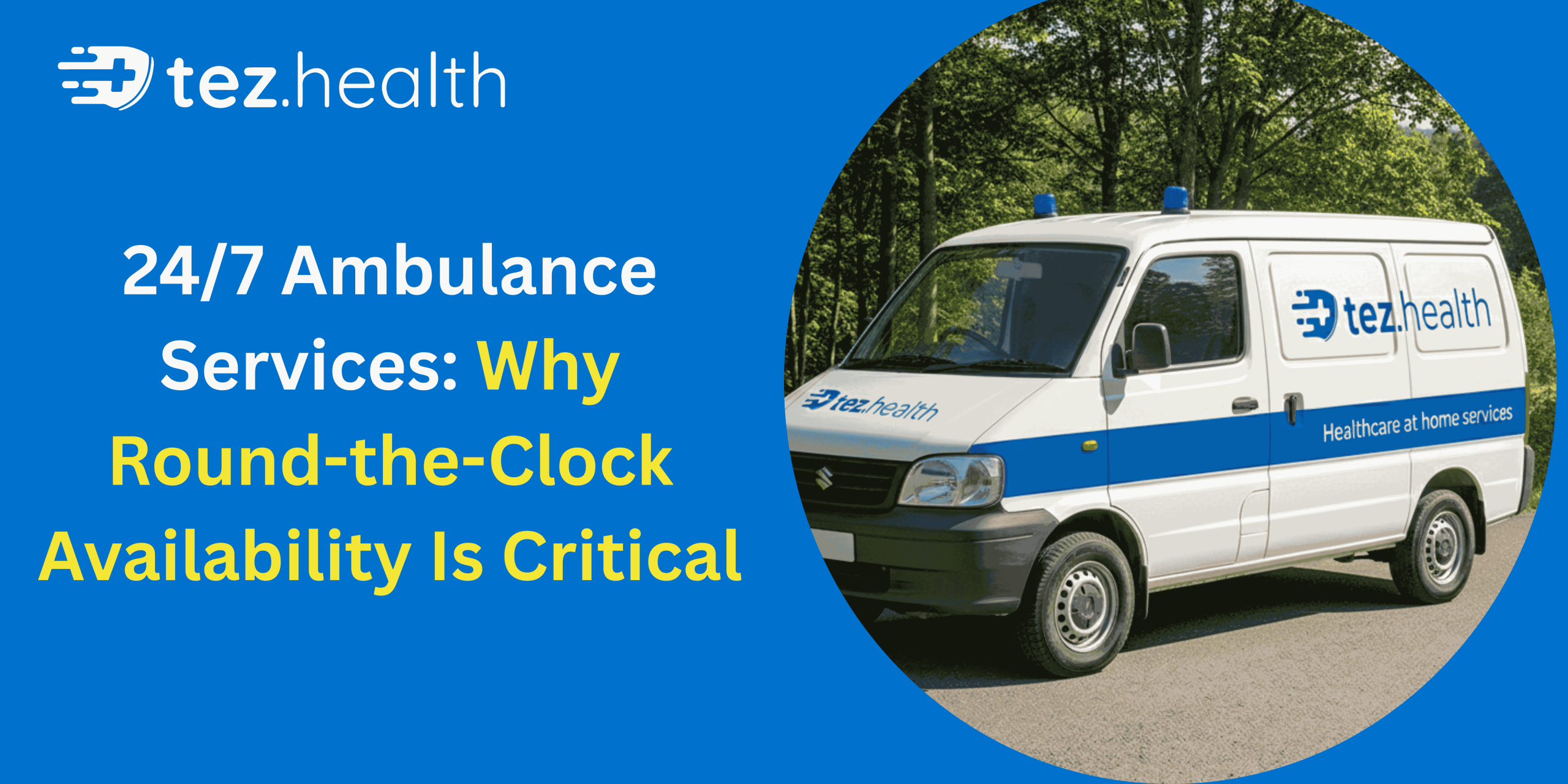
Medical emergencies do not follow a schedule. They do not wait for office hours, public holidays, or convenient daylight timing. A heart attack at 2 a.m., a road accident at dawn, a severe asthma attack during a festival night, or a stroke in the early morning hours can occur without warning. In such situations, the availability of 24/7 ambulance services can make the difference between life and death.
Round-the-clock ambulance availability is not just a convenience—it is a critical pillar of an effective emergency healthcare system. In India, where population density, traffic congestion, and geographical diversity present unique challenges, 24/7 ambulance services are even more essential.
This comprehensive blog explores why 24/7 ambulance services are crucial, how they impact survival rates, what makes them effective, and why communities and healthcare providers must prioritize continuous emergency medical support.
Understanding the Role of Ambulance Services
Ambulance services are far more than vehicles that transport patients. They are mobile emergency care units equipped with trained paramedics, life-saving equipment, oxygen support, cardiac monitors, and advanced medical interventions.
A modern ambulance service typically provides:
- Emergency medical assessment
- Immediate life-saving intervention
- Stabilization of critical patients
- Safe and monitored transport
- Coordination with hospitals
- Trauma management
- Cardiac emergency support
- Neonatal and pediatric emergency care
When these services are available 24/7, they ensure that no matter when an emergency strikes, professional help is just a call away.
Why 24/7 Availability Is Critical in Medical Emergencies
1. Emergencies Are Unpredictable
Medical crises occur randomly. Statistics worldwide show that:
- A significant percentage of heart attacks occur during early morning hours.
- Road accidents are common during late-night travel.
- Elderly patients often face complications at night.
- Respiratory emergencies worsen during early morning due to physiological changes.
Without 24-hour ambulance services, patients may lose precious time trying to arrange transport, which can drastically reduce survival chances.
2. The Golden Hour Concept
In emergency medicine, the first 60 minutes after a traumatic injury or medical crisis is known as the “Golden Hour.” During this period:
- Rapid medical intervention improves survival rates.
- Early cardiac care reduces heart muscle damage.
- Stroke treatment within the first few hours prevents permanent disability.
- Trauma management reduces internal bleeding complications.
A 24/7 ambulance ensures immediate dispatch during this crucial period. Any delay caused by limited service hours can lead to irreversible damage.
3. Cardiac Emergencies Require Immediate Response
Heart attacks, arrhythmias, and sudden cardiac arrest demand urgent intervention. In such cases:
- Oxygen support must begin immediately.
- CPR may need to be administered.
- Defibrillation may be required.
- Continuous ECG monitoring is essential.
Advanced Life Support (ALS) ambulances available 24/7 provide on-the-spot cardiac stabilization, increasing survival chances before reaching the hospital.
Night-time cardiac emergencies are particularly dangerous if ambulance services are unavailable or delayed.
4. Road Accidents Often Happen at Night
India records a high number of road accidents, many occurring during late-night travel due to:
- Poor visibility
- Fatigue
- Drunk driving
- Reduced traffic enforcement
Victims often suffer from:
- Head injuries
- Internal bleeding
- Fractures
- Spinal injuries
Immediate trauma care is critical. A 24/7 emergency ambulance equipped with trauma kits and trained personnel ensures that patients receive care even before reaching the hospital.
5. Stroke Treatment Is Time-Sensitive
In stroke cases, “time is brain.” Every minute of delay can result in:
- Loss of millions of brain cells
- Permanent paralysis
- Speech impairment
- Cognitive decline
Immediate transport to a stroke-ready hospital is essential. A 24/7 ambulance reduces the delay between symptom onset and treatment, significantly improving outcomes.
6. Rural and Remote Area Challenges
In many rural and semi-urban areas:
- Healthcare facilities are far apart.
- Public transport may not be available at night.
- Road connectivity may be poor.
Round-the-clock ambulance services bridge this gap, ensuring that even patients in remote areas can access emergency care at any hour.
Without 24/7 availability, rural populations face disproportionately higher mortality risks.
Impact of 24/7 Ambulance Services on Survival Rates
Numerous studies show that rapid emergency response significantly improves outcomes in:
- Cardiac arrest
- Severe trauma
- Respiratory failure
- Sepsis
- Anaphylaxis
- Neonatal emergencies
Key benefits include:
- Reduced pre-hospital mortality
- Faster stabilization
- Better ICU survival rates
- Reduced long-term disability
A consistently available ambulance service enhances the overall efficiency of the emergency medical system.
What Makes a 24/7 Ambulance Service Effective?
Availability alone is not enough. A high-quality 24/7 ambulance service must include:
1. Rapid Dispatch System
- Centralized control room
- GPS tracking
- Real-time location monitoring
- Fast call processing
Response time is critical. A well-coordinated dispatch system ensures minimal delay.
2. Skilled Paramedics and Emergency Technicians
Round-the-clock services require trained professionals capable of:
- Performing CPR
- Managing airway emergencies
- Administering emergency medications
- Handling trauma stabilization
- Monitoring vitals
Continuous staff availability ensures professional care at any hour.
3. Advanced Equipment
A 24/7 ambulance must be equipped with:
- Oxygen cylinders
- Cardiac monitors
- Defibrillators
- Suction machines
- IV fluids
- Emergency medications
- Trauma kits
Advanced Life Support ambulances provide ICU-level care during transport.
4. Hospital Coordination
Effective ambulance services communicate with hospitals before arrival, ensuring:
- Emergency room readiness
- Faster admission
- Immediate specialist availability
This seamless coordination saves valuable time.
Why Self-Transport Is Risky During Emergencies
Many people attempt to transport patients in private vehicles to save time or cost. However, this decision can be dangerous because:
- No medical support is available during transit.
- Sudden deterioration cannot be managed.
- CPR cannot be effectively administered in a car.
- Oxygen support is unavailable.
- Traffic navigation may delay arrival.
In contrast, a 24/7 ambulance service provides medical care while transporting the patient, significantly increasing survival chances.
Importance During Public Health Crises
The COVID-19 pandemic demonstrated the importance of continuous ambulance services. During crises:
- Demand increases unpredictably.
- Patients require oxygen support.
- Isolation transport is necessary.
- Critical care transfers become frequent.
Only 24/7 ambulance networks can handle such unpredictable surges in demand.
Supporting Elderly and Chronic Patients
India has a growing elderly population. Senior citizens often face:
- Sudden cardiac issues
- Breathing difficulties
- Diabetic emergencies
- Falls and fractures
Since many elderly individuals live alone or with limited family support, 24/7 ambulance availability provides a safety net and peace of mind.
Neonatal and Pediatric Emergencies
Newborn and pediatric emergencies can occur at any time, including:
- Premature birth complications
- High fever with seizures
- Severe dehydration
- Respiratory distress
Specialized neonatal ambulances available 24/7 are critical in such situations.
Mental Health and Psychiatric Emergencies
Psychiatric crises, including:
- Severe panic attacks
- Suicidal attempts
- Acute psychosis
can happen unexpectedly. Round-the-clock ambulance services trained in handling sensitive mental health emergencies ensure safe transport and crisis management.
Economic and Social Benefits of 24/7 Ambulance Services
Beyond saving lives, round-the-clock ambulance services contribute to:
- Reduced disability burden
- Faster return to productivity
- Lower long-term healthcare costs
- Increased public trust in healthcare systems
Communities with reliable emergency transport systems experience better overall health outcomes.
Technological Advancements Strengthening 24/7 Services
Modern ambulance services are now enhanced by:
- GPS navigation
- Real-time traffic analysis
- Telemedicine support
- Digital patient monitoring
- Electronic medical records
These technologies improve response times and patient care quality.
Challenges in Maintaining 24/7 Ambulance Services
Despite their importance, maintaining round-the-clock services involves challenges such as:
- Staffing shortages
- High operational costs
- Fuel and maintenance expenses
- Equipment upgrades
- Traffic congestion
However, the benefits far outweigh these operational difficulties.
How to Ensure Access to 24/7 Ambulance Services
Communities and individuals can improve emergency preparedness by:
- Saving emergency ambulance numbers
- Choosing reliable providers
- Educating family members about emergency symptoms
- Avoiding delay in decision-making
- Ensuring elderly relatives have emergency contact access
Preparation reduces panic and speeds up emergency response.
Why Round-the-Clock Availability Builds Trust
When people know that emergency help is available at any hour:
- Anxiety reduces
- Families feel secure
- Elderly patients gain confidence
- Chronic patients feel protected
Trust in healthcare infrastructure improves when emergency services are dependable.
Future of 24/7 Ambulance Services in India
The future will likely include:
- More advanced mobile ICU ambulances
- Air ambulance expansion
- Integration with smart city systems
- AI-based dispatch optimization
- Remote patient monitoring during transit
As healthcare evolves, 24/7 ambulance services will remain a foundational component.
Conclusion
24/7 ambulance services are not optional—they are essential. Medical emergencies are unpredictable and time-sensitive. Immediate access to trained medical professionals, advanced equipment, and rapid hospital transport can mean the difference between life and death.
From cardiac emergencies and strokes to trauma, neonatal complications, and elderly care, round-the-clock ambulance availability ensures:
- Faster intervention
- Improved survival rates
- Reduced long-term complications
- Greater public confidence in healthcare systems
In a country as vast and dynamic as India, investing in reliable 24/7 ambulance services is not merely a healthcare decision—it is a societal responsibility.
When emergencies strike, every second matters. And those seconds are only valuable if help is always available.
Round-the-clock ambulance services save lives—anytime, every time.