
When people think of heart disease, they often imagine sudden chest pain or collapse. In reality, many serious heart conditions begin quietly. The warning signs may be mild, irregular, or easy to dismiss as stress, fatigue, or acidity. Unfortunately, ignoring these early signals can delay life-saving treatment.
This is where a timely ECG plays a crucial role.
An Electrocardiogram (ECG) is a simple, painless test that records the electrical activity of the heart. When performed at the right time, it can detect hidden abnormalities long before they turn into heart attacks, cardiac arrest, or life-threatening complications.
Understanding when and why to get an ECG could truly make the difference between early treatment and a medical emergency.
What Is an ECG?
An ECG (Electrocardiogram) is a medical test that measures the electrical impulses generated by the heart.
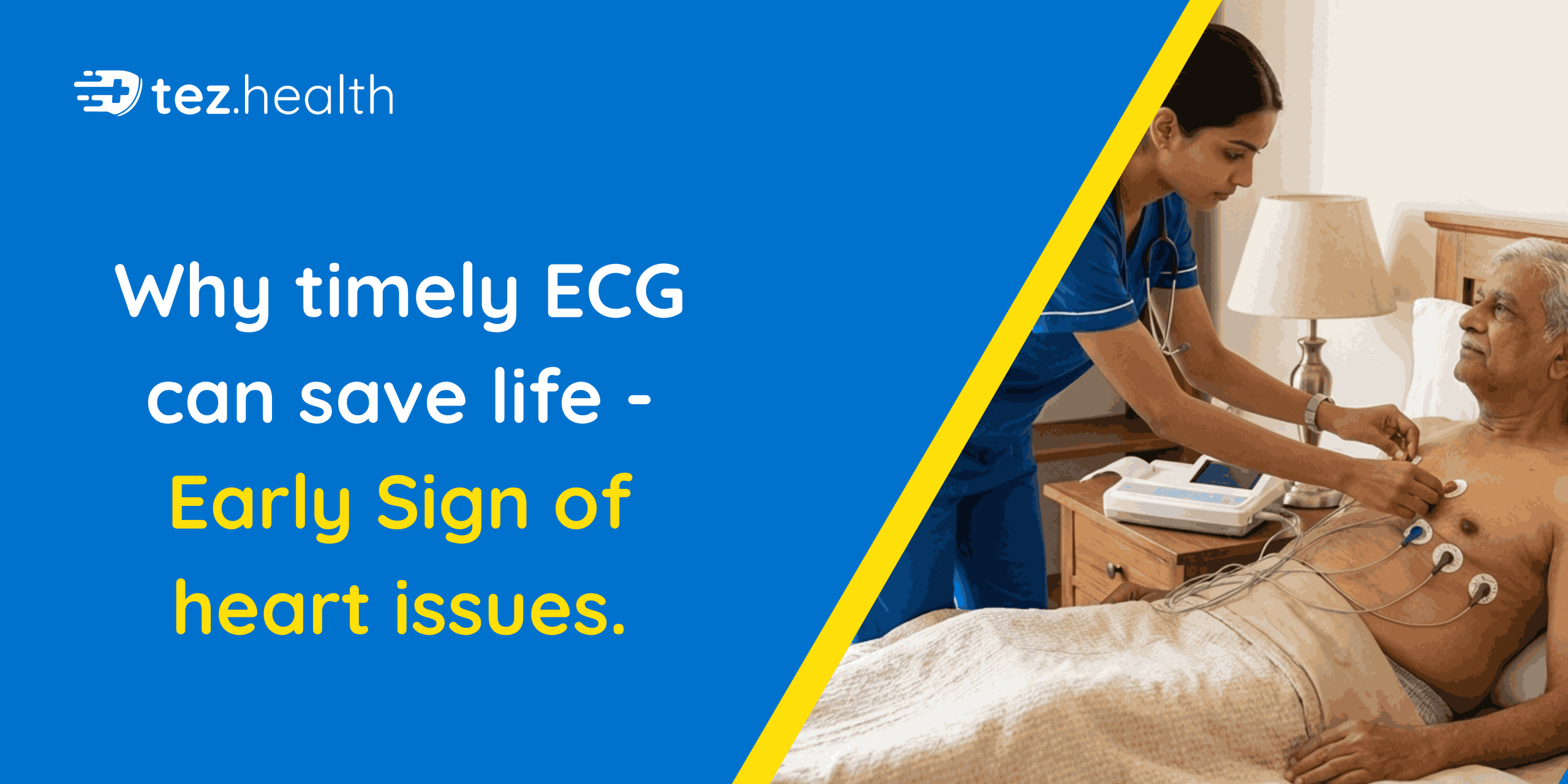
Each heartbeat is triggered by electrical signals that travel through the heart muscle. These signals coordinate the contraction of the heart chambers and maintain a steady rhythm. An ECG records these signals using small electrodes placed on the chest, arms, and legs.
The test helps doctors evaluate:
- Heart rate
- Heart rhythm
- Electrical conduction
- Evidence of heart muscle damage
- Signs of reduced blood flow
The procedure usually takes 5–10 minutes, is completely painless, and does not involve radiation.
How Does an ECG Work?
The heart’s electrical system follows a precise pathway:
- The sinoatrial (SA) node generates an impulse.
- The signal spreads through the atria.
- It passes through the atrioventricular (AV) node.
- It travels down specialized pathways to the ventricles.
These electrical activities appear on an ECG tracing as waves:
Wave Component | What It Represents
P wave | Atrial contraction
QRS complex | Ventricular contraction
T wave | Recovery phase of the heart muscle
Any abnormality in the size, timing, or shape of these waves may indicate arrhythmias, heart block, ischemia, or prior heart damage.
Why Timely ECG Matters
Most life-threatening heart conditions do not appear suddenly without warning. They often begin with subtle electrical changes in the heart.
A timely ECG can:
- Detect abnormal heart rhythms (arrhythmias)
- Identify early signs of reduced blood supply (ischemia)
- Reveal evidence of silent heart attacks
- Diagnose heart blocks
- Detect electrolyte imbalances
- Prevent sudden cardiac arrest
Early detection allows doctors to begin treatment before permanent damage occurs.
Early Signs of Heart Issues You Should Not Ignore
Many heart-related symptoms are mild and often dismissed. However, even small warning signs deserve attention.
Seek an ECG promptly if you experience:
- Chest discomfort, tightness, or pressure
- Pain spreading to the arm, jaw, neck, or back
- Shortness of breath
- Sudden sweating without exertion
- Unexplained fatigue or weakness
- Palpitations or irregular heartbeat
- Dizziness or fainting
- Nausea with chest discomfort
Symptoms may come and go. Even if they improve, an ECG can still detect underlying problems.
Silent Heart Attacks: A Hidden Risk
Not all heart attacks present with severe pain. Some are “silent” and produce mild or vague symptoms such as:
- Indigestion-like discomfort
- Mild chest pressure
- Breathlessness
- Fatigue
These episodes may go unnoticed. Later, an ECG may reveal signs of previous heart muscle damage.
This is especially common in diabetic patients, who may not feel typical chest pain due to nerve damage.
ECG During the Golden Hour
The first 60 minutes after the onset of a heart attack are often called the “Golden Hour.”
During this time:
- Clot-dissolving medications can be administered
- Emergency angioplasty can be performed
- Heart muscle damage can be minimized
A rapid ECG in emergency settings guides immediate treatment decisions. Delayed ECG means delayed life-saving intervention.
Who Should Get Regular ECG Screening?
ECG is not only for elderly individuals. Preventive screening is important for people with risk factors such as:
- Age above 40
- High blood pressure
- Diabetes
- High cholesterol
- Obesity
- Smoking
- Sedentary lifestyle
- Family history of heart disease
- Chronic stress
Even without symptoms, a baseline ECG can help detect early abnormalities.
ECG and Arrhythmias
Arrhythmias are irregular heart rhythms. Some are harmless, but others can be fatal.
ECG can detect:
- Atrial fibrillation
- Ventricular tachycardia
- Heart blocks
- Premature beats
- Bradycardia (slow heart rate)
Certain arrhythmias increase the risk of stroke or sudden cardiac arrest. Early diagnosis through ECG significantly improves outcomes.
ECG and Heart Block
Heart block occurs when electrical signals are delayed or interrupted as they travel through the heart.
Symptoms may include:
- Dizziness
- Fainting
- Fatigue
- Slow pulse
An ECG can identify heart block early. In severe cases, timely pacemaker placement can prevent life-threatening complications.
ECG Before Surgery
Preoperative ECG screening is essential for high-risk individuals.
It helps:
- Identify hidden cardiac conditions
- Reduce anesthesia risks
- Prevent intraoperative cardiac complications
Skipping ECG in high-risk patients may increase surgical risk.
Common Myths About ECG
Myth | Fact
ECG is needed only during heart attack | ECG detects early heart problems before emergencies
ECG exposes you to radiation | ECG only records electrical signals
Young people do not need ECG | Heart rhythm disorders can occur at any age
Normal ECG means perfect heart health | Some conditions require additional testing
Understanding these facts encourages timely screening.
How Often Should You Get an ECG?
General recommendations:
Category | Frequency
Healthy under 40 | Every 3–5 years
Above 40 years | Once a year
Diabetes or hypertension | Every 6–12 months
Previous heart disease | As advised by cardiologist
Individual risk factors may require more frequent monitoring.
When to Seek Immediate ECG
Seek urgent medical attention and ECG if you experience:
- Sudden chest pain
- Severe breathlessness
- Collapse or fainting
- Palpitations with dizziness
- Sudden unexplained sweating
Do not wait to see if symptoms resolve on their own.
Why Delay Can Be Dangerous
Ignoring early signs can lead to:
- Extensive heart muscle damage
- Chronic heart failure
- Sudden cardiac arrest
- Irreversible complications
Early ECG findings often allow reversible treatment. Delayed detection reduces survival chances.
A Simple Test That Saves Lives
ECG is:
- Quick
- Non-invasive
- Painless
- Affordable
- Widely available
Electrodes are placed on the chest and limbs, and results are available within minutes.
Despite its simplicity, ECG remains one of the most powerful tools in modern cardiology.
Conclusion
Heart disease rarely strikes without warning. The signals may be subtle, but they are present. A timely ECG helps detect these early changes before they escalate into emergencies.
Whether you have mild symptoms or belong to a high-risk group, do not ignore the importance of early screening. A short, simple test today could prevent a life-threatening event tomorrow.
Your heart works continuously for you. Taking a few minutes for an ECG could protect it for years to come.