Menstrual cramps, also known as dysmenorrhea, are one of the most common health concerns experienced by women during their menstrual cycle. These cramps usually occur in the lower abdomen and can range from mild discomfort to severe pain that interferes with daily activities.
For many women, menstrual cramps begin just before or during the first few days of their period. The pain may also spread to the lower back or thighs. Although period cramps are normal, intense pain can significantly affect a person’s quality of life.
Fortunately, several natural remedies and medical treatments can help relieve menstrual pain at home. By understanding the causes of cramps and using the right methods, women can manage their symptoms effectively.
This comprehensive guide explains the causes of menstrual cramps, common symptoms, natural remedies, medical treatments, and when to seek medical advice.
What Causes Period Cramps?
Period cramps occur because the uterus contracts to shed its lining during menstruation. These contractions are triggered by hormone-like substances called prostaglandins.
Higher levels of prostaglandins cause stronger uterine contractions, which can lead to more intense pain.
Several factors may increase the severity of period cramps, including:
- Hormonal imbalance
- Heavy menstrual flow
- Stress and fatigue
- Lack of physical activity
- Underlying medical conditions
Understanding the cause of cramps helps in choosing the most effective treatment.
Common Symptoms of Menstrual Cramps
Menstrual cramps can present in different ways depending on the individual.
Common symptoms include:
- Pain in the lower abdomen
- Cramping sensation in the pelvic area
- Lower back pain
- Pain radiating to the thighs
- Nausea
- Fatigue
- Headache
- Loose stools
These symptoms usually begin shortly before the menstrual period and may last for two to three days.
Natural Remedies for Period Cramps at Home
Many women prefer natural methods to relieve menstrual cramps before using medications. Fortunately, several home remedies can help reduce pain and discomfort.
1. Heat Therapy
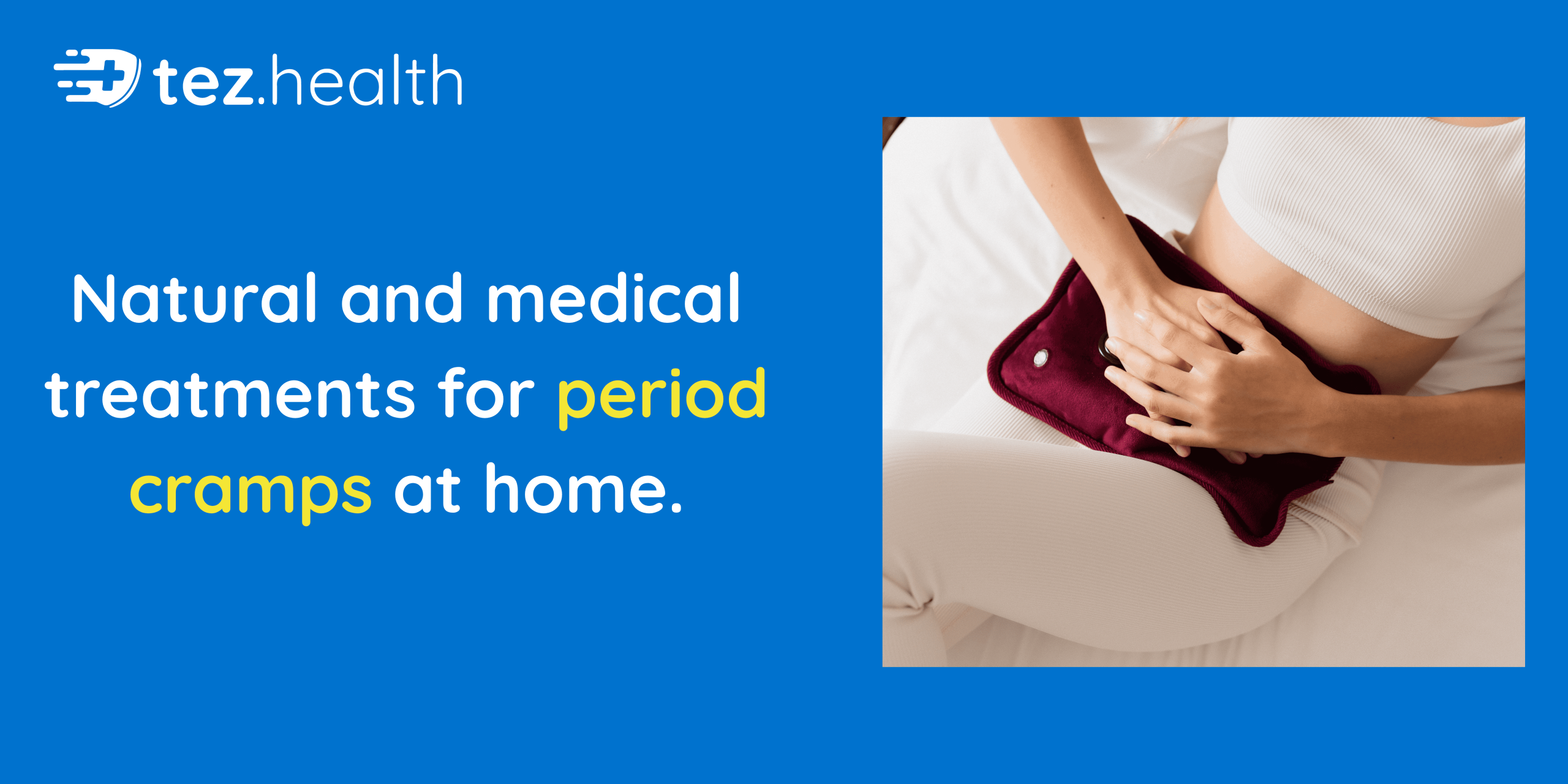
Applying heat to the lower abdomen is one of the most effective ways to relieve menstrual cramps.
Heat helps relax the uterine muscles and improves blood circulation.
You can use:
- Heating pads
- Warm water bottles
- Warm baths
Applying heat for 15–20 minutes can significantly reduce pain.
2. Herbal Teas
Certain herbal teas may help reduce menstrual discomfort.
Examples include:
- Ginger tea
- Chamomile tea
- Peppermint tea
- Cinnamon tea
These teas contain natural anti-inflammatory properties that may help relax muscles and reduce cramps.
3. Gentle Exercise
Although rest is important during menstruation, light exercise can help reduce cramps.
Activities such as:
- Walking
- Yoga
- Stretching
can improve blood circulation and release endorphins, which act as natural pain relievers.
4. Hydration
Drinking enough water can help reduce bloating and improve overall comfort during menstruation.
Warm fluids such as herbal teas or warm water with lemon may provide additional relief.
5. Healthy Diet
Nutrition plays a key role in managing menstrual pain.
Foods that may help reduce cramps include:
- Leafy green vegetables
- Fruits rich in vitamins
- Whole grains
- Foods rich in magnesium and calcium
Avoiding processed foods, caffeine, and excessive salt may also reduce symptoms.
6. Essential Oils Massage
Gentle abdominal massage with essential oils may help relieve cramps.
Common oils used include:
- Lavender oil
- Clary sage oil
- Rosemary oil
These oils may help relax muscles and improve blood circulation.
7. Adequate Rest
Rest allows the body to recover during menstruation.
Ensuring 7–8 hours of sleep supports hormonal balance and reduces fatigue.
Medical Treatments for Period Cramps
While natural remedies work for many women, some may require medical treatment for effective relief.
1. Over-the-Counter Pain Relievers
Doctors commonly recommend medications such as:
These medications reduce prostaglandin levels and help relieve pain.
However, they should be taken according to medical advice.
2. Hormonal Birth Control
For women with severe menstrual pain, doctors may recommend hormonal contraceptives.
These include:
- Birth control pills
- Hormonal patches
- Hormonal intrauterine devices (IUDs)
Hormonal treatments help regulate menstrual cycles and reduce prostaglandin production.
3. Prescription Medications
In cases of severe pain, doctors may prescribe stronger medications or therapies.
Medical evaluation helps determine the underlying cause of intense cramps.
Conditions That Can Cause Severe Period Pain
Sometimes menstrual cramps may indicate an underlying health condition.
Common conditions include:
Endometriosis
A condition where tissue similar to the uterine lining grows outside the uterus.
Uterine Fibroids
Non-cancerous growths in the uterus that may cause heavy bleeding and pain.
Pelvic Inflammatory Disease (PID)
An infection of the reproductive organs.
Adenomyosis
A condition where the uterine lining grows into the uterine muscle.
If cramps are severe or persistent, medical consultation is important.
When to Seek Medical Help
Although menstrual cramps are common, certain symptoms require medical attention.
Seek medical help if:
- Pain is severe and disrupts daily activities
- Cramps worsen over time
- Menstrual bleeding becomes unusually heavy
- Pain occurs outside the menstrual cycle
- Over-the-counter medications do not provide relief
Early diagnosis can help identify underlying conditions.
Lifestyle Changes That Help Reduce Period Cramps
Certain lifestyle habits can reduce menstrual pain over time.
Helpful changes include:
- Regular exercise
- Balanced nutrition
- Stress management
- Adequate sleep
- Avoiding smoking and excessive caffeine
These habits support hormonal balance and improve overall menstrual health.
Supporting Women’s Health at Home
Home care and awareness can significantly improve menstrual comfort.
Simple steps such as heat therapy, hydration, proper nutrition, and medical guidance allow women to manage cramps effectively at home.
Additionally, open conversations about menstrual health help reduce stigma and encourage timely medical care when needed.
Conclusion
Menstrual cramps are a common experience for many women. While mild cramps are a natural part of the menstrual cycle, severe pain should never be ignored.
Fortunately, a combination of natural remedies and medical treatments can effectively manage period cramps at home. Heat therapy, gentle exercise, proper hydration, and herbal remedies often provide relief for mild symptoms.
However, when cramps become severe or persistent, medical evaluation is essential to rule out underlying conditions.
By understanding menstrual health and adopting healthy habits, women can better manage period pain and maintain overall well-being.
FAQs on Natural & Medical treatments for period cramps
1. What causes period cramps?
Period cramps occur due to uterine contractions triggered by prostaglandins, which help the uterus shed its lining during menstruation.
2. Are period cramps normal?
Yes, mild to moderate cramps are common during menstruation. However, severe pain may indicate an underlying medical condition.
3. How long do menstrual cramps usually last?
Menstrual cramps typically last between one and three days during the beginning of the menstrual cycle.
4. Can heat therapy help relieve cramps?
Yes, applying heat to the lower abdomen helps relax uterine muscles and reduce menstrual pain.
5. What foods help reduce period cramps?
Foods rich in magnesium, calcium, and vitamins, such as leafy greens, fruits, nuts, and whole grains, may help reduce cramps.
6. When should I see a doctor for period cramps?
You should consult a doctor if cramps are severe, worsen over time, or interfere with daily activities.
7. Do exercise and yoga help with menstrual pain?
Yes, gentle exercise and yoga improve blood circulation and release endorphins, which act as natural pain relievers.
8. Can dehydration worsen menstrual cramps?
Yes, dehydration can contribute to bloating and discomfort, which may worsen cramps.
9. Are painkillers safe for menstrual cramps?
Over-the-counter pain relievers are commonly used for menstrual cramps but should be taken according to medical advice.
10. Can period cramps indicate a medical condition?
Yes, severe or persistent cramps may be associated with conditions such as endometriosis, fibroids, or pelvic infections.