
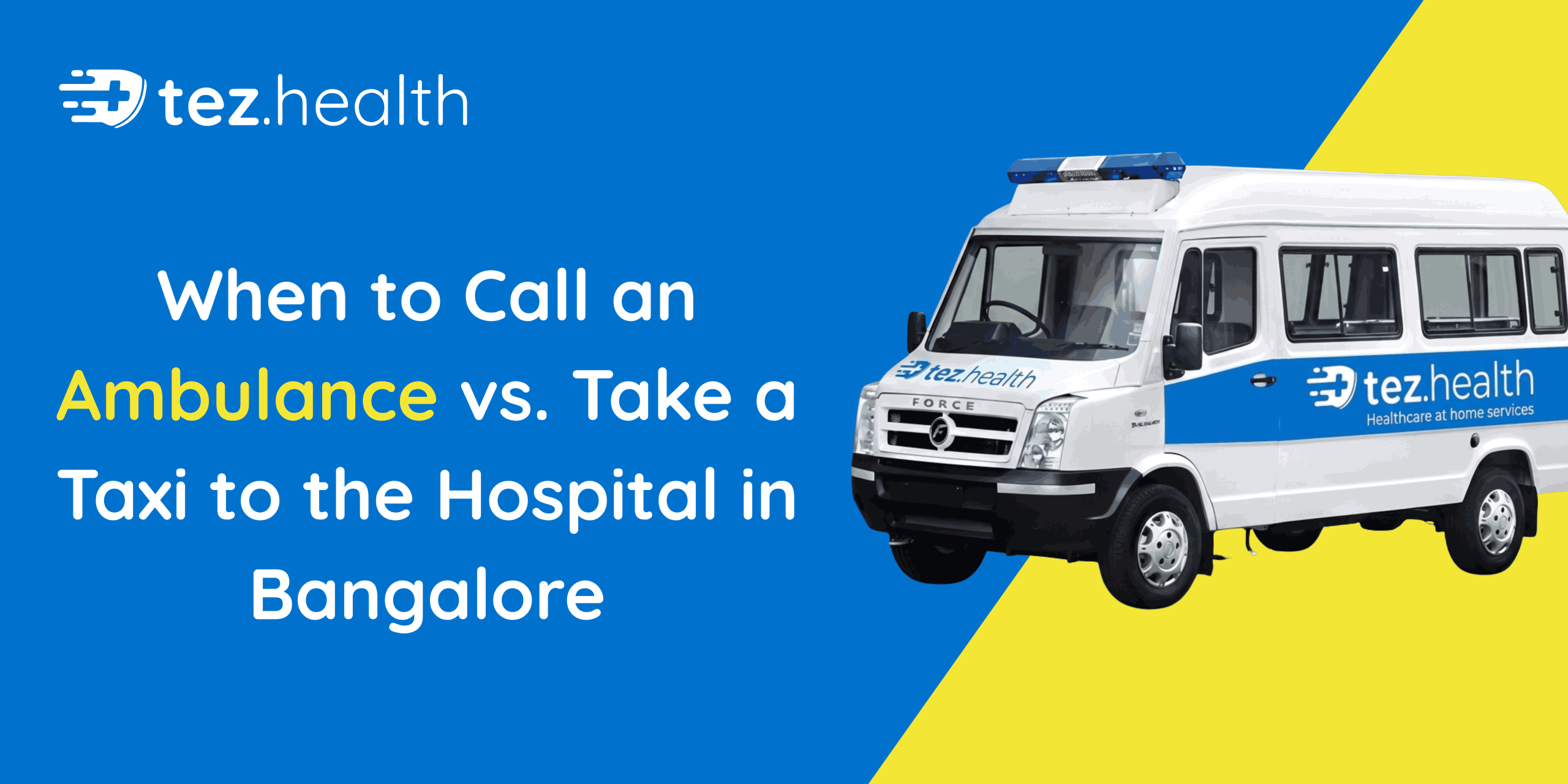
The When to Call an Ambulance Vs Take a Taxi to the Hospital in Bangalore guide is crucial for making quick, informed decisions during medical situations. In emergencies, the choice between calling an ambulance or taking a taxi can significantly impact outcomes. With increasing traffic, busy lifestyles, and rising healthcare needs in cities like Bangalore, understanding when to use emergency medical services versus alternative transport is essential for patient safety and timely care.
Why This Decision Matters
In critical situations, time and medical support during transit can mean the difference between life and death. While taxis or private vehicles may seem faster or more convenient, they lack medical equipment and trained personnel.
Making the right decision ensures:
- Immediate medical attention
- Faster stabilization
- Safe transport to the hospital
What Does an Ambulance Offer?
An ambulance is not just a vehicle—it is a mobile medical unit equipped with:
- Trained paramedics or emergency medical technicians (EMTs)
- Oxygen supply
- Cardiac monitoring equipment
- First aid and life-saving medications
- Stretchers and immobilization tools
Ambulances can begin treatment even before reaching the hospital.
When Should You Call an Ambulance?
You should call an ambulance immediately in the following situations:
1. Chest Pain or Suspected Heart Attack
- Severe chest pain
- Pain radiating to arm, jaw, or back
- Shortness of breath
2. Difficulty Breathing
- Severe breathlessness
- Asthma attack
- Oxygen levels dropping
3. Stroke Symptoms
- Sudden weakness on one side
- Slurred speech
- Confusion
4. Severe Injuries or Accidents
- Road accidents
- Heavy bleeding
- Suspected fractures
5. Loss of Consciousness
- Fainting
- Unresponsiveness
6. Seizures
- Continuous or repeated seizures
- First-time seizure
7. Severe Allergic Reactions
- Swelling of face or throat
- Difficulty breathing
8. High Fever with Complications
- Especially in children or elderly
- Accompanied by confusion or seizures
In such cases, waiting or choosing a taxi can be risky.
When Is It Okay to Take a Taxi?
In non-emergency situations, a taxi or private vehicle may be sufficient.
Suitable Scenarios:
- Mild fever or cold
- Routine doctor visits
- Minor injuries (small cuts, mild sprains)
- Scheduled checkups
- Stable chronic conditions
If the patient is conscious, stable, and not in severe distress, a taxi may be a practical option.
Key Differences: Ambulance vs Taxi
| Factor | Ambulance | Taxi |
| Medical Support | Yes | No |
| Emergency Equipment | Yes | No |
| Trained Staff | Yes | No |
| Speed in Traffic | Often prioritized | Regular traffic |
| Cost | Higher | Lower |
| Suitable For | Emergencies | Non-emergencies |
Risks of Choosing a Taxi in Emergencies
Opting for a taxi during a critical situation can lead to:
- Delayed treatment
- Worsening of condition
- Lack of medical intervention en route
- Increased risk of complications
In cities like Bangalore, traffic congestion can further delay reaching the hospital without emergency support.
Benefits of Calling an Ambulance
1. Immediate Medical Care
Paramedics can stabilize the patient during transit.
2. Faster Response
Emergency vehicles often receive priority on roads.
3. Safe Transport
Proper handling of critical patients.
4. Communication with Hospital
Ambulance teams can alert hospitals in advance.
Cost Considerations
While cost of ambulances are more expensive than taxis, the cost is justified in emergencies due to:
- Medical support
- Equipment usage
- Trained personnel
In non-critical cases, taxis remain a cost-effective choice.
How to Decide Quickly
Ask yourself the following questions:
- Is the condition life-threatening?
- Is the patient conscious and stable?
- Is immediate medical support required?
- Can the condition worsen during travel?
If the answer to any of these indicates risk, call an ambulance immediately.
Emergency Numbers and Availability
Most cities, including Bangalore, have emergency ambulance services available 24/7.
Common Emergency Numbers:
- 108 – Government ambulance service
- Private ambulance providers
Saving these numbers can help in urgent situations.
Role of Home Healthcare Services
Modern home healthcare providers in Bangalore also offer:
- On-demand ambulance services
- Emergency response support
- Medical consultation at home
This improves access to timely care.
Tips for Emergency Preparedness
- Keep emergency numbers saved
- Know the nearest hospital
- Maintain medical records handy
- Keep a basic first aid kit at home
- Stay calm and act quickly
Preparedness can save valuable time.
Common Mistakes to Avoid
- Ignoring serious symptoms
- Delaying decision-making
- Choosing cost over safety
- Not calling for help in time
Avoiding these mistakes can prevent complications.
Why Awareness Is Important
In fast-paced urban environments like Bangalore, emergencies can happen anytime. Awareness about when to call an ambulance versus taking a taxi ensures:
- Better decision-making
- Faster response
- Improved patient outcomes
Conclusion
The When to Call an Ambulance vs. Take a Taxi to the Hospital in Bangalore guide emphasizes the importance of making the right choice during medical situations. While taxis are suitable for minor or non-urgent cases, ambulances are critical for emergencies where immediate medical attention is required. Understanding the difference can save lives and ensure timely care. In cities like Bangalore, being prepared and informed is key to handling emergencies effectively.
Frequently Asked Questions on When to Call an Ambulance vs. Take a Taxi to the Hospital in Bangalore
1. When should I call an ambulance?
In life-threatening situations like heart attack, stroke, or severe injuries.
2. Can I take a taxi in an emergency?
It is not recommended for serious or critical conditions.
3. Is ambulance service available 24/7?
Yes, most services operate круглосуточно.
4. What number should I call for an ambulance in India?
Dial 108 for emergency ambulance services.
5. Are ambulances faster than taxis?
They often get priority in traffic, making them faster in emergencies.
6. Is ambulance service expensive?
It costs more than taxis but provides essential medical support.
7. Can paramedics treat patients during transport?
Yes, they provide immediate care.
8. What if I am unsure about the situation?
It is safer to call an ambulance.
9. Are private ambulances available?
Yes, many providers offer private ambulance services.
10. Can elderly patients use taxis?
Yes, if the condition is stable.
11. Do ambulances carry oxygen?
Yes, most are equipped with oxygen and medical devices.
12. Can I cancel an ambulance if not needed?
Yes, depending on the service provider.