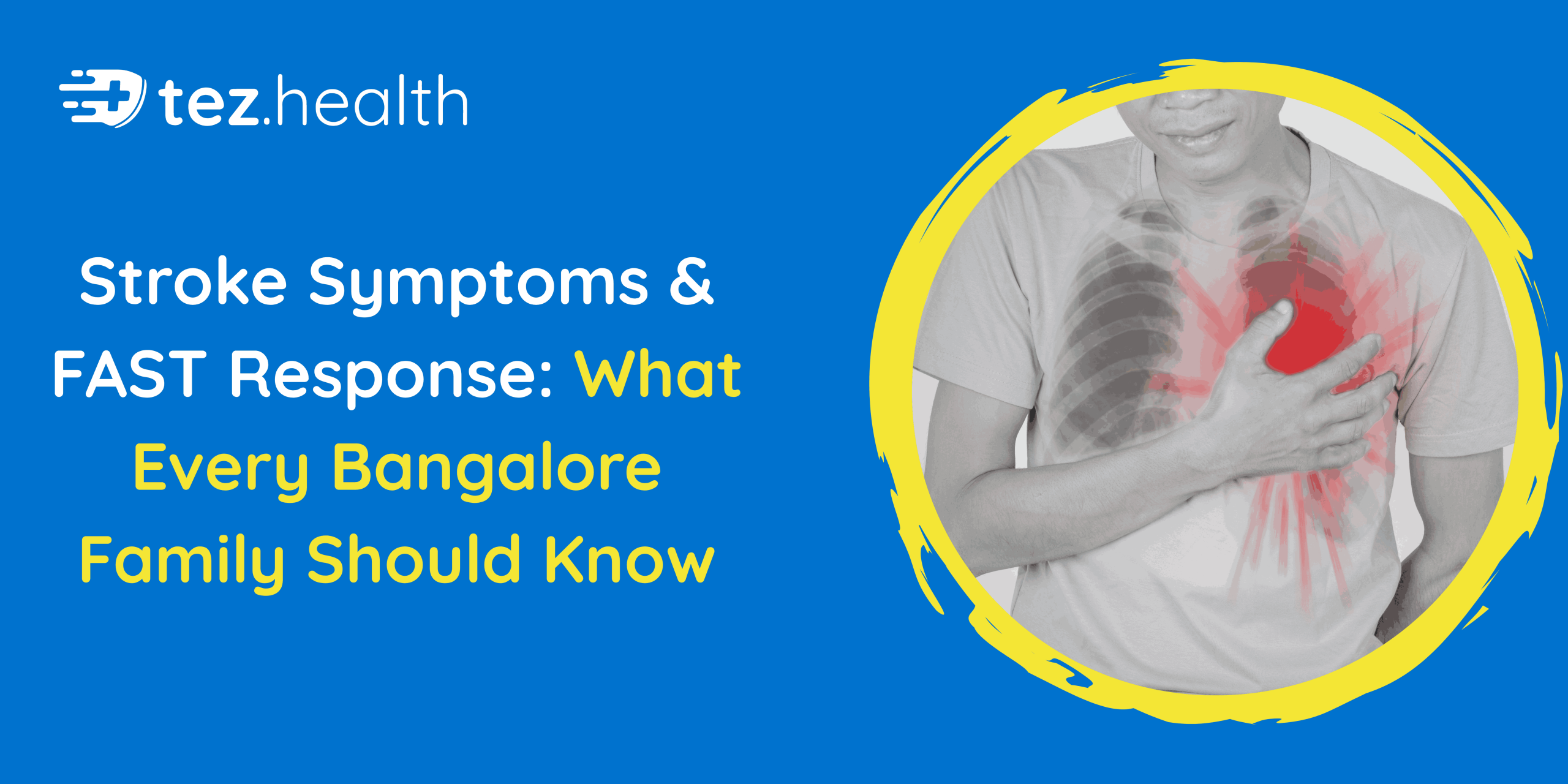
The Stroke Symptoms & FAST Response: What Every Bangalore Family Should Know guide is essential for recognizing one of the most time-sensitive medical emergencies. A stroke can happen suddenly and without warning, and immediate action can save lives and prevent long-term disability. In busy urban environments like Bangalore, where traffic and response times may vary, knowing how to identify stroke symptoms and act quickly using the FAST method can make a critical difference.
What Is a Stroke?
A stroke occurs when the blood supply to part of the brain is interrupted or reduced, depriving brain tissue of oxygen and nutrients. This can lead to brain cell damage within minutes.
There are two main types of stroke:
1. Ischemic Stroke
- Caused by a blockage in a blood vessel
- Most common type
2. Hemorrhagic Stroke
- Caused by bleeding in the brain
- Often more severe
Both types require immediate medical attention.
Why Stroke Awareness Is Important
Stroke is one of the leading causes of death and disability worldwide. Early recognition and quick response can:
- Reduce brain damage
- Improve survival rates
- Minimize long-term complications
- Increase chances of recovery
In cities like Bangalore, awareness is crucial due to increasing lifestyle-related risk factors.
Common Stroke Symptoms
Recognizing symptoms early is the first step in saving a life.
Sudden Signs to Watch For:
- Weakness or numbness on one side of the body
- Difficulty speaking or understanding speech
- Sudden confusion
- Vision problems in one or both eyes
- Severe headache with no known cause
- Loss of balance or coordination
These symptoms can appear suddenly and worsen quickly.
The FAST Method: A Life-Saving Tool
The FAST method is an easy way to identify stroke symptoms quickly.
F – Face Drooping
- Ask the person to smile
- One side of the face may droop
A – Arm Weakness
- Ask the person to raise both arms
- One arm may drift downward
S – Speech Difficulty
- Slurred or unclear speech
- Difficulty repeating simple sentences
T – Time to Call Emergency Services
- If any of these signs are present, call an ambulance immediately
Time is critical—every minute counts.
What to Do If You Suspect a Stroke
Taking immediate action can save brain function and life.
Step 1: Call Emergency Services Immediately
Dial 108 for ambulance services. Do not delay or wait for symptoms to improve.
In Bangalore, early calling helps overcome traffic delays.
Step 2: Note the Time
Record when symptoms first appeared. This helps doctors decide treatment options.
Step 3: Keep the Patient Safe and Comfortable
- Lay the person down with head slightly elevated
- Keep them calm
- Loosen tight clothing
Step 4: Do Not Give Food or Drink
Swallowing may be impaired, increasing the risk of choking.
Step 5: Monitor Breathing
Be ready to perform CPR if the patient becomes unresponsive.
What NOT to Do During a Stroke
- Do not ignore symptoms
- Do not let the person sleep it off
- Do not give medication without medical advice
- Do not delay calling an ambulance
Quick action is critical.
Risk Factors for Stroke
Understanding risk factors helps in prevention.
Medical Conditions:
- High blood pressure
- Diabetes
- High cholesterol
- Heart disease
Lifestyle Factors:
- Smoking
- Obesity
- Sedentary lifestyle
- Poor diet
- Excess alcohol
Urban populations in Bangalore are increasingly at risk due to lifestyle habits.
Prevention Tips
1. Maintain Healthy Blood Pressure
Regular monitoring is essential.
2. Eat a Balanced Diet
Reduce salt and unhealthy fats.
3. Exercise Regularly
At least 30 minutes daily.
4. Quit Smoking
Reduces risk significantly.
5. Manage Stress
Practice relaxation techniques.
6. Regular Health Checkups
Early detection of risk factors.
Importance of Early Treatment
Stroke treatments are most effective when given quickly.
Treatments May Include:
- Clot-busting medications (for ischemic stroke)
- Surgery (in certain cases)
- Rehabilitation therapy
Early hospital arrival improves recovery outcomes.
Role of Ambulance Services
Ambulances provide:
- Immediate medical support
- Oxygen and monitoring
- Faster transport
- Pre-hospital care
In emergencies, choosing an ambulance over a private vehicle is crucial.
Long-Term Impact of Stroke
If not treated promptly, stroke can lead to:
- Paralysis
- Speech difficulties
- Memory problems
- Loss of independence
Early intervention reduces these risks.
Stroke Recovery and Rehabilitation
Recovery may involve:
- Physiotherapy
- Speech therapy
- Occupational therapy
Support from family and caregivers is essential.
Why Every Family Should Know FAST
In a city like Bangalore, where families often manage emergencies at home before help arrives, knowing the FAST method ensures:
- Quick recognition
- Immediate action
- Better survival chances
Awareness can save lives.
Conclusion
The Stroke Symptoms & FAST Response: What Every Bangalore Family Should Know guide highlights the importance of recognizing stroke symptoms and acting immediately. The FAST method provides a simple and effective way to identify a stroke and take action. In fast-paced urban environments like Bangalore, being informed and prepared can make a life-saving difference. Remember—time lost is brain lost, so act FAST.
Frequently Asked Questions on Stroke Symptoms & FAST Response: What Every Bangalore Family Should Know
1. What is the FAST method?
A quick way to identify stroke symptoms: Face, Arm, Speech, Time.
2. What is the first sign of a stroke?
Sudden weakness or numbness, especially on one side.
3. Should I call an ambulance immediately?
Yes, call emergency services without delay.
4. Can stroke symptoms go away?
Temporary symptoms may occur but still require urgent care.
5. What number should I call in India?
Dial 108 for ambulance services.
6. Can young people have strokes?
Yes, especially with risk factors.
7. Is stroke preventable?
Many cases can be prevented with lifestyle changes.
8. Can stroke be treated at home?
No, it requires immediate hospital care.
9. What happens if treatment is delayed?
It can lead to permanent brain damage.
10. Can stress cause stroke?
Chronic stress increases risk.
11. How long does recovery take?
It varies depending on severity.
12. Is rehabilitation necessary?
Yes, it helps regain lost functions.