
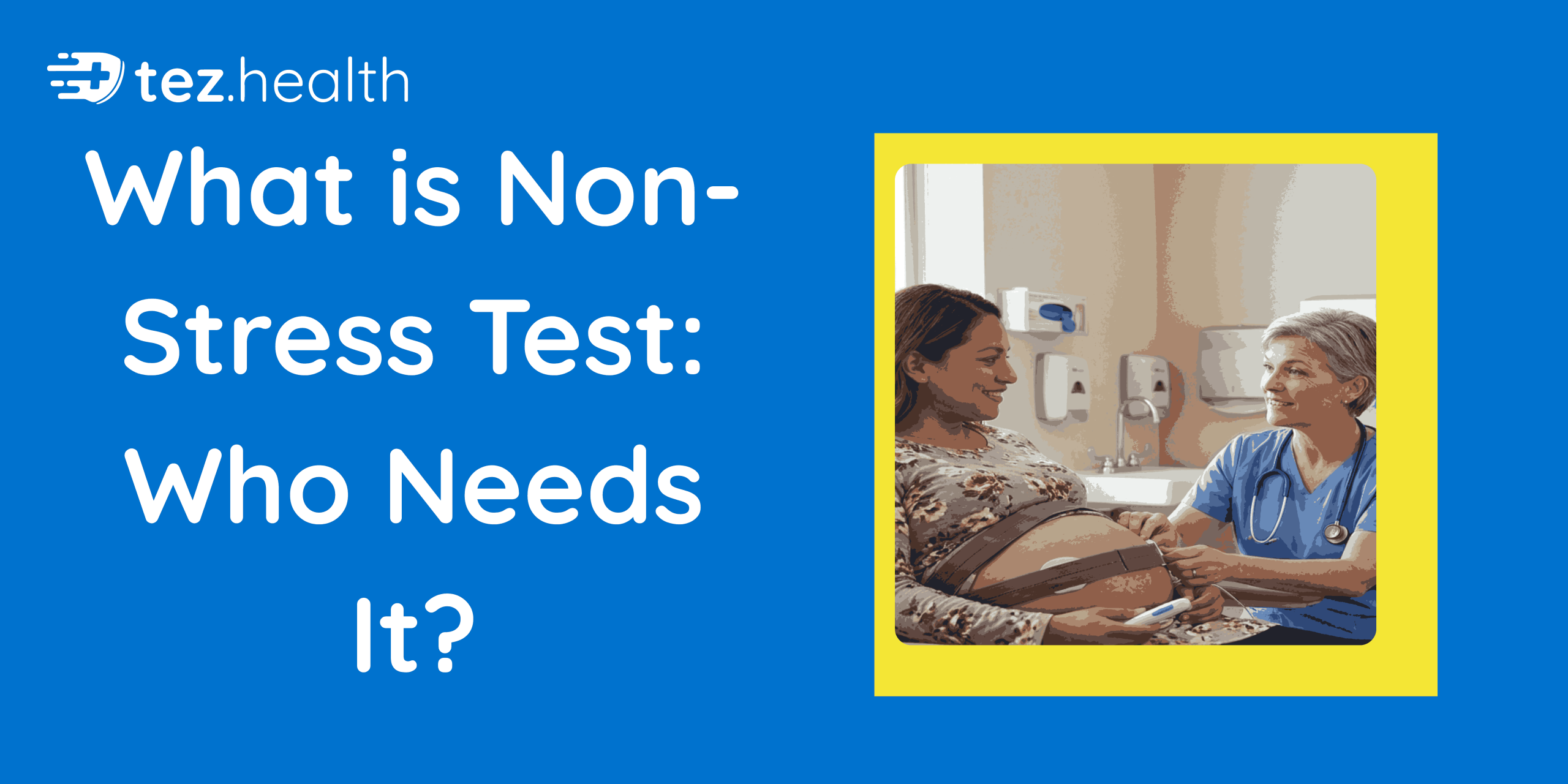
At Tez Health, we believe timely monitoring can make all the difference—especially when it comes to heart health and overall well-being. While specialized tests like Non-Stress Tests (NST) are conducted in clinical settings for specific conditions, many early signs of cardiac issues can be detected through a simple and effective ECG (Electrocardiogram) test at home. With our doorstep healthcare services, you can avoid hospital visits and still get accurate heart monitoring within minutes. Our trained professionals ensure a smooth and comfortable experience, helping detect irregular heart rhythms and early warning signs without delay. While NST and other advanced tests serve specific purposes, starting with an ECG at home is a smart and convenient first step toward proactive health care.
What is a Non-Stress Test (NST)?
A Non-Stress Test (NST) is a non-invasive diagnostic test commonly used during pregnancy to monitor the health and well-being of the fetus. It measures the baby’s heart rate and how it responds to movements.
The term “non-stress” refers to the fact that no stress is placed on the baby during the test.
Why is a Non-Stress Test Done?
NST is performed to ensure that the baby is receiving enough oxygen and is healthy.
Common Reasons for NST:
- High-risk pregnancy
- Reduced fetal movements
- Post-term pregnancy (beyond due date)
- Maternal conditions like diabetes or hypertension
- Previous pregnancy complications
How Does a Non-Stress Test Work?
The NST measures fetal heart rate patterns in response to movements. A healthy baby’s heart rate typically increases when they move.
Who Needs a Non-Stress Test?
NST is recommended for:
- Pregnant women after 28–32 weeks
- Women with high-risk pregnancies
- Mothers experiencing decreased fetal movement
- Women with medical conditions affecting pregnancy
Procedure of a Non-Stress Test
The NST is simple, safe, and painless.
Step-by-Step Process:
- Positioning
The mother lies comfortably on a bed or reclined chair. - Sensor Placement
Two sensors are placed on the abdomen:- One monitors fetal heart rate
- The other detects contractions
- Monitoring
The test records the baby’s heart rate over 20–40 minutes. - Movement Tracking
The mother may be asked to press a button when she feels the baby move.
Understanding NST Results
1. Reactive NST (Normal)
- Baby’s heart rate increases with movement
- Indicates good oxygen supply
2. Non-Reactive NST
- No significant heart rate changes
- May require further testing
Benefits of Non-Stress Test
- Non-invasive and painless
- Safe for both mother and baby
- Provides quick results
- Helps detect fetal distress early
Risks and Limitations of NST
Risks:
- No known risks
Limitations:
- False non-reactive results may occur
- May require follow-up tests.
NST vs Other Prenatal Tests
| Test | Purpose | When Used |
| NST | Monitor fetal heart rate | Routine/high-risk pregnancy |
| Ultrasound | Visualize baby | Growth & development |
| Biophysical Profile | Combined assessment | Detailed evaluation |
Role of ECG in General Health Monitoring
While NST focuses on fetal health, ECG plays a crucial role in monitoring maternal heart health, especially during pregnancy.
Why ECG is Important:
- Detects heart rhythm abnormalities
- Monitors maternal cardiac health
- Ensures safe pregnancy management
ECG at Home with Tez Health
Tez Health provides ECG testing at home, making it easier for pregnant women and families to monitor heart health without stress.
Advantages:
- No hospital visits
- Quick and convenient
- Safe for mothers
- Ideal for routine monitoring
When Should You Consult a Doctor?
Seek medical attention if:
- Decreased fetal movements
- High-risk pregnancy conditions
- Abnormal NST results
- Maternal health concerns
Preventive Care During Pregnancy
- Regular prenatal check-ups
- Balanced diet
- Adequate rest
- Stress management
- Timely diagnostic tests
Conclusion
The Non-Stress Test (NST) is an essential tool for monitoring fetal health, especially in high-risk pregnancies. It is safe, non-invasive, and provides valuable insights into the baby’s well-being.
While NST focuses on the baby, maternal health is equally important. Simple tests like ECG can help monitor the mother’s heart health and ensure a safe pregnancy journey.
With Tez Health’s ECG at home services, you can take proactive steps toward better health—comfortably and conveniently.
FAQs (Frequently Asked Questions)
1. What is a non-stress test?
It is a test used during pregnancy to monitor the baby’s heart rate.
2. Is NST safe?
Yes, it is completely safe and non-invasive.
3. How long does an NST take?
Usually 20–40 minutes.
4. When is NST recommended?
In high-risk pregnancies or after 28 weeks.
5. What does a reactive NST mean?
It indicates the baby is healthy.
6. What if NST results are abnormal?
Further tests may be required.
7. Can NST be done at home?
Typically, it is done in clinics or hospitals.
8. Is ECG needed during pregnancy?
Yes, for monitoring maternal heart health.
9. Can I get ECG at home?
Yes, Tez Health provides doorstep ECG services.
10. How can I book ECG at home?
You can easily book through TEZ Health for quick and reliable service.