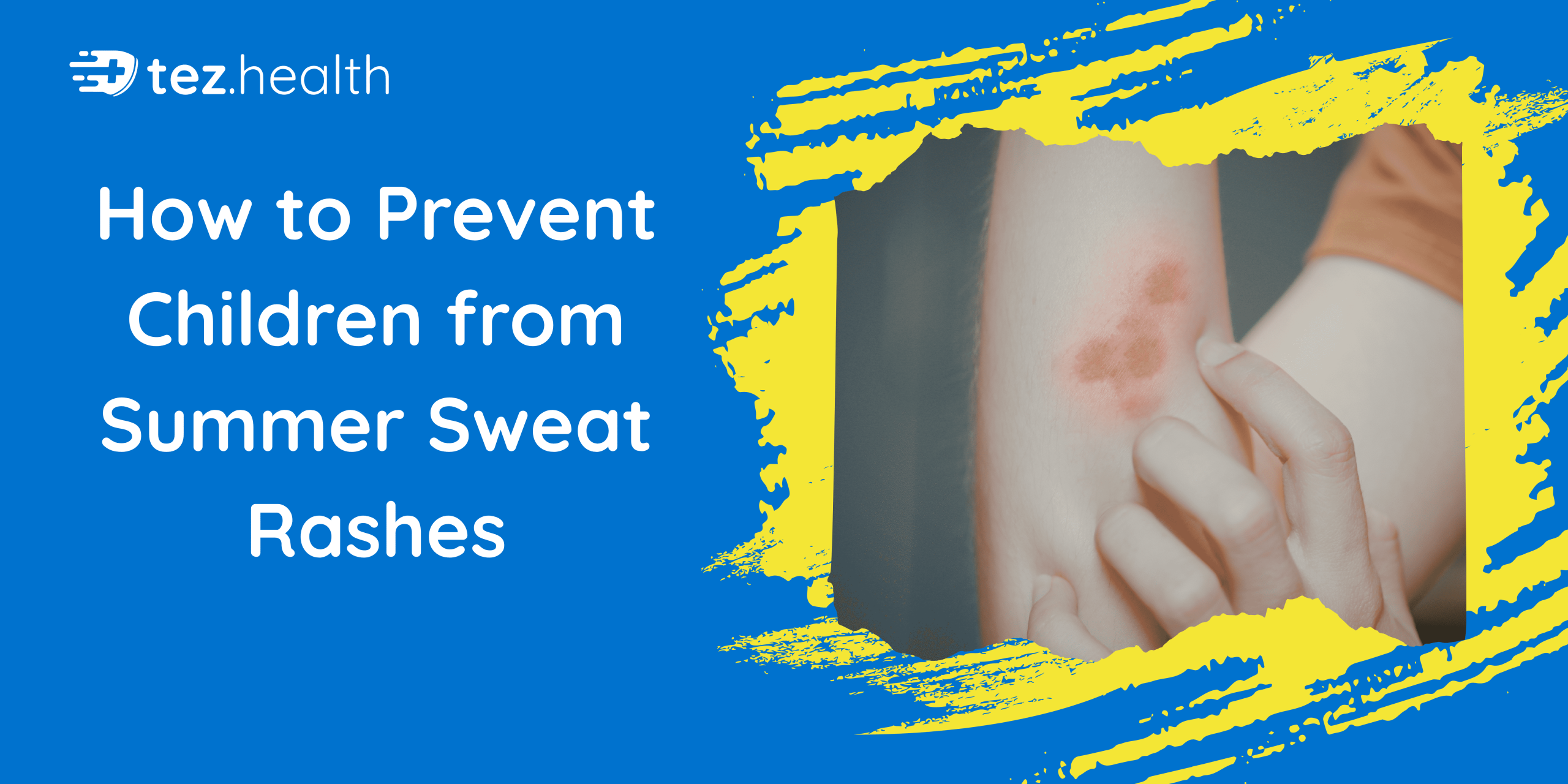
Prevent Children from Summer Sweat Rashes by understanding how heat, humidity, and excessive sweating can irritate delicate skin and lead to itchy, red rashes in kids. These rashes are commonly caused by blocked sweat glands, tight clothing, and prolonged exposure to heat. Symptoms include redness, tiny bumps, itching, and discomfort, especially in areas like the neck, back, and folds of the skin. Prevention is simple—keep your child cool and dry, dress them in loose, breathable cotton clothes, ensure regular bathing, and avoid heavy creams that block pores.
Give your child the comfort and care they deserve without stepping out in the heat. With TEZ Health, you get quick doctor consultations, expert pediatric guidance, and at-home healthcare services—making it easier to manage your child’s health safely and conveniently right from home.
What Are Summer Sweat Rashes in Children?
Summer sweat rashes, also known as heat rashes or prickly heat, occur when sweat gets trapped in the skin due to blocked sweat glands. This leads to irritation, redness, and small itchy bumps on the skin.
Children are more prone to sweat rashes because their sweat glands are not fully developed, making it harder for their bodies to regulate temperature.
Causes of Sweat Rashes in Children
Sweat rashes are mainly caused by:
- Excessive sweating
- Hot and humid weather
- Tight or non-breathable clothing
- Poor ventilation
- Prolonged exposure to heat
When sweat cannot evaporate properly, it gets trapped under the skin, leading to rashes.
Common Symptoms of Sweat Rashes
Recognizing symptoms early can help prevent worsening.
Signs to Look For:
- Small red or pink bumps
- Itching or prickling sensation
- Skin irritation
- Mild swelling
- Discomfort, especially in folds of skin
Areas Where Sweat Rashes Commonly Occur
- Neck
- Back
- Chest
- Underarms
- Elbow folds
- Diaper area
These areas tend to trap more sweat and heat.
Types of Heat Rashes
1. Miliaria Crystallina
- Mild form
- Clear, small blisters
- Not itchy
2. Miliaria Rubra (Prickly Heat)
- Most common
- Red bumps and itching
3. Miliaria Profunda
- Rare and deeper
- More serious condition
How to Prevent Sweat Rashes in Children
Prevention is the best approach.
1. Keep the Child Cool
- Use fans or air conditioning
- Avoid overheating
- Keep indoor spaces ventilated
2. Dress in Lightweight Clothing
- Choose loose, cotton clothes
- Avoid synthetic fabrics
- Change clothes frequently if sweaty
3. Maintain Proper Hygiene
- Bathe your child daily
- Use mild soaps
- Keep skin clean and dry
4. Avoid Excessive Sweating
- Limit outdoor activities during peak heat
- Encourage indoor play
5. Use Powder Carefully
- Apply doctor-recommended powders
- Avoid overuse
6. Keep Skin Dry
- Gently pat skin dry after sweating
- Avoid rubbing
7. Ensure Proper Hydration
- Give plenty of fluids
- Prevent dehydration
Home Remedies for Sweat Rashes
Mild cases can be managed at home.
- Cool baths
- Aloe vera gel
- Calamine lotion
- Coconut oil (in small amounts)
When to Consult a Doctor
Seek medical help if:
- Rash worsens
- Signs of infection appear
- Child has fever
- Rash does not improve in a few days
With Tez Health, you can easily arrange a doctor visit at home for quick and comfortable care.
Benefits of Doctor Visit at Home for Children
- Comfortable environment for the child
- Reduced exposure to infections
- Faster diagnosis
- Personalized care
Common Mistakes to Avoid
- Using harsh soaps
- Overdressing children
- Ignoring early symptoms
- Applying heavy creams
- Keeping child in hot environments
Preventive Tips for Parents During Summer
- Keep your home cool
- Monitor child’s skin regularly
- Encourage hydration
- Maintain hygiene
- Avoid peak sun hours
Impact of Heat on Children’s Health
Apart from rashes, heat can cause:
- Dehydration
- Heat exhaustion
- Fatigue
- Skin infections
Proper care can prevent these issues.
Why Home Healthcare is Important in Summer
Summer heat makes hospital visits uncomfortable. Home healthcare provides:
- Quick medical attention
- Comfort and safety
- Reduced exposure to heat
- Convenient care
How Tez Health Supports Families
Tez Health offers:
- Doctor visits at home
- Nursing care at home
- Quick responsive customer support team
- Professional healthcare support at home on time
Conclusion
Frequently Asked Questions (FAQ’s) on How to Prevent Children from Summer Sweat Rashes
1. What are summer sweat rashes in children?
They are skin irritations caused by blocked sweat glands, leading to small red bumps, itching, and discomfort in hot weather.
2. What causes sweat rashes in kids?
Excessive sweating, heat, humidity, tight clothing, and poor ventilation are the main causes.
3. What are the common symptoms of sweat rashes?
Redness, tiny bumps, itching, prickling sensation, and irritation—especially in skin folds like the neck, armpits, and back.
4. How can I prevent sweat rashes in my child?
Keep your child cool and dry, dress them in loose cotton clothes, ensure regular bathing, and avoid overheating.
5. Which fabrics are best for preventing rashes?
Soft, breathable fabrics like cotton are ideal as they allow air circulation and absorb sweat.
6. How often should children bathe in summer?
At least once or twice a day, depending on sweating and outdoor activity.
7. Can powders help prevent sweat rashes?
Yes, mild, child-safe powders can help absorb moisture, but they should be used in moderation.
8. Are sweat rashes harmful?
They are usually harmless but can cause discomfort. If left untreated, they may lead to infections.
9. When should I consult a doctor?
If the rash becomes severe, spreads, causes pain, or shows signs of infection like pus or fever.
10. Can sweat rashes go away on their own?
Yes, mild cases often resolve with proper cooling, hygiene, and care.
11. Should I avoid outdoor play completely?
No, but limit outdoor activities during peak heat hours and keep your child hydrated.
12. Can creams or lotions worsen sweat rashes?
Heavy or oily creams can block pores and worsen rashes, so light, doctor-recommended products are better.