When people think about healthcare costs in India, hospitals are usually the first thing that comes to mind.
But as home healthcare becomes more common, many patients and families are asking:
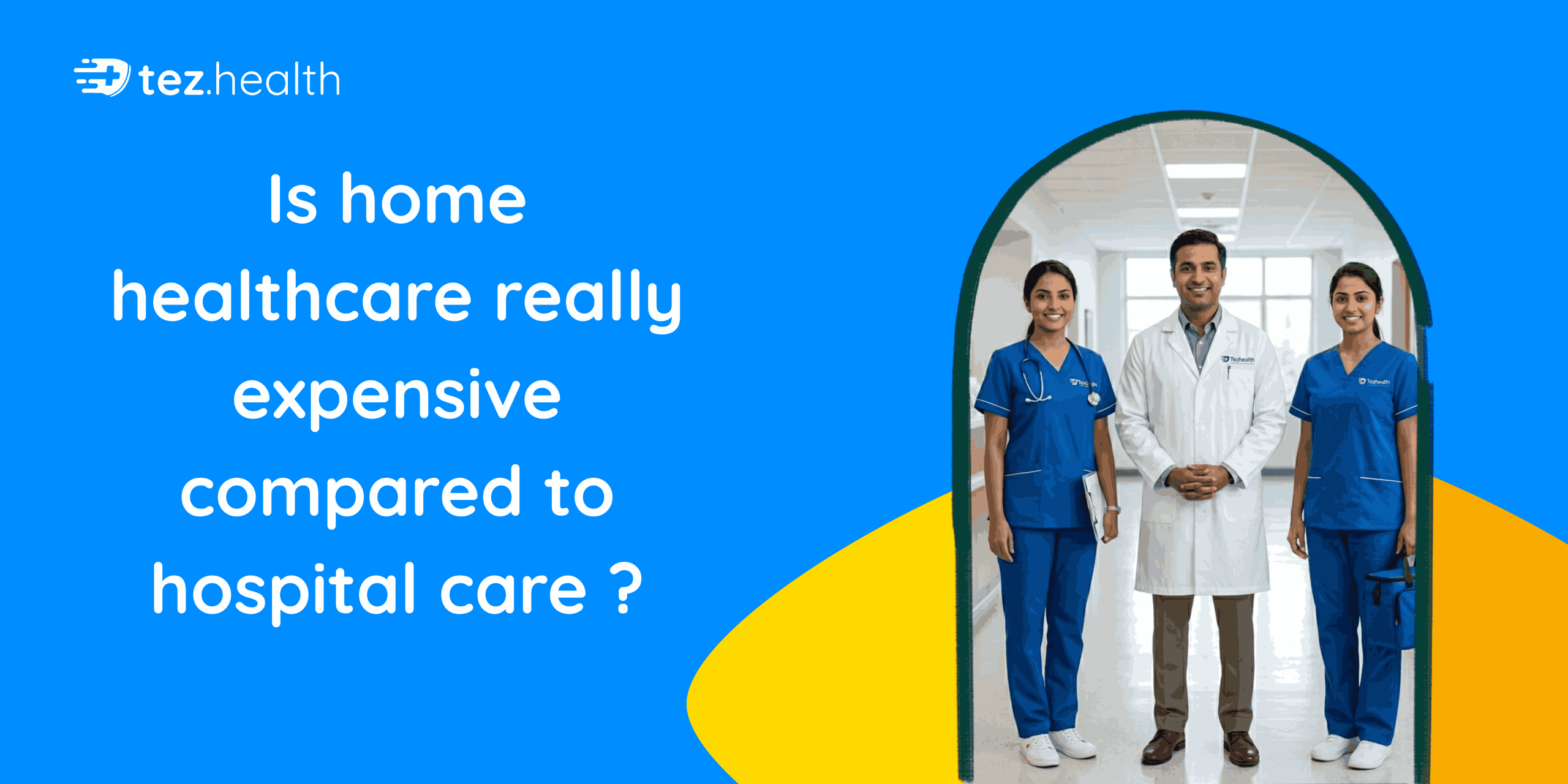
Is getting treated at home actually cheaper—or does it just look that way?
At first, home healthcare can seem costly. Paying for nurses, medical equipment, and home visits feels like a premium service.
However, when you look closely at how healthcare expenses are structured, the picture changes.
In many situations, home healthcare turns out to be more cost-effective than hospital care.
The key is understanding how costs are built in both models.
Why Hospital Care Costs Add Up Quickly
Hospital bills are rarely just about treatment.
They include multiple layers of expenses that are not always obvious at first.
1. Facility and Infrastructure Charges
Hospitals maintain large facilities, and patients are charged for:
- Rooms or ICU beds
- Equipment usage
- Maintenance and utilities
These costs are fixed and apply regardless of how much care a patient actually uses.
2. Staffing and Operational Costs
Hospitals operate with large teams:
- Doctors
- Nurses
- Technicians
- Administrative staff
The cost of running this system is included in patient bills.
3. Diagnostics and Monitoring
Tests and monitoring are often repeated in hospital settings. While many are necessary, they still add to the overall cost.
4. Administrative Expenses
Billing systems, coordination, and hospital operations also contribute to the final bill.
The result is simple:
Hospital care is expensive not just because of treatment—but because of the entire system behind it.
How Home Healthcare Works Differently
Home healthcare follows a different approach.
Instead of charging for infrastructure, it focuses on delivering care directly to the patient.
1. No Room or Facility Charges
At home, there are no hospital beds or room rents.
This removes one of the biggest cost components.
2. Pay Only for Required Services
Patients pay for:
- Nursing care
- Medical equipment (if needed)
- Doctor visits
There are no bundled facility costs.
3. Flexible Care Options
Home care can be tailored based on need:
- Short-term care
- Long-term care
- Part-time or full-time support
This flexibility helps control expenses.
Why Home Healthcare Sometimes Feels Expensive
Even when it is more affordable overall, home healthcare can feel costly.
Here’s why.
1. Costs Are Visible
At home, every service is billed separately.
This makes the cost more noticeable.
In hospitals, many costs are combined into one bill, which feels less immediate.
2. Upfront Payments
Home care often requires direct payment.
Hospital expenses are sometimes covered by insurance, reducing the immediate burden.
3. Per-Service Pricing
Since services are not bundled, patients may feel they are paying more—even when total costs are lower.
When Home Healthcare Is More Affordable
Home healthcare becomes significantly more cost-effective in certain situations.
1. Recovery After Hospitalization
Patients who no longer need hospital supervision can continue care at home.
This reduces daily expenses while maintaining necessary support.
2. Long-Term Medical Conditions
Chronic illnesses require ongoing care.
Managing these conditions at home avoids repeated hospital admissions and reduces overall cost.
3. Elderly Care
Older patients often need continuous assistance.
Home care provides consistent support without the expense of long hospital stays.
4. Rehabilitation
Physiotherapy and recovery services are often more affordable and convenient at home.
When Hospital Care Makes More Sense
Home healthcare is not always the cheaper option.
There are situations where hospitals are necessary.
1. Emergencies
Hospitals provide immediate intervention and advanced support.
Home care is not designed for urgent situations.
2. Complex Medical Conditions
Patients requiring multiple specialists or advanced procedures need hospital care.
3. Short-Term Treatments
For very short stays, the cost difference between home and hospital may not be significant.
The Hidden Costs You Might Not Consider
Cost comparisons are not always straightforward.
Both hospital and home care have hidden expenses.
Hidden Costs of Hospital Care
- Travel to and from the hospital
- Time away from work
- Accommodation for family members
- Physical and emotional strain
Hidden Costs of Home Healthcare
- Care coordination by family members
- Minor home adjustments
- Increased utility usage
Beyond Cost: Looking at Value
Healthcare decisions should not be based on cost alone.
They should focus on overall value.
What Does Value Include?
- Quality of care
- Comfort for the patient
- Speed of recovery
- Long-term health outcomes
Home healthcare often provides:
- Personalized attention
- Familiar surroundings
- Reduced stress
- Lower risk of infections
These factors can improve recovery and reduce future medical expenses.
Why More Patients Are Choosing Home Healthcare
The shift toward home care is driven by multiple factors:
- Rising hospital costs
- Increase in chronic diseases
- Ageing population
- Need for convenience
Patients are looking for solutions that are both effective and sustainable.
The Tez Health Approach
At Tez Health, the focus is not just on reducing costs.
It is about delivering efficient and reliable care without unnecessary expenses.
1. Transparent Pricing
Patients should clearly understand what they are paying for.
2. Need-Based Services
Care is designed based on patient requirements—not unnecessary additions.
3. Reduced Overhead
By avoiding large infrastructure costs, services remain more affordable.
4. Quality Assurance
Cost savings should never compromise medical standards.
So, Is Home Healthcare Really Expensive?
Let’s answer the question directly.
Home healthcare is not inherently expensive.
In many cases, it is more cost-effective than hospital care.
However:
The right choice depends on the patient’s condition and type of care required.
Final Thoughts
Instead of asking:
“Which option is cheaper?”
It is better to ask:
“Which option provides the right care at the right cost?”
Hospitals are essential for:
- Emergencies
- Surgeries
- Critical care
Home healthcare is ideal for:
- Recovery
- Long-term care
- Ongoing support
When used appropriately, home healthcare can:
- Reduce financial burden
- Improve patient experience
- Deliver effective outcomes
At Tez Health, the goal is simple:
Make healthcare not just accessible—but also practical and sustainable for patients and families.
Because the true value of healthcare lies not just in treatment—But in delivering the right care, in the right place, at the right cost.