
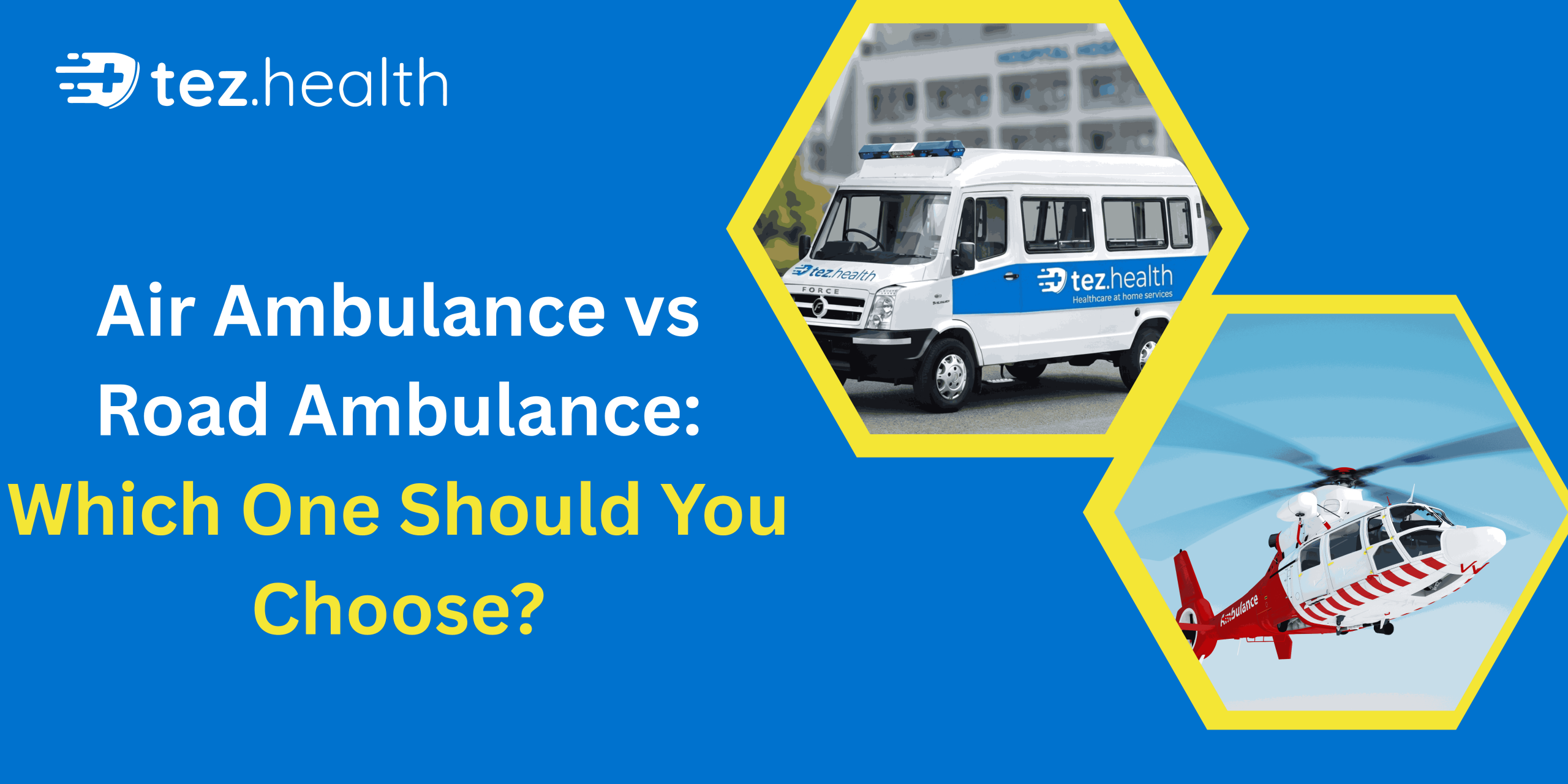
Medical emergencies demand swift decision-making. One of the most critical choices families face during a crisis is selecting the right mode of medical transport. Should you opt for an air ambulance or a road ambulance? The answer depends on several factors, including the patient’s condition, distance, urgency, geography, and available medical infrastructure.
In India, with its vast geography, dense urban populations, remote rural regions, and challenging terrains, both air ambulances and road ambulances play vital roles in the emergency healthcare system. However, understanding when to choose each option can significantly impact survival rates, recovery outcomes, and financial planning.
This comprehensive guide explores the differences between air ambulance and road ambulance services, their advantages, limitations, costs, medical capabilities, and practical scenarios to help you make an informed decision during a medical emergency.
Understanding Road Ambulance Services
Road ambulances are the most common and widely used emergency medical transport vehicles. They operate via road networks and are categorized based on the level of medical support provided.
Types of Road Ambulances
In types Road Transport we have :
- Basic Life Support (BLS) Ambulance
- Advanced Life Support (ALS) Ambulance
- ICU Ambulance
- Neonatal Ambulance
Each type is designed to handle specific levels of medical emergencies.
Features of Road Ambulances
- Oxygen supply
- Cardiac monitor
- Defibrillator
- Suction apparatus
- Emergency medications
- IV fluids
- Trained paramedics
- In some cases, a doctor onboard
Road ambulances are typically the first responders in urban and semi-urban areas.
Understanding Air Ambulance Services
Air ambulances are specially equipped aircraft or helicopters designed to transport critically ill or injured patients over long distances quickly.
Types of Air Ambulances
- Helicopter Ambulance
- Fixed-Wing Aircraft Ambulance
Helicopters are generally used for short-distance emergency transfers, especially in inaccessible or congested areas. Fixed-wing aircraft are used for intercity or international medical transfers.
Features of Air Ambulances
- ICU-level medical setup
- Ventilators
- Advanced cardiac monitoring
- Emergency medications
- Portable oxygen systems
- Trained critical care team
- Specialist doctors when required
Air ambulances function as flying intensive care units.
Key Differences Between Air Ambulance and Road Ambulance
1. Speed and Response Time
Air Ambulance:
- Extremely fast over long distances
- Bypasses road traffic
- Ideal for intercity or interstate transfers
Road Ambulance:
- Dependent on traffic conditions
- Slower over long distances
- Faster for short urban distances
If the patient needs rapid transport over hundreds of kilometers, air ambulance is typically the better choice.
2. Distance Coverage
Air Ambulance:
- Suitable for distances above 300–400 km
- Can transport patients across states
- International medical evacuation possible
Road Ambulance:
- Ideal for city or nearby hospital transfers
- Practical for distances under 250–300 km
For remote villages, hilly regions, or islands, air ambulance is often necessary.
3. Accessibility
Road Ambulance:
- Accessible in most urban and rural roads
- Cannot access areas with severe traffic blockages easily
- Limited in mountainous or flood-prone regions
Air Ambulance:
- Can land at airports or designated helipads
- Helicopters can reach inaccessible terrains
- Useful during floods, landslides, or disasters
Air ambulances are particularly beneficial in remote or disaster-affected areas.
4. Cost Comparison
Cost is a major deciding factor.
Road Ambulance:
- Significantly more affordable
- Charges depend on distance, equipment, and type (BLS/ALS/ICU)
- Suitable for most emergency cases
Air Ambulance:
- Expensive due to aviation costs
- Charges depend on aircraft type, distance, medical team, and logistics
- Often requires advance payment
Air ambulance services may cost several lakhs depending on the distance and medical setup.
5. Medical Capabilities
Road Ambulance:
- ALS and ICU ambulances provide high-level care
- Suitable for most emergencies
- Can manage cardiac arrest, trauma, and respiratory failure
Air Ambulance:
- Equipped for critical care transport
- Designed for ventilated patients
- Suitable for organ transplant transfers
- Ideal for unstable ICU patients needing rapid relocation
Both can provide advanced care, but air ambulances are more suitable for long-distance ICU transfers.
When Should You Choose a Road Ambulance?
Road ambulances are appropriate in the following situations:
1. Short Distance Transfers
If the hospital is within city limits or nearby, road ambulance is sufficient and cost-effective.
2. Non-Critical Transfers
Patients who are stable but need medical supervision during transport.
3. Post-Surgery Transfers
Transporting patients from hospital to home with oxygen support or basic monitoring.
4. Routine Emergency Cases
- Fractures
- Moderate breathing difficulty
- Controlled cardiac issues
- Fever with complications
5. Budget Constraints
When financial considerations are significant, road ambulance offers reliable medical care at a lower cost.
When Should You Choose an Air Ambulance?
Air ambulance is recommended in the following scenarios:
1. Critical ICU Transfers Over Long Distances
If a patient needs specialized treatment in another city urgently, air ambulance ensures rapid relocation.
2. Organ Transplant Transport
Time-sensitive organ transfers require rapid air transport.
3. Severe Trauma in Remote Areas
Accidents in mountainous or remote regions may require helicopter evacuation.
4. International Medical Evacuation
For patients needing treatment abroad or repatriation.
5. Natural Disasters
Floods, earthquakes, and landslides may make roads inaccessible.
Medical Condition as the Primary Deciding Factor
The patient’s condition plays the most critical role.
Choose Road Ambulance If:
- Patient is stable
- Travel time is short
- Immediate advanced procedures are not required
Choose Air Ambulance If:
- Patient is on ventilator
- Multi-organ failure present
- Rapid deterioration risk
- Delay could worsen survival chances
A medical professional should ideally assess and recommend the appropriate mode.
Urban vs Rural Considerations
In Metro Cities:
- Traffic congestion can delay road ambulances.
- However, short distances may still favor road transport.
In Rural Areas:
- Long travel times to tertiary hospitals may require air transport.
- Limited local facilities may necessitate urgent intercity transfer.
Safety Considerations
Both air and road ambulances maintain strict safety standards.
Road Ambulance Safety:
- Subject to traffic risks
- Can face road delays
- Stable during transport
Air Ambulance Safety:
- Regulated aviation protocols
- Weather-dependent
- Requires coordinated ground transport to and from airports
Weather conditions can delay air ambulance operations.
Logistics and Coordination
Road Ambulance:
- Direct hospital-to-hospital transfer
- Minimal coordination required
Air Ambulance:
- Requires airport clearance
- Ground ambulance at departure and arrival
- Medical team coordination
- Aviation permissions
Air transport involves more complex planning.
Time Sensitivity and Golden Hour
In trauma and stroke cases, the golden hour is critical.
If the nearest advanced hospital is several hundred kilometers away, air ambulance may significantly improve survival chances by reducing travel time.
If advanced care is within city limits, road ambulance is adequate.
Insurance and Financial Planning
Some health insurance policies cover ambulance services, including air ambulance under specific conditions.
It is important to:
- Check policy coverage
- Confirm pre-authorization requirements
- Understand reimbursement policies
Air ambulance coverage is often limited and conditional.
Emotional and Practical Considerations
Families often feel pressured during emergencies. Choosing the most expensive option does not always mean better care.
Decision should be based on:
- Medical urgency
- Distance
- Doctor’s advice
- Patient stability
- Budget capacity
Making a rational decision under stress requires guidance from medical professionals.
Real-Life Scenarios
Scenario1: A heart attack patient in Delhi needs transport to a nearby cardiac hospital.
→ Road ALS ambulance is sufficient.
Scenario2: A severe head injury patient in a remote Himalayan village requires neurosurgery in Delhi.
→ Air ambulance is the safer choice.
Scenario3: A stable cancer patient requires transfer from Mumbai to Pune for treatment.
→ Road ICU ambulance is appropriate.
Scenario4: A ventilated patient requires urgent liver transplant in Chennai from another state.
→ Air ambulance is recommended.
Advantages and Disadvantages Summary
Road Ambulance Advantages
- Affordable
- Widely available
- Direct hospital transfer
- Suitable for most emergencies
Road Ambulance Disadvantages
- Traffic delays
- Slower for long distances
Air Ambulance Advantages
- Fast over long distances
- Ideal for critical ICU transfers
- Access to remote areas
Air Ambulance Disadvantages
- High cost
- Weather dependency
- Complex logistics
The Role of Medical Guidance
Never decide purely based on speed or cost. A qualified doctor should evaluate:
- Vital stability
- Ventilator requirement
- Cardiac risk
- Oxygen dependency
- Travel duration tolerance
Professional assessment ensures patient safety.
Future of Medical Transport in India
With advancements in healthcare infrastructure:
- More integrated ambulance networks are emerging
- Telemedicine is improving pre-transport stabilization
- Air ambulance services are expanding in tier-2 cities
- Helicopter emergency medical services (HEMS) are increasing
Improved coordination between road and air systems will enhance patient outcomes.
Final Verdict: Which One Should You Choose?
There is no universal answer. The right choice depends on:
- Distance
- Patient condition
- Urgency
- Accessibility
- Budget
- Medical advice
Choose Road Ambulance when:
- Distance is short
- Patient is stable
- Urban hospital access is nearby
Choose Air Ambulance when:
- Distance is long
- Time is extremely critical
- Patient is unstable
- Remote access is required
Conclusion
Both air ambulance and road ambulance services are essential components of modern emergency healthcare. They are not competitors but complementary systems designed to address different needs.
Road ambulances handle the majority of emergency cases effectively, especially within cities and short distances. Air ambulances serve as life-saving options for critical long-distance transfers and remote evacuations.
The key is informed decision-making. In medical emergencies, time, stability, and expert guidance should dictate your choice—not panic or assumption.
Choosing the right ambulance service at the right time can significantly impact survival, recovery, and long-term health outcomes.
In moments when every second matters, making the right transport decision truly saves lives.