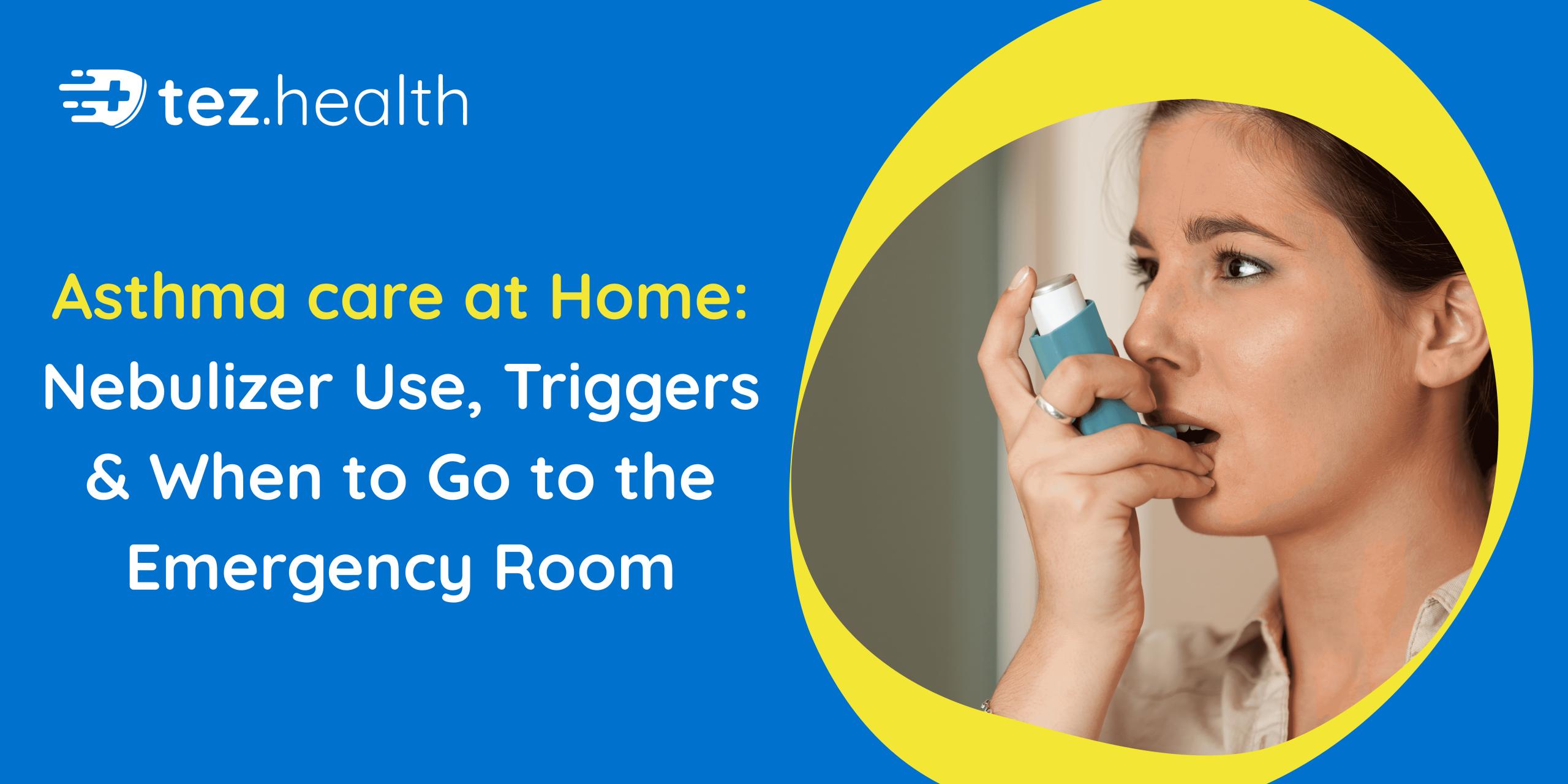
The Asthma Care at Home: Nebulizer Use, Triggers & When to Go to the Emergency Room guide is essential for individuals and families managing asthma in a home setting. Asthma is a chronic respiratory condition that can cause sudden breathing difficulties if not properly controlled. With increasing pollution, allergens, and lifestyle factors in cities like Bangalore, managing asthma at home has become more important than ever. This comprehensive guide covers nebulizer usage, common triggers, daily management, and clear signs of when emergency care is needed.
What Is Asthma?
Asthma is a chronic condition in which the airways become inflamed and narrowed, making it difficult to breathe.
It is medically known as Asthma and can vary in severity from mild to life-threatening.
Common Symptoms of Asthma
- Shortness of breath
- Wheezing (whistling sound while breathing)
- Chest tightness
- Coughing, especially at night or early morning
Symptoms may worsen during an asthma attack.
What Is a Nebulizer?
A nebulizer is a device that converts liquid medication into a fine mist, allowing it to be inhaled directly into the lungs.
It is commonly used for:
- Children
- Elderly patients
- Severe asthma cases
How to Use a Nebulizer at Home
Step-by-Step Guide:
- Wash your hands thoroughly
- Measure the prescribed medication
- Pour it into the nebulizer cup
- Attach the mask or mouthpiece
- Turn on the machine
- Inhale the mist slowly and deeply
- Continue until the medication is finished (10–15 minutes)
Tips for Effective Nebulizer Use
- Sit upright during the session
- Ensure the mask fits properly
- Clean the device after each use
- Use only prescribed medications
Proper usage ensures better medication delivery and symptom relief.
Types of Asthma Medications
1. Reliever Medications
- Provide quick relief during attacks
2. Controller Medications
- Reduce inflammation and prevent symptoms
3. Nebulized Medications
- Used in moderate to severe cases
Always follow your doctor’s prescription.
Common Asthma Triggers
Identifying and avoiding triggers is key to prevention.
Environmental Triggers:
- Dust and pollution
- Pollen
- Smoke
- Pet dander
Lifestyle Triggers:
- Stress
- Cold air
- Exercise (in some cases)
Health-Related Triggers:
- Respiratory infections
- Allergies
In cities like Bangalore, air pollution and allergens are major contributors.
How to Prevent Asthma Attacks at Home
1. Keep Your Home Clean
- Regular dusting and vacuuming
2. Avoid Smoke Exposure
- Stay away from smoking areas
3. Use Air Purifiers
- Helps reduce indoor pollutants
4. Monitor Weather Conditions
- Avoid exposure during high pollution days
5. Follow Medication Routine
- Do not skip prescribed medications
Daily Asthma Management Routine
Morning:
- Take controller medication
- Avoid known triggers
Afternoon:
- Stay active with light exercise
- Stay hydrated
Evening:
- Monitor symptoms
- Use medication if needed
Night:
- Ensure clean sleeping environment
Consistency helps maintain control.
When to Use a Nebulizer
Use a nebulizer when:
- Symptoms worsen
- Inhalers are not effective
- During an asthma attack (as prescribed)
It provides faster and more effective relief in severe cases.
Warning Signs of a Severe Asthma Attack
- Severe breathlessness
- Difficulty speaking
- Rapid breathing
- Bluish lips or face
- No improvement after medication
These signs require immediate attention.
When to Go to the Emergency Room
Seek emergency care immediately if:
- Breathing becomes extremely difficult
- Nebulizer or inhaler does not provide relief
- Chest tightness worsens
- The patient becomes drowsy or confused
- There is a drop in oxygen levels
In Bangalore, timely access to emergency care is crucial.
Role of Home Healthcare Services
Home healthcare services in Bangalore can support asthma management by:
- Providing nebulizer therapy
- Monitoring respiratory health
- Offering medical guidance
- Assisting during emergencies
Tips for Caregivers
- Recognize early symptoms
- Ensure medication adherence
- Keep emergency contacts ready
- Stay calm during attacks
- Assist with nebulizer use
Caregiver awareness is vital for effective management.
Common Mistakes to Avoid
- Ignoring mild symptoms
- Overusing reliever medications
- Not cleaning nebulizer properly
- Skipping preventive medications
- Delaying emergency care
Avoiding these mistakes improves control and safety.
Long-Term Asthma Control
Key Strategies:
- Regular doctor visits
- Lung function monitoring
- Allergy management
- Healthy lifestyle
Proper management reduces frequency and severity of attacks.
Why Asthma Awareness Matters
In urban environments like Bangalore, rising pollution and allergens increase asthma cases. Awareness helps:
- Early detection
- Better control
- Reduced hospital visits
- Improved quality of life
Conclusion
The Asthma Care at Home: Nebulizer Use, Triggers & When to Go to the Emergency Room guide emphasizes the importance of proper home management, trigger control, and timely intervention. With the right knowledge and tools, asthma can be effectively managed at home. However, recognizing when to seek emergency care is equally important. In cities like Bangalore, staying informed and prepared ensures better respiratory health and safety for individuals and families.
Frequently Asked Questions on Asthma Care at Home: Nebulizer Use Triggers & When to Go to the Emergency Room
1. What is a nebulizer used for?
It delivers medication directly to the lungs in mist form.
2. How often can I use a nebulizer?
As prescribed by your doctor.
3. What triggers asthma attacks?
Dust, pollution, smoke, and allergies.
4. Can asthma be managed at home?
Yes, with proper care and medication.
5. When should I go to the emergency room?
When breathing becomes severe or medication fails.
6. Is asthma curable?
No, but it can be controlled effectively.
7. Can children use nebulizers?
Yes, it is commonly used for children.
8. How do I clean a nebulizer?
Wash and dry all parts after each use.
9. Can stress trigger asthma?
Yes, stress can worsen symptoms.
10. Is exercise safe for asthma patients?
Yes, with proper precautions.
11. Can pollution worsen asthma?
Yes, it is a major trigger.
12. Do I need regular checkups?
Yes, for effective long-term management.