Speed has become a defining expectation in almost every part of life.
Food arrives in minutes. Groceries show up at the doorstep within hours. Transportation is available on demand.
Naturally, the same question is now being asked about healthcare:
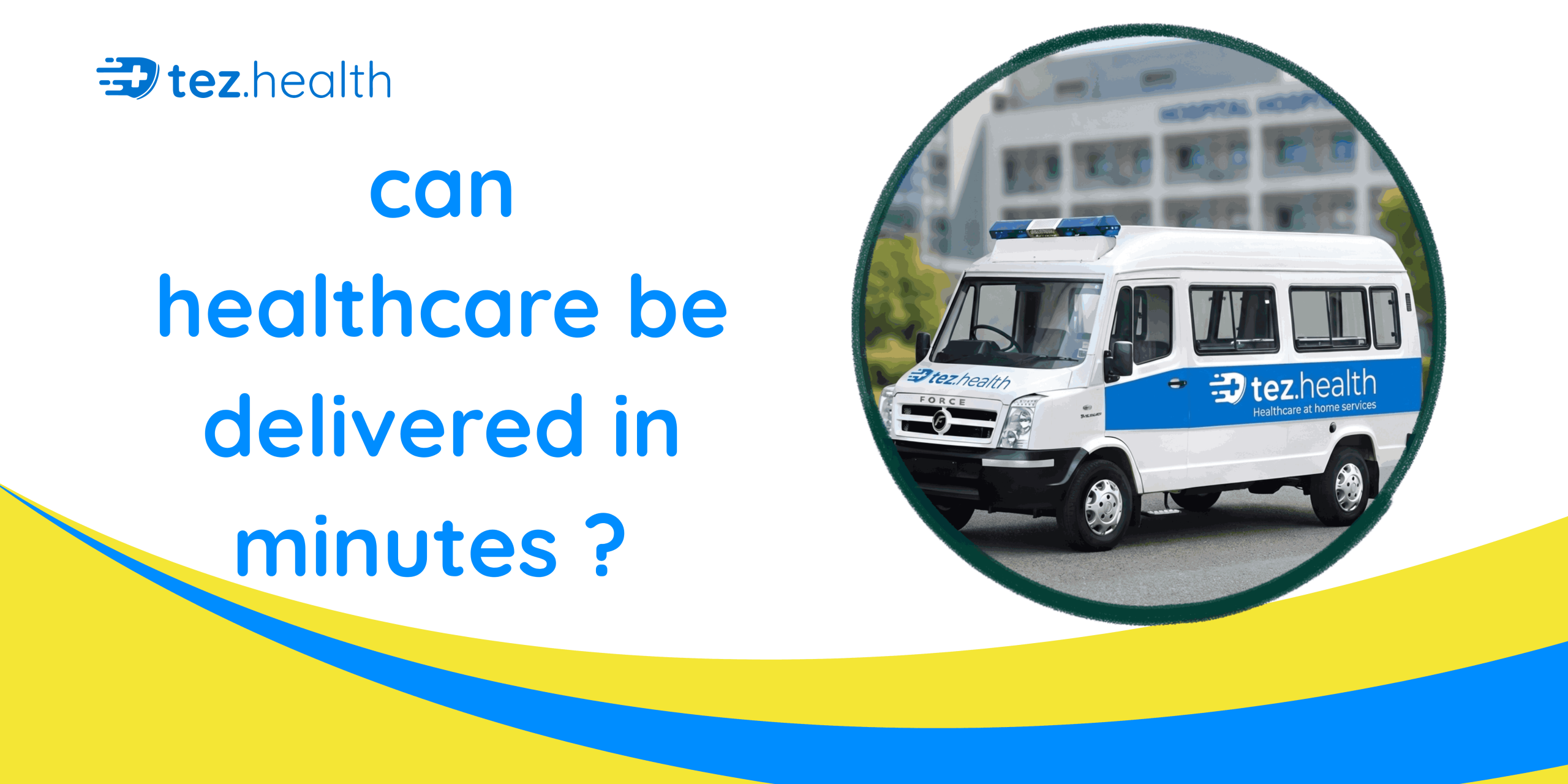
Can healthcare be delivered in minutes?
At first, the idea sounds ambitious—maybe even unrealistic.
Healthcare has always been associated with:
- Waiting rooms
- Appointment delays
- Long queues
- Complex processes
But today, that model is changing.
The real answer is not a simple yes or no.
Some parts of healthcare can absolutely be delivered in minutes. Others never should be.
Understanding the difference is what matters.
What Does “Healthcare in Minutes” Actually Mean?
Before going further, it’s important to define the phrase.
Healthcare in minutes does not mean:
- Instant surgeries
- Immediate complex treatments
- Zero clinical process
Instead, it refers to:
Reducing the time between need and access to care
This includes:
- Getting a doctor consultation quickly
- Booking a test without delays
- Receiving care at home without waiting days
It is about speed of access, not rushing medical decisions.
Why Speed Matters in Healthcare
Speed in healthcare is not just about convenience.
In many cases, it directly impacts outcomes.
1. Early Intervention
Faster access to care allows:
- Early diagnosis
- Timely treatment
- Prevention of complications
Delays often make conditions worse.
2. Reduced Patient Stress
Waiting for care can create:
- Anxiety
- Uncertainty
- Frustration
Faster service improves the overall patient experience.
3. Better System Efficiency
When care is delivered quickly:
- Hospitals are less crowded
- Resources are used more efficiently
- Patients are managed more effectively
Speed benefits both patients and the system.
What Can Actually Be Delivered in Minutes?
Let’s be clear—not all healthcare can be instant.
But several important services can be.
1. Doctor Consultations
With telemedicine, patients can:
- Connect with doctors quickly
- Discuss symptoms
- Receive initial guidance
In many cases, this can happen within minutes.
2. Appointment Scheduling
Digital platforms allow:
- Instant booking
- Real-time availability
- Faster coordination
This removes traditional delays.
3. Home-Based Services
Healthcare providers can dispatch:
to the patient’s home quickly.
This reduces the need for travel and waiting.
4. Diagnostics at Home
Lab tests can now be:
- Booked instantly
- Collected at home
- Processed quickly
This speeds up diagnosis and treatment.
What Cannot—and Should Not—Be Rushed?
While speed is important, healthcare is not a race.
Certain aspects require time, precision, and careful judgment.
1. Diagnosis
Accurate diagnosis requires:
- Detailed evaluation
- Proper testing
- Clinical judgment
Rushing this process can lead to errors.
2. Treatment Planning
Every patient is different.
Treatment must be:
- Personalized
- Carefully considered
- Medically appropriate
This cannot be done instantly.
3. Surgeries and Critical Care
Complex procedures require:
- Preparation
- Team coordination
- Controlled environments
These cannot be compressed into “minutes.”
4. Long-Term Care
Chronic conditions need:
- Consistent monitoring
- Lifestyle changes
- Ongoing management
Speed is less important than consistency here.
The Real Shift: From Waiting to Immediate Access
Healthcare is not becoming instant—but it is becoming immediate in access.
Earlier:
- Patients waited days for appointments
- Tests took time to arrange
- Care was delayed
Now:
- Access begins almost immediately
- Care pathways start faster
- Patients receive quicker attention
This is the real transformation.
The Role of Technology
Technology is the biggest enabler of speed in healthcare.
1. Telemedicine
Doctors can consult patients remotely, eliminating travel time and reducing delays.
2. Digital Platforms
Apps and platforms allow:
- Instant bookings
- Real-time updates
- Seamless coordination
3. Smart Logistics
Healthcare providers can:
- Dispatch professionals quickly
- Optimize routes
- Reduce response time
4. Data Integration
Digital records ensure that:
- Information is instantly available
- Doctors can make faster decisions
The Rise of On-Demand Healthcare
Healthcare is moving toward an on-demand model.
This means:
- Patients can request care when needed
- Services are delivered quickly
- Delays are minimized
This shift is similar to other industries—but with one key difference:
Healthcare must balance speed with safety
The Risks of Chasing Speed Alone
While speed is important, focusing only on speed can be dangerous.
1. Compromised Quality
If providers rush services:
- Errors can increase
- Care quality may decline
2. Misdiagnosis
Quick consultations without proper evaluation can lead to incorrect conclusions.
3. Incomplete Care
Speed should not replace thoroughness.
Healthcare must remain comprehensive.
The Ideal Balance: Fast Yet Responsible Care
The goal is not just speed—it is smart speed.
This means:
- Fast access to care
- Careful and accurate treatment
- Clear communication
- Continuous follow-up
Healthcare should be:
Fast where possible
Careful where necessary
The Tez Health Perspective
At Tez Health, the idea of delivering healthcare in minutes is approached with clarity.
It is not about rushing care.
It is about:
Reducing unnecessary delays without compromising medical quality
This includes:
1. Rapid Response
Patients should be able to access care quickly when they need it.
2. Seamless Coordination
From consultation to diagnostics, services should work together smoothly.
3. Reliable Professionals
Speed should never replace expertise.
4. Patient-Centric Design
Healthcare should fit into the patient’s life—not disrupt it.
What This Means for Patients
For patients, this shift brings several advantages:
- Faster access to doctors
- Reduced waiting times
- Convenient home-based services
- Better overall experience
But it also requires awareness.
Patients should understand that:
Not everything can be instant—and that’s a good thing
Real-Life Scenarios
1: Mild Symptoms
- A patient feels unwell and needs advice.
- A quick consultation can happen within minutes
2: Diagnostic Need
- A patient needs a blood test.
- Booking and sample collection can happen quickly
3: Serious Condition
- A patient has severe symptoms.
- Immediate hospital care—not speed alone—is critical
The Future of Fast Healthcare in India
In the coming years, speed will become a key feature of healthcare.
We will see:
- Faster consultations
- Quicker diagnostics
- More responsive home services
- Improved coordination
Healthcare will become:
More accessible
More responsive
More efficient
But it will also remain:
Careful Structured
Clinically driven
Final Thoughts
So, can healthcare be delivered in minutes?
Yes—for access, coordination, and certain services.
No—for complex medical decisions and critical care.
The real transformation is not about making healthcare instant.
It is about making it faster, smarter, and more responsive.
At Tez Health, the focus is simple:
Deliver care quickly when it matters—but never at the cost of safety or quality.
Because in healthcare, speed is important.
But getting it right is what truly matters.