
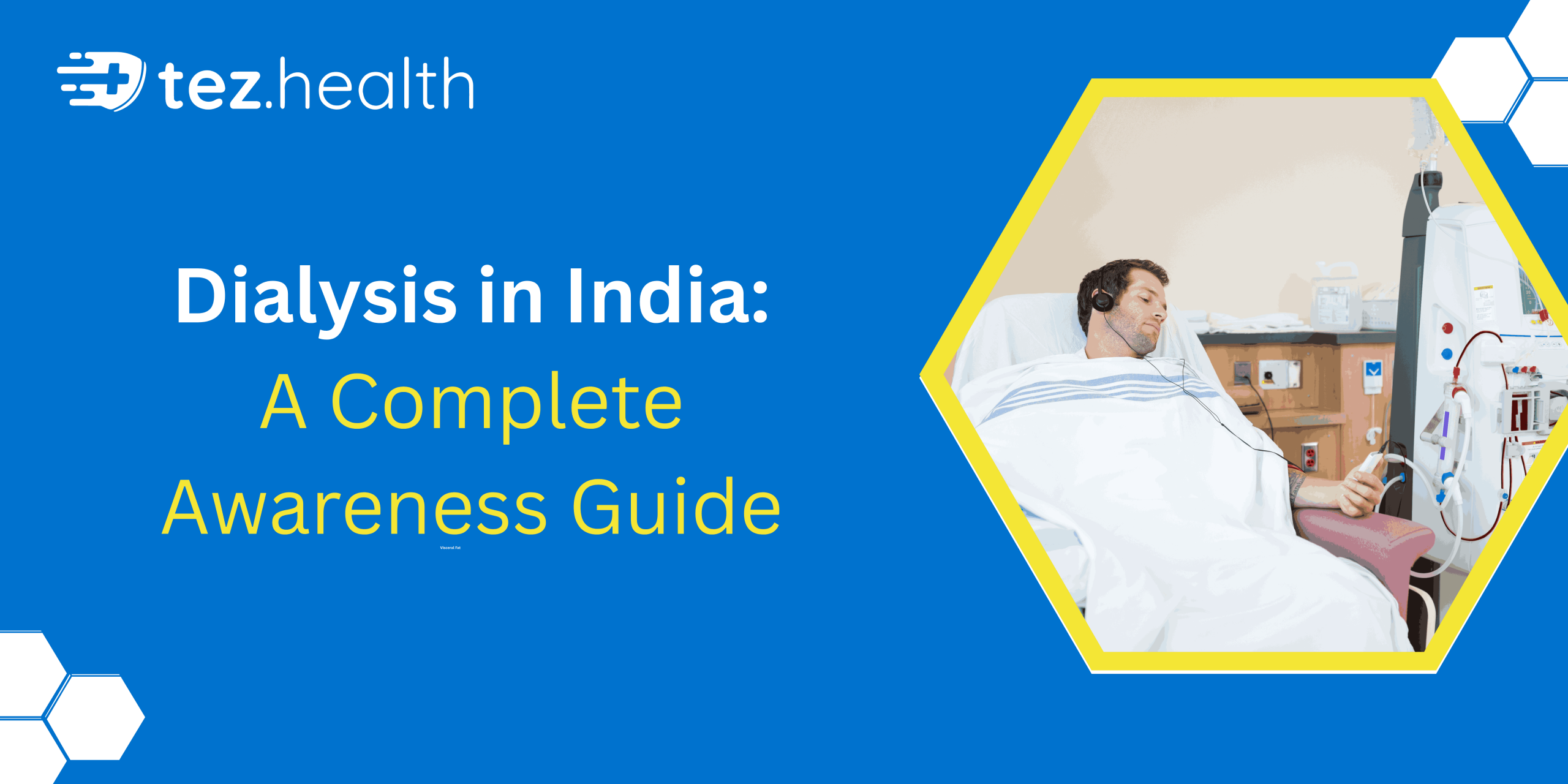
Kidney disease is rising rapidly in India. Every year, more than two lakh Indians begin dialysis treatment. Yet many families only learn about dialysis when kidney failure has already reached a critical stage.
In most cases, dialysis is not sudden — it is the result of untreated diabetes, high blood pressure, or chronic kidney disease (CKD) that progresses silently.
This comprehensive guide explains:
- What dialysis is?
- Early symptoms of kidney failure
- Types of dialysis in India
- Dialysis cost in India (2026 estimates)
- Government schemes available
- Risks and lifestyle impact
- Dialysis vs kidney transplant
- How to prevent kidney failure
If you or a loved one is at risk, early awareness can delay or even prevent dialysis.
What Is Dialysis? (Simple Definition)
Dialysis is a medical treatment that removes waste products, toxins, and excess fluids from the blood when the kidneys are unable to perform these functions naturally.
It replaces some kidney functions but does not cure kidney failure.
Dialysis becomes necessary in advanced kidney disease, especially in End-Stage Renal Disease (ESRD).
Understanding Kidney Function
Healthy kidneys:
- Filter blood continuously
- Remove toxins
- Maintain fluid balance
- Regulate sodium and potassium
- Control blood pressure
- Help produce red blood cells
- Support bone health
When kidney function drops below 10–15%, survival depends on dialysis or kidney transplantation.
Early Symptoms of Kidney Failure
Kidney disease often progresses without obvious warning signs. Common symptoms include:
- Persistent fatigue
- Swelling in legs or face
- Reduced urine output
- Foamy or dark urine
- Shortness of breath
- Nausea and vomiting
- Severe itching
- Muscle cramps
- Confusion
- Uncontrolled blood pressure
If you have diabetes or hypertension and notice these symptoms, immediate kidney testing is essential.
Why Is Dialysis Needed?
Dialysis is required when:
- Blood creatinine and urea rise significantly
- Fluid builds up in lungs or body
- Potassium levels become dangerous
- Severe symptoms develop
Leading Causes in India
- Diabetes (primary cause)
- High blood pressure
- Chronic glomerulonephritis
- Genetic kidney disorders
- Long-term painkiller overuse
Late diagnosis remains a major reason for emergency dialysis in India.
Types of Dialysis in India
There are two main types:
1. Hemodialysis (HD)
Hemodialysis is the most commonly performed dialysis method in India.
How It Works:
Blood is removed from the body → filtered through a dialyzer machine → cleaned blood is returned.
Frequency:
- 2–3 sessions per week
- 3–5 hours per session
Access Required:
Arteriovenous (AV) fistula surgery for long-term access.
Best For:
- Patients who prefer supervised hospital treatment
- Those unable to manage home dialysis
2. Peritoneal Dialysis (PD)
Peritoneal dialysis uses the abdominal lining as a natural filter.
Types:
Best For:
- Patients in remote areas
- Those needing flexible schedules
- Individuals preferring home-based care
Hemodialysis vs Peritoneal Dialysis
| Factor | Hemodialysis | Peritoneal Dialysis |
| Location | Hospital/Dialysis Center | Home |
| Frequency | 2–3 times/week | Daily |
| Procedure | Machine-based blood filtering | Fluid exchange in abdomen |
| Travel Required | Yes | No |
| Infection Risk | Bloodstream infection | Peritonitis |
| Flexibility | Limited | High |
The choice depends on medical condition, lifestyle, and nephrologist recommendation.
Dialysis Cost in India (2026 Estimates)
Costs vary by city and hospital type.
Hemodialysis Cost:
- ₹1,500 – ₹4,000 per session (private)
- ₹12,000 – ₹40,000+ monthly
Peritoneal Dialysis Cost:
- ₹15,000 – ₹30,000 monthly
Additional costs include:
- Medications (anemia treatment, BP control)
- Blood tests
- Fistula surgery
- Transportation
Dialysis can become financially challenging without insurance support.
Government Schemes for Dialysis in India
India has expanded access through national programs.
Pradhan Mantri National Dialysis Programme
- Free dialysis services in many district hospitals
- Targeted support for economically weaker sections
Ayushman Bharat PM-JAY
- Coverage up to ₹5 lakh per family per year
- Dialysis included for eligible patients
Many states also run regional health insurance programs.
Patients should verify eligibility and documentation requirements.
Preparing for Dialysis
Before starting hemodialysis:
- AV fistula surgery is performed
- Blood tests are evaluated
- Diet modifications begin
- Vaccinations may be advised
- Psychological counseling may be offered
Early planning improves survival and reduces complications.
Risks and Complications
Dialysis is life-saving but not risk-free.
Hemodialysis Risks:
- Low blood pressure
- Muscle cramps
- Infection
- Access clotting
Peritoneal Dialysis Risks:
- Peritonitis
- Catheter infections
- Hernia
Regular monitoring significantly reduces complications.
Dialysis vs Kidney Transplant
Dialysis is ongoing treatment. A kidney transplant offers a potential long-term solution.
However:
- Donor availability is limited
- Surgery carries risks
- Lifelong immunosuppressants are required
Many patients remain on dialysis while awaiting transplant.
Life on Dialysis
With proper management, many patients:
- Continue working
- Travel with planning
- Maintain family life
Diet Guidelines:
- Limit sodium
- Restrict potassium
- Control fluids
- Follow renal dietician advice
Emotional and financial support are equally important.
Dialysis in Rural India
Challenges include:
- Limited dialysis centers
- Travel burden
- Low awareness
- Financial barriers
Government expansion and public-private partnerships are gradually improving access.
Common Myths About Dialysis
Myth: Dialysis is painful.
Fact: Mild discomfort during needle insertion; treatment itself is not painful.
Myth: Dialysis means life is over.
Fact: Many patients live for years with proper care.
Myth: Dialysis cures kidney disease.
Fact: It supports the body but does not restore kidney function.
How to Prevent Kidney Failure
Prevention strategies:
- Strict diabetes control
- Blood pressure management
- Avoid excessive painkiller use
- Maintain healthy weight
- Regular kidney function tests
- Adequate hydration
Early detection is far less costly than lifelong dialysis.
The Future of Dialysis in India
India is investing in:
- Increased dialysis machines
- Public-private healthcare partnerships
- Home dialysis awareness
- Cost-effective manufacturing
Yet prevention and screening remain the most powerful tools.
Conclusion
Dialysis is a life-sustaining treatment for patients with advanced kidney disease. While it involves lifestyle adjustments and financial planning, it enables thousands of Indians to continue living meaningful lives.
However, early screening for diabetes and hypertension can delay or even prevent dialysis entirely.
Kidney disease is often silent — but action does not have to be delayed.
Regular testing, awareness, and timely medical intervention save lives.