


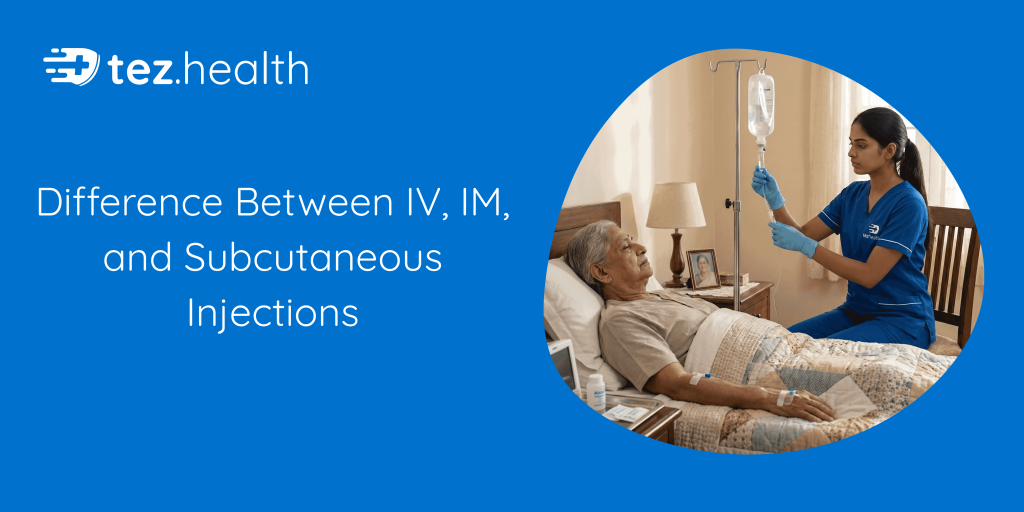
A Complete Guide to Intravenous, Intramuscular, and Subcutaneous Injections in Medical Practice
In modern healthcare, injections remain one of the most effective methods for delivering medication. Whether it involves antibiotics, insulin, vaccines, pain relief, or emergency drugs, the route of injection directly influences how quickly and efficiently the medicine works.
However, many patients and caregivers often wonder:
- What is the difference between IV, IM, and Subcutaneous injections?
- Are they interchangeable?
- Which one works faster?
- Which method is safer for home healthcare?
To answer these questions clearly, it is essential to understand how each injection route functions. Therefore, this comprehensive guide explains the differences, advantages, risks, absorption speed, and safety considerations for each method.
Understanding Injection Routes in Medical Treatment
An injection route refers to the pathway through which medication enters the body. Importantly, the chosen route determines:
- Speed of action
- Duration of effect
- Accuracy of dosage
- Risk level
- Type of medication administered
In clinical practice, the three most common non-oral (parenteral) routes are:
- Intravenous (IV) – Directly into a vein
- Intramuscular (IM) – Into muscle tissue
- Subcutaneous (SC) – Into the fat layer beneath the skin
Although all three methods deliver medication effectively, they serve different medical purposes. Let us examine each in detail.
1. Intravenous (IV) Injection
An Intravenous (IV) injection delivers medication directly into the bloodstream through a vein. As a result, the drug begins working almost immediately.
How IV Injection Works
First, a needle or cannula is inserted into a vein. Then, medication or fluids are infused directly into the bloodstream. Consequently, absorption bypasses digestive processes entirely.
Because of this direct access, IV injections provide the fastest therapeutic effect.
When IV Injections Are Used
IV administration is preferred when:
- Immediate action is required
- The patient is unconscious
- Oral medication is not possible
- Rapid hydration is necessary
- Severe infections require IV antibiotics
- Emergency cardiac support is needed
Additionally, IV therapy is commonly used in hospitals for chemotherapy, electrolyte imbalance, and post-surgical recovery. Increasingly, it is also administered safely in home healthcare settings under professional supervision.
Advantages of IV Injection
- Immediate onset of action
- 100% bioavailability
- Precise dosage control
- Suitable for large fluid volumes
- Ideal for critically ill patients
Disadvantages of IV Injection
However, IV injections also carry certain risks:
- Requires skilled healthcare professionals
- Higher risk if improperly administered
- Potential vein irritation
- Risk of infection
- Rare but serious air embolism
Therefore, IV injections should always be administered by trained professionals.
2. Intramuscular (IM) Injection
In contrast to IV injections, Intramuscular (IM) injections deliver medication into muscle tissue. Because muscles have a strong blood supply, absorption is faster than subcutaneous injections but slower than IV administration.
How IM Injection Works
A needle penetrates deep into muscle tissue, commonly in the:
- Deltoid (upper arm)
- Vastus lateralis (thigh)
- Gluteal muscle (buttocks)
Once injected, the medication gradually enters the bloodstream through muscle capillaries.
When IM Injections Are Used
IM injections are commonly chosen for:
- Vaccinations
- Vitamin B12 injections
- Hormonal therapies
- Certain antibiotics
- Pain management medications
- Long-acting psychiatric medications
Furthermore, IM injections are frequently administered in home healthcare for elderly patients and individuals with chronic deficiencies.
Advantages of IM Injection
- Faster absorption than SC injections
- Can accommodate moderate volumes
- Suitable for vaccines
- Allows long-acting formulations
Disadvantages of IM Injection
Nevertheless, IM injections may:
- Cause temporary discomfort
- Risk nerve injury if improperly placed
- Lead to muscle soreness
- Be unsuitable for patients with bleeding disorders
Thus, proper anatomical knowledge is essential.
3. Subcutaneous (SC) Injection
Unlike IV and IM routes, Subcutaneous (SC) injections deliver medication into the fatty layer just beneath the skin. Consequently, absorption is slower and more controlled.
How Subcutaneous Injection Works
The needle enters the fat layer, typically in the:
- Abdomen
- Upper thigh
- Upper arm
- Lower back
Since fatty tissue has fewer blood vessels than muscle, medication is absorbed gradually. Therefore, this route is ideal for sustained-release therapies.
When Subcutaneous Injections Are Used
SC injections are commonly used for:
- Insulin
- Blood thinners (heparin)
- Certain hormones
- Biologic medications
- Allergy treatments
In many cases, patients are trained to self-administer subcutaneous injections safely at home.
Advantages of Subcutaneous Injection
- Less painful
- Easier technique
- Lower complication risk
- Suitable for self-administration
- Ideal for long-term therapy
Disadvantages of Subcutaneous Injection
However:
- Absorption is slower
- Only small volumes can be administered
- Not suitable for emergency medications
Therefore, SC injections are rarely used in acute emergencies.
Key Differences Between IV, IM, and Subcutaneous Injections
1. Speed of Action
- IV: Immediate (seconds to minutes)
- IM: Moderate (10–30 minutes)
- SC: Slow (30 minutes to hours)
Clearly, IV provides the fastest response, while SC provides the slowest.
2. Absorption Mechanism
- IV: Direct bloodstream entry
- IM: Absorbed via muscle blood supply
- SC: Absorbed through fatty tissue capillaries
3. Volume Capacity
- IV: Large volumes
- IM: Moderate volumes
- SC: Small volumes only
4. Pain Level
Generally:
- SC is least painful
- IM may cause moderate discomfort
- IV causes insertion discomfort but minimal infusion pain
5. Skill Requirement
- IV: Highly trained professional required
- IM: Trained nurse recommended
- SC: Can sometimes be self-administered after instruction
Safety Considerations in Clinical Practice
Regardless of route, sterile technique is essential. Without proper precautions, infection risks increase.
Professional healthcare providers ensure:
- Single-use sterile needles
- Proper hand hygiene
- Correct injection angles
- Accurate dosage calculation
- Safe biomedical waste disposal
When administered correctly, complications are rare.
Common Complications by Route
Although uncommon, potential complications include:
IV Complications
- Phlebitis
- Infiltration
- Infection
IM Complications
- Muscle soreness
- Hematoma
- Nerve irritation
SC Complications
- Skin irritation
- Lump formation
- Delayed absorption
Fortunately, trained professionals can minimize these risks.
Which Injection Is Safest for Home Healthcare?
All three routes can be safely administered at home — provided they are handled by trained professionals.
However:
- IV therapy requires strict monitoring and emergency readiness.
- IM injections require accurate muscle identification.
- SC injections are typically safest for long-term home treatment and may be self-administered after proper training.
Therefore, safety depends more on professional expertise than on the route itself.
Why Injection Route Matters
Choosing the correct injection route ensures:
- Optimal drug effectiveness
- Faster recovery
- Reduced side effects
- Improved patient compliance
For example:
- Severe dehydration requires IV fluids.
- Vaccines are typically given IM for optimal immune response.
- Insulin must be administered subcutaneously for controlled absorption.
Using the wrong route can reduce effectiveness or increase complications. Consequently, route selection is a clinical decision made by healthcare professionals.
Conclusion
Understanding the difference between IV, IM, and Subcutaneous injections empowers patients and caregivers to make informed healthcare decisions.
To summarize:
- IV injections act immediately and are ideal for emergencies.
- IM injections offer moderate absorption and are commonly used for vaccines and specific medications.
- Subcutaneous injections provide slow, controlled delivery for long-term therapy.
Ultimately, each method has a specific medical purpose. When administered by trained professionals using sterile techniques, all three injection routes are safe and effective.
As home healthcare continues to expand, awareness of these differences ensures safer, evidence-based care for patients and families.