Healthcare in India is rapidly evolving. As a result, patients are increasingly seeking care that is not only effective but also convenient and personalized. In recent years, doctor visit at home services have gained significant popularity. However, one critical concern still remains:
Is a doctor visit at home medically safe?
To answer this properly, we must examine safety standards, medical effectiveness, limitations, and practical advantages. Therefore, this comprehensive guide will help you make an informed and confident decision.
What Is a Doctor Visit at Home?
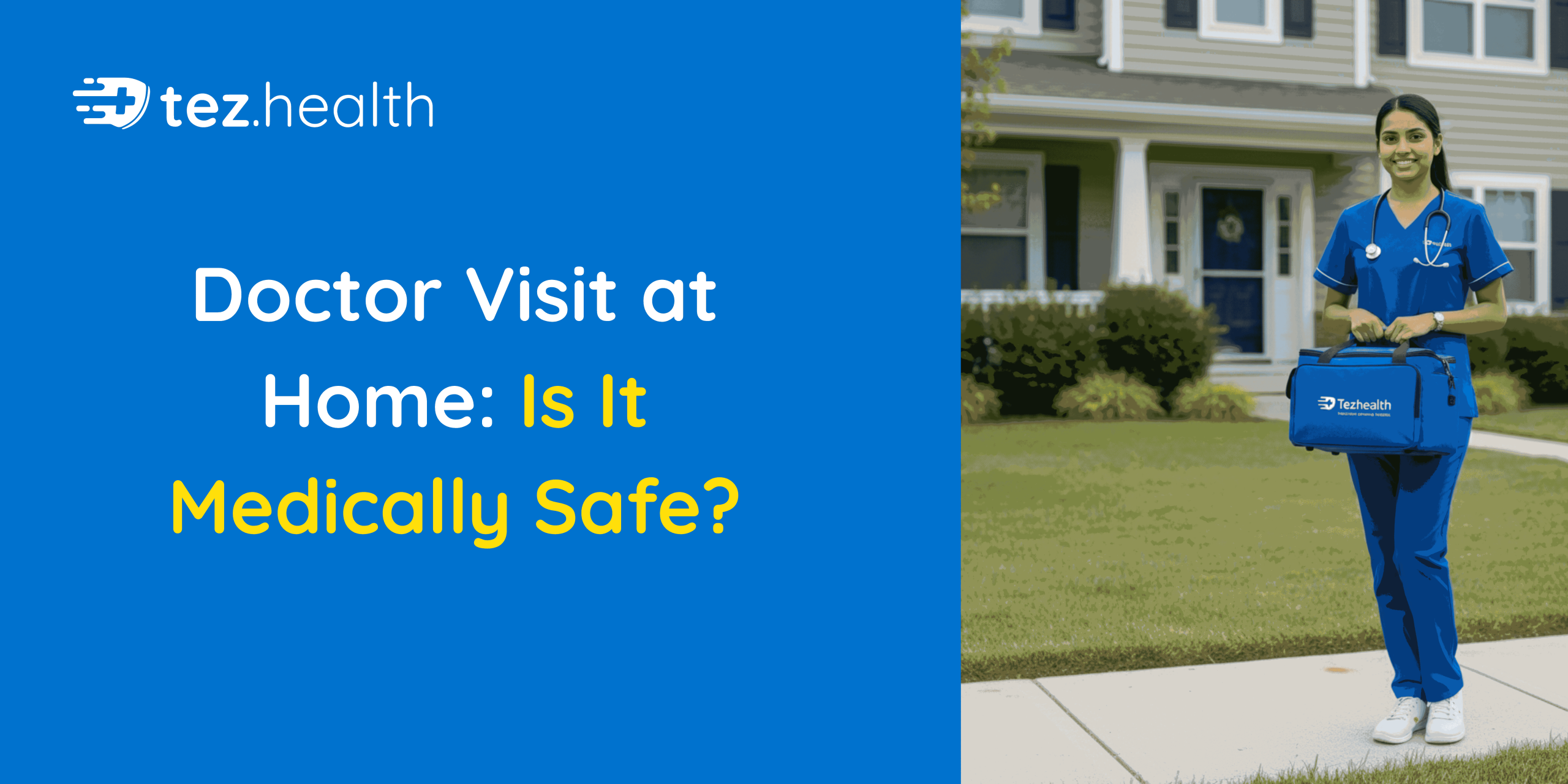
A doctor home visit service allows a qualified medical professional to assess, diagnose, and treat a patient within their home environment. Instead of traveling to a hospital or clinic, the physician arrives at the patient’s residence.
Typically, a structured home consultation includes:
- Detailed symptom assessment
- Physical examination
- Monitoring of vital signs (blood pressure, oxygen saturation, pulse, temperature)
- Prescription of medications
- Injection administration
- IV fluid therapy if required
- Basic wound care
- Lab test recommendations
- Referral to a hospital when necessary
Importantly, modern home healthcare services utilize portable medical equipment. Consequently, doctors can conduct safe and systematic evaluations similar to outpatient consultations.
Why Are Doctor Home Visits Increasing in India?
The growing demand is not accidental. Rather, it reflects broader changes in healthcare delivery.
Firstly, hospitals in urban areas are often overcrowded. As a result, patients experience long waiting times and rushed consultations.
Secondly, hospital-acquired infections remain a concern, particularly for elderly or immunocompromised individuals. In contrast, home consultations significantly reduce exposure to infectious environments.
Moreover, India’s aging population requires ongoing medical supervision. Because many elderly patients have mobility limitations, frequent hospital visits can be physically exhausting.
Additionally, chronic diseases such as diabetes, hypertension, and heart disease are increasing. Therefore, regular monitoring is essential.
Finally, post-pandemic awareness has heightened the importance of minimizing unnecessary hospital exposure. Taken together, these factors explain the rapid growth of home doctor services.
Is Doctor Visit at Home Medically Safe?
The short answer is yes — provided that it is delivered by licensed medical professionals under proper protocols.
Nevertheless, safety depends on several important conditions. Therefore, understanding these factors is essential before making a decision.
Key Factors That Ensure Medical Safety
1. Qualified and Licensed Doctors
First and foremost, safety begins with credentials.
Reputable providers ensure that doctors are:
- Registered medical practitioners
- Properly qualified
- Clinically experienced
- Background verified
Without proper credentials, safety cannot be guaranteed. Therefore, always verify the provider’s legitimacy before booking.
2. Comprehensive Medical Assessment
A professional home visit is not a casual interaction. Instead, it follows a structured clinical process.
The doctor typically conducts:
- A detailed medical history review
- A thorough physical examination
- Vital signs monitoring
- Clinical decision-making based on findings
Furthermore, portable diagnostic tools allow accurate evaluation. These include:
- Digital BP monitors
- Glucometers
- Pulse oximeters
- Thermometers
As a result, many stable conditions can be assessed effectively at home.
3. Clear Emergency Escalation Protocols
One major concern is handling unexpected complications. However, responsible home healthcare providers maintain clear escalation systems.
If a doctor detects warning signs, they will:
- Recommend immediate hospital transfer
- Arrange ambulance support
- Provide referral documentation
In other words, home visits are designed for non-critical cases. Meanwhile, life-threatening emergencies still require hospital infrastructure.
4. Strict Infection Control Practices
Another critical safety factor is hygiene.
Professional home visits include:
- Proper hand hygiene
- Sterile equipment usage
- Use of gloves and masks
- Safe disposal of medical waste
Interestingly, hospitals treat multiple patients daily. Therefore, cross-infection risk may actually be higher in clinical settings compared to controlled home environments.
Conditions That Can Be Safely Managed at Home
Home consultations are particularly suitable for stable and non-emergency conditions.
Fever and Mild Viral Illness
For example, mild to moderate fever, cough, cold, sore throat, and body pain can be evaluated safely. In most cases, treatment can begin immediately at home.
Gastrointestinal Issues
Similarly, vomiting, mild dehydration, loose motions, and non-severe abdominal pain can often be managed without hospitalization. If necessary, IV fluids may be administered.
Chronic Disease Monitoring
Patients with:
- Diabetes
- Hypertension
- Thyroid disorders
- COPD
- Stable heart disease
require ongoing supervision. Therefore, home visits provide convenient monitoring without unnecessary travel.
Elderly Health Concerns
Elderly patients frequently experience sudden weakness or appetite changes. Instead of transporting them to a crowded hospital, doctors can assess them at home.
Consequently, stress and fatigue are minimized.
Post-Surgical Follow-Up
After surgery, patients often need wound checks, dressing changes, or stitch removal. In such cases, home visits are not only safe but also highly practical.
Minor Injuries
Small wounds, mild burns, and localized swelling can be treated effectively at home. Thus, hospital visits become unnecessary for minor issues.
Situations Where Home Visits Are NOT Appropriate
While home consultations are valuable, they have clear limitations.
Do not rely on home visits if there is:
- Severe chest pain
- Suspected heart attack
- Stroke symptoms
- Severe breathlessness
- Heavy bleeding
- Unconsciousness
- Seizures
- Major trauma
In these scenarios, immediate emergency services are essential.
Ultimately, home healthcare complements hospital services — it does not replace emergency care.
Benefits of Doctor Visit at Home
Beyond safety, home consultations offer significant advantages.
Reduced Infection Risk
Since hospitals treat many patients simultaneously, infection exposure increases. By contrast, home environments are controlled and familiar.
Greater Comfort
Patients feel more relaxed at home. As a result, anxiety levels decrease, which can positively influence recovery.
Faster Access to Care
There are no waiting rooms or registration queues. Therefore, medical attention is more focused and efficient.
Ideal for Mobility Challenges
Bedridden patients avoid the strain of transportation. Consequently, health deterioration due to travel stress is prevented.
Personalized Medical Attention
Doctors can observe environmental factors, including:
- Living conditions
- Medication storage
- Diet patterns
- Caregiver involvement
This broader understanding allows more customized treatment plans.
Cost Efficiency
Hospital admissions often involve multiple charges. In contrast, home consultations for stable conditions are generally more economical.
Role of Technology in Enhancing Safety
Modern healthcare technology has strengthened home services significantly.
Portable devices such as:
- ECG machines
- Oxygen support systems
- Nebulizers
- Digital monitors
allow accurate on-site assessment.
Additionally, telemedicine follow-ups ensure continuity of care. Therefore, safety standards continue to improve.
Common Misconceptions
Some people believe home visits are less professional. However, licensed practitioners follow strict medical protocols.
Others assume serious evaluations cannot occur at home. On the contrary, many stable conditions are effectively assessed using portable tools.
Finally, some think home care is unsafe. In reality, when proper systems are in place, it is medically reliable.
Who Should Consider Regular Home Visits?
Home doctor services are particularly beneficial for:
- Individuals above 65
- Patients with mobility limitations
- Chronic disease patients
- Cancer patients
- Post-surgical patients
- Bedridden individuals
For these groups, consistent monitoring becomes safer and more convenient.
How to Choose a Safe Provider
Before booking, ensure:
- Doctor credentials are verified
- Service reviews are positive
- Emergency referral systems exist
- Transparent pricing is offered
- Hygiene protocols are followed
Ultimately, choosing the right provider determines overall safety.
Final Verdict: Is Doctor Visit at Home Medically Safe?
Yes — when the condition is stable and non-emergency, and when licensed professionals follow proper protocols, home doctor visits are medically safe.
They reduce infection exposure, improve comfort, enhance accessibility, and provide personalized care.
However, they should never replace emergency hospital services in life-threatening situations.
In conclusion, smart healthcare decisions depend on selecting the appropriate level of care at the right time. When used correctly, doctor visit at home services offer a safe and effective alternative to hospital visits.