
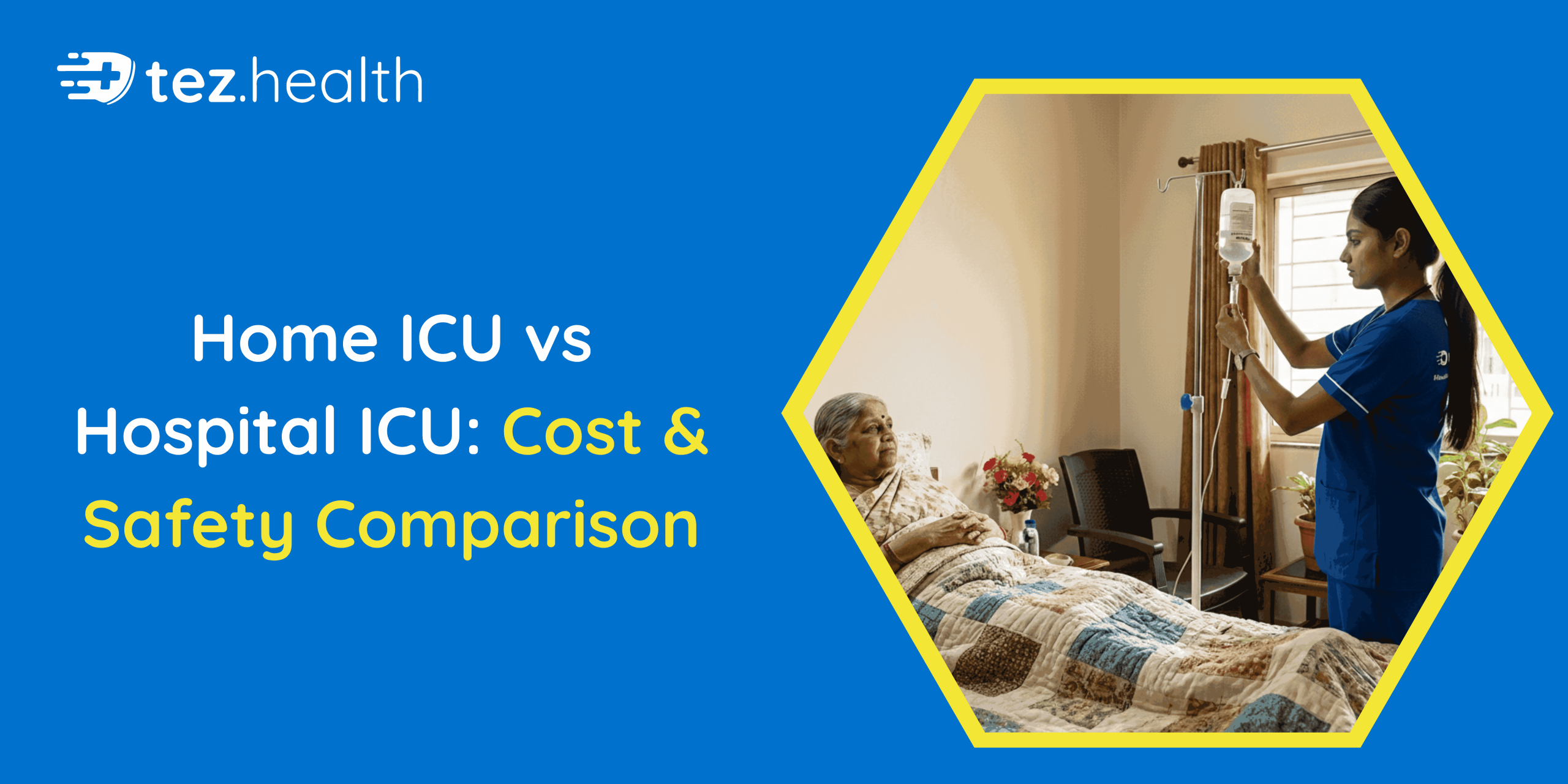
Critical care is essential for patients with life-threatening conditions such as severe infections, respiratory failure, stroke, heart disease, or major surgeries. Traditionally, this level of treatment is provided in a hospital Intensive Care Unit (ICU). However, with advances in medical technology and home healthcare services, Home ICU care is becoming a popular alternative in India.
Families often face a difficult decision: Should the patient stay in a hospital ICU or receive ICU-level care at home? The answer depends on several factors, including the patient’s medical condition, safety requirements, cost, and family support.
This guide explains the cost difference, safety factors, advantages, disadvantages, and decision-making criteria between Home ICU and Hospital ICU care in India.
What Is a Hospital ICU?
A Hospital Intensive Care Unit (ICU) is a specialized hospital department designed to treat critically ill patients who require constant monitoring and advanced life-support equipment.
Key Features of Hospital ICU
Hospital ICUs are equipped with:
- Advanced ventilators
- Cardiac monitors
- Defibrillators
- Infusion pumps
- Dialysis machines
- Emergency surgical access
- Multi-disciplinary medical teams
A hospital ICU provides 24/7 monitoring by intensivists, nurses, and emergency teams, ensuring rapid response to complications.
Conditions Treated in Hospital ICU
Patients admitted to ICU typically have:
- Severe heart attacks
- Stroke
- Respiratory failure
- Severe infections or sepsis
- Multiple trauma
- Post-surgery complications
- Organ failure
Hospital ICUs are best suited for unstable patients who need constant medical intervention.
What Is a Home ICU?
A Home ICU is a healthcare setup where ICU-level equipment and professional medical support are installed in a patient’s home.
It is typically recommended for patients who are stable but still require continuous monitoring or specialized medical support.
Equipment Used in a Home ICU
Home ICU setups may include:
- ICU hospital bed
- Ventilator or BiPAP
- Cardiac monitor
- Oxygen concentrator
- Suction machine
- Syringe pumps
- Infusion pumps
- Emergency medication kits
A trained ICU nurse and visiting doctor supervise the patient’s care, ensuring treatment continues safely at home.
Home ICU services also include physiotherapy, nutrition planning, and medication management.
Cost Comparison: Home ICU vs Hospital ICU
One of the biggest reasons families consider Home ICU care is cost savings.
Average Cost of Hospital ICU in India
Hospital ICU charges typically include:
- ICU bed charges
- Equipment usage
- Nursing care
- Doctor consultation
- Diagnostic tests
- Medications
The cost varies by hospital and city.
Typical cost range:
- ₹25,000 – ₹50,000 per day in private hospitals
- Government hospitals may be cheaper but have limited ICU beds.
For a patient staying 10–15 days in ICU, the cost can exceed ₹3–₹7 lakh.
Average Cost of Home ICU in India
Home ICU costs depend on the equipment required and nursing care.
Typical expenses include:
- Equipment rental
- ICU nurse salary
- Doctor visits
- Medical supplies
- Oxygen support
Average daily cost:
- ₹7,000 – ₹14,000 per day
- Around 40–70% cheaper than hospital ICU care
Some providers offer monthly packages ranging from ₹2.4 lakh to ₹8 lakh depending on equipment and staffing.
Safety Comparison: Home ICU vs Hospital ICU
While cost matters, patient safety is the most important factor when choosing critical care.
Safety Advantages of Hospital ICU
Hospital ICU provides:
Immediate Emergency Response
If a patient deteriorates suddenly, doctors and emergency equipment are immediately available.
Multi-Specialty Support
Hospitals provide access to specialists such as:
- Cardiologists
- Neurologists
- Pulmonologists
- Surgeons
Advanced Diagnostic Facilities
Tests like CT scans, MRIs, and lab tests are available instantly.
Continuous Monitoring by ICU Team
Multiple trained professionals monitor the patient.
These features make hospital ICUs essential for unstable or high-risk patients.
Safety Advantages of Home ICU
Home ICU can also be safe when implemented properly.
Lower Risk of Hospital-Acquired Infections
Patients staying long in hospitals face risks of hospital-acquired infections and drug-resistant bacteria. Home environments reduce this risk.
Personalized Care
In hospitals, nurses may care for multiple patients simultaneously.
At home, a dedicated ICU nurse focuses on one patient.
Comfortable Recovery Environment
Patients often sleep better and experience less stress in a familiar home environment.
These factors may improve emotional well-being and recovery.
Risks of Home ICU Care
Despite benefits, home ICU also has challenges.
Emergency Delays
If a patient’s condition suddenly worsens, transportation to a hospital may take time.
Medical experts warn that deterioration may be noticed later in home settings if monitoring is inadequate.
Equipment Failure
Home ICUs rely heavily on machines like ventilators and monitors.
Possible issues include:
- Power outages
- Equipment malfunction
- Incorrect settings
Backup power systems and professional supervision are essential.
Caregiver Burden
Family members may experience stress managing medications, monitoring equipment, and coordinating care.
Who Should Choose Home ICU Care?
Home ICU is suitable for patients who:
- Are medically stable
- Require long-term ventilator support
- Need post-ICU rehabilitation
- Have chronic neurological conditions
- Require palliative care
- Need post-stroke care
- Need long-term oxygen therapy
Doctors usually recommend home ICU after hospital discharge once the patient stabilizes.
Who Should Stay in Hospital ICU?
Hospital ICU is necessary when patients have:
- Severe breathing problems
- Unstable blood pressure
- Multiple organ failure
- Severe trauma
- Major surgery complications
- Active infections requiring emergency care
These conditions require continuous specialist supervision and emergency interventions.
Equipment Required for Home ICU Setup
A standard home ICU may include:
1. ICU Bed
Adjustable beds prevent bed sores and improve patient comfort.
2. Ventilator
Supports breathing for patients with respiratory failure.
3. Cardiac Monitor
Tracks vital signs such as:
- Heart rate
- Blood pressure
- Oxygen saturation
4. Oxygen Support
Includes oxygen cylinders or concentrators.
5. Suction Machine
Used to clear airway secretions.
Additional devices may include infusion pumps and feeding tubes.
How to Set Up a Safe Home ICU
Families considering home ICU should ensure:
Doctor Approval
Always consult the treating physician before moving the patient home.
Professional Nursing Care
Hire trained ICU nurses available 24/7.
Emergency Plan
Have a nearby hospital ready for emergencies.
Reliable Equipment
Use certified medical devices with maintenance support.
Backup Power Supply
Ensure uninterrupted electricity for life-support machines.
Emotional Benefits of Home ICU Care
Beyond medical care, emotional well-being is important for recovery.
Home ICU offers:
- Family presence
- Familiar environment
- Better sleep patterns
- Reduced stress
- Improved appetite
Many elderly patients recover faster when surrounded by family.
Future of Home ICU in India
The demand for home healthcare is growing rapidly due to:
- Increasing chronic diseases
- Rising hospital costs
- Shortage of ICU beds
- Aging population
Healthcare providers are developing advanced remote monitoring technologies, allowing doctors to track patients’ vital signs from hospitals while patients remain at home.
This hybrid model may redefine critical care in the future.
Conclusion
Choosing between Home ICU and Hospital ICU depends on the patient’s medical condition, financial capacity, and support system.
Hospital ICUs are essential for unstable and emergency cases, offering immediate access to specialists and advanced medical facilities.
Home ICU care, on the other hand, is an affordable and comfortable alternative for stable patients requiring long-term monitoring or rehabilitation.
When managed by trained professionals with proper equipment, home ICU can provide safe and effective care while significantly reducing treatment costs.
Families should always consult doctors and evaluate safety factors before making this important decision.
FAQ’s on Home ICU Vs Hospital ICU
1. What is the difference between home ICU and hospital ICU?
Hospital ICU is located in a hospital with advanced emergency facilities, while home ICU provides ICU-level care at the patient’s home.
2. Is home ICU safe?
Yes, home ICU can be safe if managed by trained nurses, supervised by doctors, and equipped with proper medical devices.
3. How much does home ICU cost in India?
Home ICU typically costs around ₹7,000 to ₹14,000 per day depending on equipment and nursing care.
4. How much does hospital ICU cost in India?
Hospital ICU charges usually range between ₹25,000 and ₹50,000 per day in private hospitals.
5. Who is eligible for home ICU care?
Patients who are medically stable but require continuous monitoring, ventilator support, or long-term care may be eligible.
6. What equipment is used in home ICU?
Common equipment includes ventilators, oxygen concentrators, cardiac monitors, infusion pumps, and ICU beds.
7. Can ventilator patients stay at home?
Yes, stable patients requiring long-term ventilator support can receive care through home ICU services.
8. Do doctors visit patients in home ICU?
Yes, doctors typically visit periodically and may also monitor patients through telemedicine.
9. Is home ICU covered by insurance?
Some insurance plans cover domiciliary hospitalization, but coverage varies depending on the policy.
10. When should a patient be shifted from home ICU to hospital ICU?
If the patient’s condition suddenly worsens or requires emergency procedures, immediate hospital transfer is necessary.