


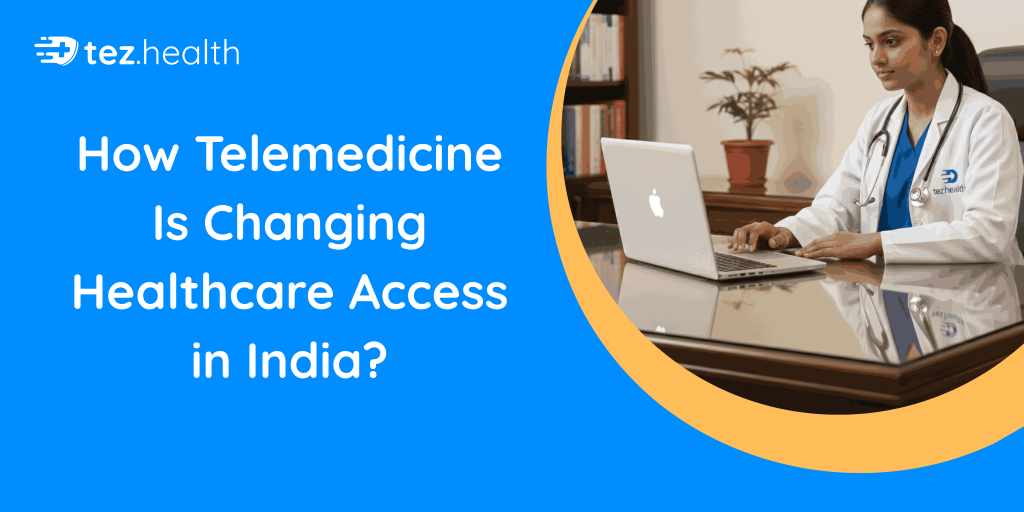
Healthcare in India has traditionally been defined by one thing: distance.
Distance between patients and hospitals.
>Distance between small towns and specialist doctors.
>Distance between needing care and actually receiving it.
For decades, accessing quality healthcare often meant traveling, waiting, and adjusting your entire day—or even your entire life—around a doctor’s availability.
But in 2026, that reality is changing rapidly.
Telemedicine has emerged as one of the most powerful forces reshaping how Indians access healthcare. What was once seen as a temporary solution is now becoming a permanent and essential part of the healthcare system.
At Tez Health, where the focus is on delivering fast, reliable care at home, this shift is not just visible—it’s foundational.
Let’s explore how telemedicine is transforming healthcare access across India, what it means for patients, and why it’s here to stay.
What Telemedicine Really Means Today
Telemedicine is often misunderstood as just “online doctor consultation.” But in 2026, it goes far beyond that.
It includes:
- Video and audio consultations with doctors
- Digital prescriptions and follow-ups
- Remote monitoring of health conditions
- Online mental health support
- Continuous care without repeated hospital visits
In simple terms, telemedicine is about bringing healthcare to the patient instead of taking the patient to healthcare.
And that shift is redefining everything.
Why Telemedicine Is Growing So Fast in India
India’s healthcare challenges are unique, and telemedicine fits naturally into solving many of them.
1. A Large and Diverse Population
India’s population is spread across cities, towns, and remote villages. Access to healthcare varies widely.
2. Shortage of Specialists
While metro cities have top medical experts, smaller regions often lack access to specialists.
3. Time Constraints
Urban patients struggle with traffic, busy schedules, and long waiting times.
4. Rising Health Awareness
More people are now proactive about their health and want quicker access to medical advice.
5. Smartphone Penetration
With smartphones in almost every hand, digital healthcare has become more accessible than ever. Telemedicine sits at the intersection of all these factors—making it one of the most practical solutions for modern India.
How Telemedicine Is Changing Access to Healthcare
Telemedicine is not just adding convenience—it is fundamentally changing how healthcare is accessed and experienced.
1. Healthcare Without Travel
One of the biggest changes is the removal of travel.
Patients no longer need to:
- Spend hours commuting
- Take time off work
- Arrange transportation for elderly family members
A consultation can now happen from the comfort of home.
For many patients, especially in smaller towns, this is the difference between delaying care and getting timely treatment.
2. Faster Medical Attention
Traditional healthcare often involves waiting—sometimes for hours, sometimes for days.
Telemedicine reduces this gap dramatically.
Patients can:
- Connect with doctors quickly
- Get early advice
- Avoid unnecessary delays
In healthcare, speed is not just convenience—it can directly impact outcomes.
3. Access to Specialists Across Cities
Earlier, consulting a specialist often meant traveling to a metro city.
Today, telemedicine makes it possible to:
- Speak to experts across locations
- Get second opinions easily
- Access specialized care without relocation
This is particularly valuable for patients managing long-term or complex conditions.
4. Better Management of Chronic Diseases
Chronic conditions like diabetes, hypertension, and thyroid disorders require continuous care—not just occasional visits.
Telemedicine allows:
- Regular follow-ups
- Medication adjustments
- Ongoing monitoring
This leads to better disease management and fewer complications.
5. Improved Mental Health Access
Mental health care has historically faced stigma and accessibility issues in India.
Telemedicine is changing that by offering:
- Privacy
- Comfort
- Easy access to professionals
Patients are more likely to seek help when they can do so in a familiar environment.
6. Reduced Pressure on Hospitals
Hospitals often deal with overcrowding, especially for minor issues and follow-ups.
Telemedicine helps filter these cases by handling:
- Routine consultations
- Minor illnesses
- Post-treatment follow-ups
This allows hospitals to focus on critical cases.
7. Encouraging Early Action
One of the most important shifts telemedicine brings is early intervention.
When access becomes easy, patients are more likely to:
- Address symptoms early
- Ask questions
- Seek guidance before conditions worsen
This shift from reactive to proactive healthcare is a major step forward.
8. Making Healthcare More Inclusive
Telemedicine is helping bridge gaps across:
- Geography
- Income levels
- Social barriers
Whether it’s a working professional in a city or a family in a small town, healthcare is becoming more accessible to everyone.
The Limitations of Telemedicine
While telemedicine is powerful, it is not a complete replacement for traditional healthcare.
1. No Physical Examination
- Certain conditions require physical assessment. A doctor needs to see, feel, or test specific symptoms.
2. Not Suitable for Emergencies
- Telemedicine cannot replace emergency care or critical interventions.
3. Technology Barriers
- Some patients may struggle with using apps or accessing stable internet.
4. Risk of Miscommunication
- Without physical interaction, some symptoms may not be fully understood.
These limitations highlight an important point:
- Telemedicine works best as part of a larger healthcare system—not as a standalone solution.
The Shift Toward Hybrid Healthcare
The future of healthcare in India is not purely digital or purely physical—it is hybrid.
This means combining:
- Teleconsultation for quick access
- At-home diagnostics for testing
- In-person care when needed
This approach ensures that patients get:
- Speed
- Accuracy
- Continuity
And most importantly, complete care.
The Tez Health Approach to Telemedicine
At Tez Health, telemedicine is not treated as a standalone service—it is part of a larger ecosystem designed around the patient.
The goal is simple:
Make healthcare fast, reliable, and accessible—without compromising quality.
1. Quick Doctor Access
Patients can connect with medical professionals without delays.
2. At-Home Diagnostics
Tests and sample collection happen at your doorstep.
3. Rapid Response Services
Urgent care is delivered when and where it’s needed.
4. Doctor-Supervised Care
Every step is monitored by qualified professionals.
5. Seamless Patient Experience
From consultation to treatment, everything is connected. This integrated model ensures that telemedicine is not just about advice—it’s about actionable care.
Real Impact on Everyday Lives
Telemedicine is not just a concept—it’s changing real lives across India.
1. A working professional
- Can consult a doctor during a break instead of taking a day off.
2. An elderly patient
- Can avoid physically exhausting hospital visits.
3. A parent
Can get quick guidance for a child’s symptoms without panic.
4. A rural family
Can access expertise that was once out of reach.
5. A chronic patient
Can stay consistent with care without repeated travel. These are not small changes—they are fundamental improvements in how healthcare fits into daily life.
What Patients Should Keep in Mind
Telemedicine is a powerful tool—but it should be used responsibly.
Use Telemedicine For:
- Minor illnesses
- Follow-up consultations
- General health advice
- Ongoing condition management
Seek In-Person Care For:
- Severe or worsening symptoms
- Emergencies
- Conditions requiring examination
- Complex treatments
The key is balance.
The Future of Telemedicine in India
Telemedicine is still evolving, and the next few years will bring even more advancements.
We can expect:
- Smarter health monitoring tools
- Faster response systems
- More personalized digital care
- Greater reach in rural areas
- Deeper integration with home healthcare
Healthcare will become more connected, more responsive, and more patient-centric. And telemedicine will play a central role in that transformation.
Final Thoughts
Telemedicine is not just changing healthcare—it is redefining access. In a country as vast and diverse as India, it is breaking barriers that once limited care to location, time, and availability. But its true power lies in how it is combined with real, on-ground healthcare services.
At Tez Health, we believe the future is not about choosing between digital and physical care—it’s about bringing them together seamlessly.
Because healthcare should not be complicated.
It should not be delayed.
And it should not be out of reach.
In 2026 and beyond,
healthcare is no longer something you travel for—it’s something that comes to you.