


Understanding the Expertise Behind Professional Home Medical Care
Healthcare is no longer limited to hospitals. Across India, home healthcare services are becoming the preferred choice for elderly care, post-surgical recovery, chronic disease management, and emergency support. But one question patients and families often ask is:
“How trained are home healthcare nurses?”
This is a valid and important question. When medical care shifts from hospital to home, trust and competence become even more critical.
In this detailed guide, we’ll explore:
- Educational qualifications of home healthcare nurses
- Clinical training and certifications
- Skills required for home-based medical care
- Safety standards and protocols
- How to evaluate nurse competency
- Why trained home nurses are essential for patient outcomes
1.Educational Background of Home Healthcare Nurses
Professional home healthcare nurses are not untrained caregivers. They typically hold formal medical qualifications such as:
General Nursing and Midwifery (GNM)
GNM A 3-year diploma program focusing on:
- Medical-surgical nursing
- Community health
- Pediatric care
- Obstetrics
B.Sc. Nursing
A 4-year degree that includes:
- Advanced clinical training
- ICU exposure
- Emergency management
- Pharmacology
- Pathophysiology
- Critical care nursing
Post Basic B.Sc. Nursing
For diploma nurses who upgrade their qualification to a degree level.
These programs are regulated by:
- Indian Nursing Council (INC)
- State Nursing Councils
Only registered nurses with a valid license are legally allowed to practice.
2. Clinical Training & Hospital Experience
Before transitioning into home healthcare services, most nurses undergo:
- 6 months to 2+ years of hospital-based experience
- ICU or emergency department exposure
- Post-operative patient care training
- Handling of medical equipment
Hospital training ensures nurses are comfortable with:
- Monitoring vital signs
- Managing IV lines
- Administering injections
- Handling oxygen support
- Recognizing early warning signs of deterioration
Home healthcare nurses are often trained specifically for:
- Independent clinical decision-making
- Emergency stabilization
- Communication with remote doctors
Unlike hospital settings, home nurses often work independently — which requires higher responsibility and clinical judgment
3. Core Medical Skills of Trained Home Healthcare Nurses
A professionally trained home nurse is capable of performing:
Vital Monitoring
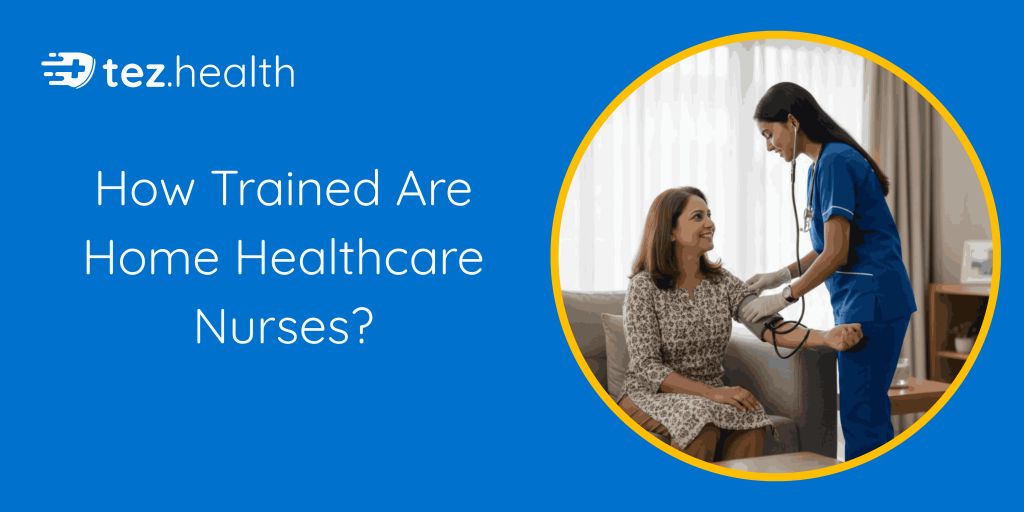
- Blood pressure monitoring
- Pulse and oxygen saturation checks
- Blood sugar monitoring
- Temperature assessment
Medication Administration
- Oral medication supervision
- Intramuscular injections
- IV medication administration
- Insulin injections
Wound Care & Dressing
- Surgical wound dressing
- Diabetic wound care
- Pressure sore management
- Sterile technique handling
Medical Device Management
- Ryle’s tube feeding
- Urinary catheter care
- Colostomy care
- Tracheostomy care
- Oxygen cylinder/concentrator management
Post-Surgical Care at Home
- Drain management
- Suture site monitoring
- Infection surveillance
- Pain management
4. Specialized Training Areas
Many home healthcare nurses receive additional training in:
Geriatric Care
Elderly patients often have:
- Multiple chronic illnesses
- Mobility issues
- Cognitive decline
Nurses are trained to:
- Prevent falls
- Manage dementia patients
- Administer multiple medications safely
Cardiac Care
Training includes:
- ECG monitoring basics
- Recognizing chest pain warning signs
- Emergency response activation
Neurological Care
- Stroke rehabilitation support
- Feeding tube management
- Seizure monitoring
Respiratory Care
- Nebulization
- Oxygen therapy
- COPD management
5. Emergency Preparedness in Home Healthcare
One of the biggest misconceptions is that home healthcare nurses are not equipped to handle emergencies.
In reality, trained nurses are educated in:
- Basic Life Support (BLS)
- CPR (Cardiopulmonary Resuscitation)
- Emergency stabilization
- Recognizing stroke symptoms
- Recognizing heart attack warning signs
- Shock management
They are trained to:
- Stabilize the patient.
- Inform the consulting doctor.
- Activate ambulance services if needed.
- Provide first-level emergency care until advanced support arrives.
This rapid response can be life-saving.
6. Infection Control & Sterility Protocols
Home healthcare nurses follow strict infection control guidelines similar to hospitals:
- Hand hygiene protocols
- Use of gloves and PPE
- Sterile dressing techniques
- Proper biomedical waste disposal
- Surface disinfection
Especially after the COVID-19 pandemic, infection control training has become even more rigorous.
7. Communication & Family Coordination Skills
Clinical skills alone are not enough in home healthcare.
Home nurses are trained to:
- Educate family members about patient care
- Explain medication schedules
- Identify behavioral changes
- Provide emotional reassurance
- Maintain patient dignity
In a home environment, empathy and communication are as important as clinical expertise.
8. Psychological & Emotional Competence
Patients at home may experience:
- Anxiety
- Depression
- Fear after surgery
- Frustration due to limited mobility
Home healthcare nurses are trained to:
- Offer psychological support
- Maintain calm during crises
- Provide patient-centered care
They act not just as caregivers — but as health partners.
9. Continuous Skill Upgradation
Professional home healthcare organizations ensure:
- Regular skill assessments
- Updated clinical protocol training
- Refresher courses in emergency care
- New equipment training
- Soft skill workshops
Healthcare evolves rapidly. Nurses must stay updated with:
- New medications
- Updated treatment guidelines
- Safety protocols
Continuous education is a core component of quality home healthcare services.
10. Legal & Ethical Training
Home healthcare nurses are educated in:
- Patient confidentiality
- Consent procedures
- Documentation
- Ethical treatment standards
They maintain patient records and report changes to supervising physicians.
11. What Makes Home Healthcare More Challenging Than Hospital Care?
Contrary to popular belief, home healthcare often demands higher clinical independence.
In hospitals:
- Doctors are nearby.
- Emergency teams are instantly available.
- Monitoring equipment is continuous.
In home settings:
- Nurses must identify subtle warning signs.
- They must act promptly without immediate supervision.
- They must adapt to different home environments.
This requires:
- Strong observational skills
- Critical thinking
- Confidence
- Experience
12. How to Evaluate the Training Level of a Home Healthcare Nurse
Before booking home nursing services, families should ask:
- What is the nurse’s qualification?
- Is the nurse registered with the State Nursing Council?
- Does the nurse have hospital experience?
- Is there emergency training (BLS/CPR)?
- Is there doctor supervision available remotely?
- What infection control protocols are followed?
Transparency indicates professionalism.
13. Common Myths About Home Healthcare Nurses
Myth 1: They are just caregivers.
Reality: Registered nurses have formal medical training.
Myth 2: They cannot handle emergencies.
Reality: Many are trained in life-saving procedures.
Myth 3: Hospital care is always superior.
Reality: For stable patients, home care often improves recovery outcomes.
14. Why Trained Nurses Improve Recovery Outcomes
Studies show that quality home healthcare:
- Reduces hospital readmissions
- Improves medication adherence
- Enhances elderly comfort
- Lowers infection risks
- Speeds up post-surgical recovery
When care is delivered in a familiar environment with professional supervision, patients often recover faster.
15. The Growing Demand for Skilled Home Healthcare Nurses in India
India’s healthcare landscape is shifting due to:
- Rising elderly population
- Increase in chronic diseases
- Hospital overcrowding
- Patient preference for comfort
This has created a demand for:
- Skilled nursing at home
- Post-operative home care
- ICU setup at home
- Home-based diagnostic services
The future of healthcare in India is moving toward patient-centric, doorstep medical services — and trained nurses are the backbone of this transformation.
Conclusion
Yes — when sourced from a professional and regulated healthcare provider.
A well-trained home healthcare nurse is:
- Clinically qualified
- Licensed and registered
- Hospital-experienced
- Emergency-trained
- Infection-control certified
- Compassionate and patient-focused
Home healthcare is not about replacing hospitals — it is about extending professional medical care beyond hospital walls.
Choosing the right provider ensures that medical safety, clinical standards, and patient dignity remain uncompromised.