
Critical care has always been associated with hospitals.
When someone is admitted to an ICU, families expect constant monitoring, advanced equipment, and immediate medical attention. Traditionally, this level of care was only possible within hospital walls.
But today, that idea is changing.
With advancements in medical technology and home healthcare services, ICU-level care is now being delivered at home. This shift has opened up new possibilities for patients—but it has also raised an important concern:
Is home-based ICU care actually safe?
The answer isn’t a simple yes or no. It depends on multiple factors—most importantly, the patient’s condition and the quality of care being provided.
Let’s break this down in a way that helps you make a confident, informed decision.
What Does Home-Based ICU Care Mean?
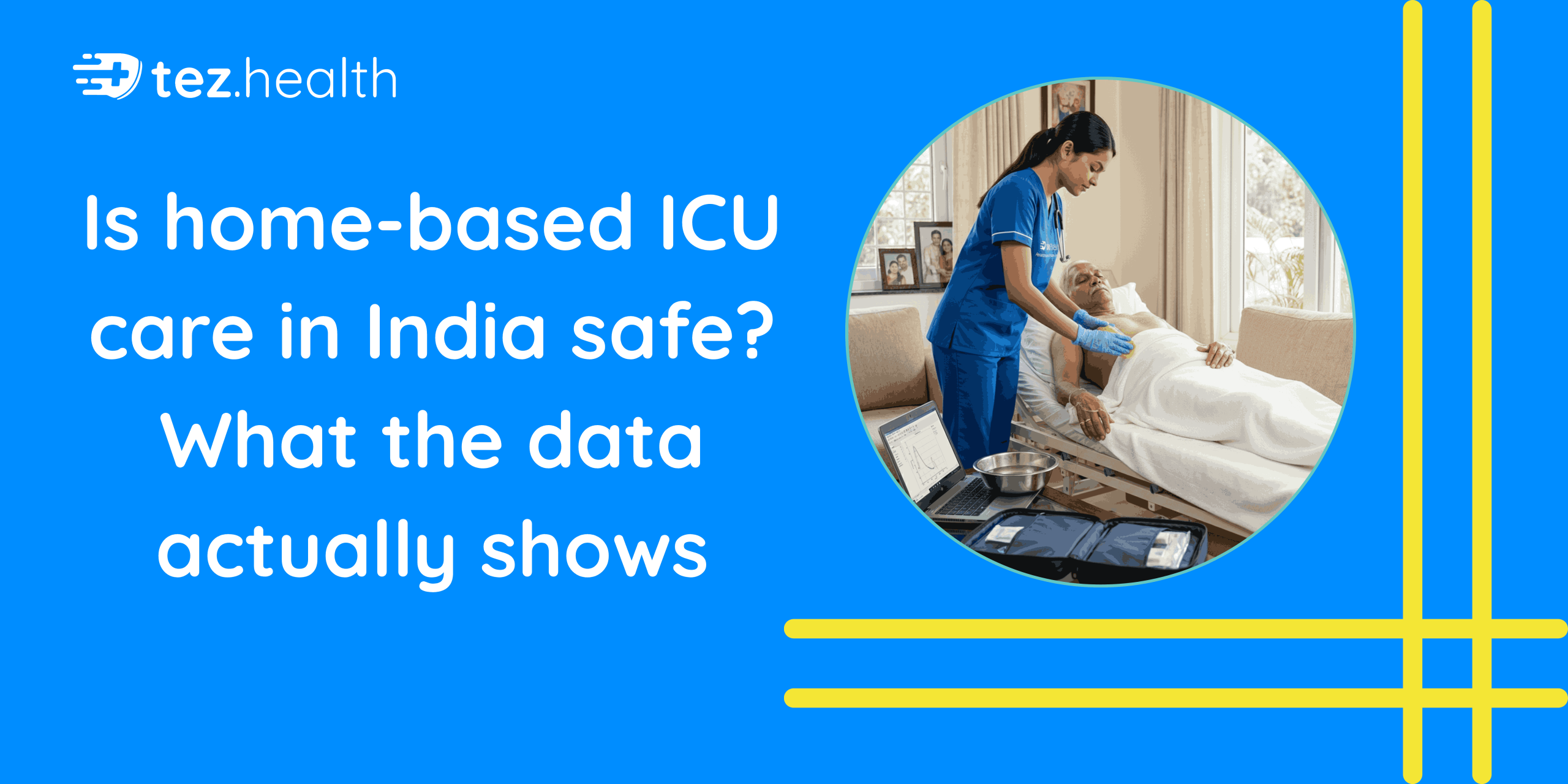
Home-based ICU care involves setting up a critical care environment inside a patient’s home.
This may include:
- Continuous vital monitoring
- Oxygen support or ventilators
- Infusion systems for medication
- ICU-grade medical equipment
- 24/7 nursing care
- Regular doctor supervision
In essence, it brings elements of an ICU into a home setting.
However, it’s important to understand one key difference:
Hospitals are designed for emergencies and rapid intervention
Home ICUs are designed for ongoing care in stable conditions
The Most Important Factor: Patient Condition
Before discussing safety, one principle must be clear:
Home ICU care is safe only when the patient is medically stable.
This is the single most important factor.
When Home ICU Care Is Not Safe
Home ICU is not suitable for patients who:
- Have unstable or rapidly changing conditions
- Require immediate access to multiple specialists
- Need constant adjustments in life-support systems
- Are at high risk of sudden emergencies
For such patients, hospital ICU remains the safest environment.
What Makes Home ICU Care Safe?
Safety in home ICU care is not about the location—it is about the system behind the care. When done correctly, home ICU can be highly effective. But it requires strict standards.
1. Continuous Monitoring
Patients must be monitored at all times.
This includes:
- Heart rate
- Blood pressure
- Oxygen levels
- Respiratory patterns
Without continuous monitoring, risks increase significantly.
2. Trained ICU-Level Nursing Support
Having a nurse is not enough—the nurse must be trained in critical care.
A qualified ICU nurse can:
- Identify early warning signs
- Manage equipment properly
- Respond quickly to changes
This is one of the most critical safety factors.
3. Regular Doctor Supervision
Home ICU care must operate under medical guidance.
This includes:
- Scheduled doctor visits
- Remote consultations when needed
- Clear treatment protocols
Without proper supervision, care quality can decline.
4. Reliable Medical Equipment
All equipment used at home must meet clinical standards.
This includes:
- Monitors
- Oxygen systems
- Infusion devices
Equally important:
- Equipment must be well-maintained
- Backup systems must be available
5. Emergency Response Plan
No matter how stable a patient is, emergencies can still happen.
A safe home ICU setup must include:
- A clear escalation plan
- Quick access to ambulance services
- Identified nearby hospital support
The ability to act quickly during emergencies is critical.
The Biggest Risk: Delayed Emergency Response
One of the main concerns with home ICU care is response time during emergencies.
In a hospital:
- Doctors are immediately available
- Advanced support is just seconds away
At home:
- Recognizing deterioration may take time
- Reaching a hospital requires transportation
This delay can be risky if the patient’s condition suddenly worsens.
That’s why patient selection and preparedness are so important.
Benefits of Home-Based ICU Care
When done correctly, home ICU care offers several advantages.
1. Lower Risk of Infections
Hospitals, especially ICUs, can expose patients to infections.
At home:
- The environment is controlled
- Exposure is limited
This reduces the risk of complications.
2. Greater Comfort for Patients
Being at home provides:
- Familiar surroundings
- Better sleep
- Reduced stress
This can positively impact recovery.
3. Personalized Attention
At home:
- Care is focused on one patient
- Monitoring is more individualized
This allows for better attention and consistency.
4. Emotional Support from Family
Patients benefit from being close to their loved ones.
This improves:
- Emotional well-being
- Mental health
- Overall recovery experience
5. Cost Efficiency
Home ICU care is often more affordable than long hospital stays.
It eliminates:
- Room charges
- Additional hospital overheads
However, cost should never come at the expense of safety.
Challenges of Home ICU Care
While there are benefits, there are also limitations.
1. Limited Immediate Medical Backup
Unlike hospitals, home setups don’t have instant access to multiple specialists.
2. Dependence on Caregiver Quality
The entire system depends heavily on:
- Nurse expertise
- Provider reliability
3. Family Responsibility
Families may need to:
- Coordinate care
- Stay involved
- Manage emotional stress
4. Infrastructure Limitations
Not all homes are suitable for ICU setups. Factors like space, power supply, and accessibility matter.
Comparing Home ICU and Hospital ICU
To understand safety better, let’s compare the two.
Hospital ICU
Best for:
- Critical and unstable patients
- Emergency interventions
- Complex medical needs
Strengths:
- Immediate response
- Full medical team
- Advanced diagnostics
Home ICU
Best for:
- Stable patients
- Recovery phase
- Long-term care
Strengths:
- Comfort
- Lower infection risk
- Personalized attention
The Key Difference
Hospital ICU handles emergencies. Home ICU supports recovery and stability
Real-Life Scenarios
Understanding real situations can help clarify this further.
1: Post-ICU Recovery
A patient has stabilized but still needs monitoring. bHome ICU can be a safe and effective option
2: Long-Term Respiratory Support
A patient requires oxygen or ventilator support but is stable. Home ICU may work well with proper setup
3: Sudden Critical Illness
A patient has unpredictable complications. Hospital ICU is the only safe choice
The Role of Technology
Technology plays a major role in improving home ICU safety.
Modern systems allow:
- Remote monitoring
- Real-time alerts
- Teleconsultations
- Continuous data tracking
These tools help bridge the gap between hospital and home care.
The Tez Health Approach
At Tez Health, home ICU care is approached with one clear priority:
Safety above everything else
This means:
1. Careful Patient Assessment
- Not every patient is suited for home ICU care—and that decision must be made carefully.
2. Structured Care Setup
- Every component—from equipment to staffing—is planned in detail.
3. Continuous Monitoring
- No gaps in observation or reporting.
4. Emergency Preparedness
- Clear protocols for rapid response.
5. Patient-Centric Care
- Balancing comfort with clinical safety at all times.
So, Is Home-Based ICU Care Safe in India?
Let’s answer this clearly.
Yes, home-based ICU care can be safe when the patient is stable and the setup meets proper medical standards.
No, it is not suitable for every patient or every situation.
Safety depends on:
- Patient condition
- Quality of care
- Medical supervision
- Emergency readiness
Final Thoughts
Home-based ICU care is not about replacing hospitals.
It is about extending care beyond them—when it is safe to do so.
For the right patient, with the right setup, it can offer:
- Better comfort
- Lower risk of infections
- More personalized care
But for critical and unstable conditions, hospital ICU remains essential.
At Tez Health, the goal is simple:
Provide the right level of care in the right place—without compromising safety.
Because in critical care, the decision is never just about convenience. It is about making the safest choice—for every patient, every time.