
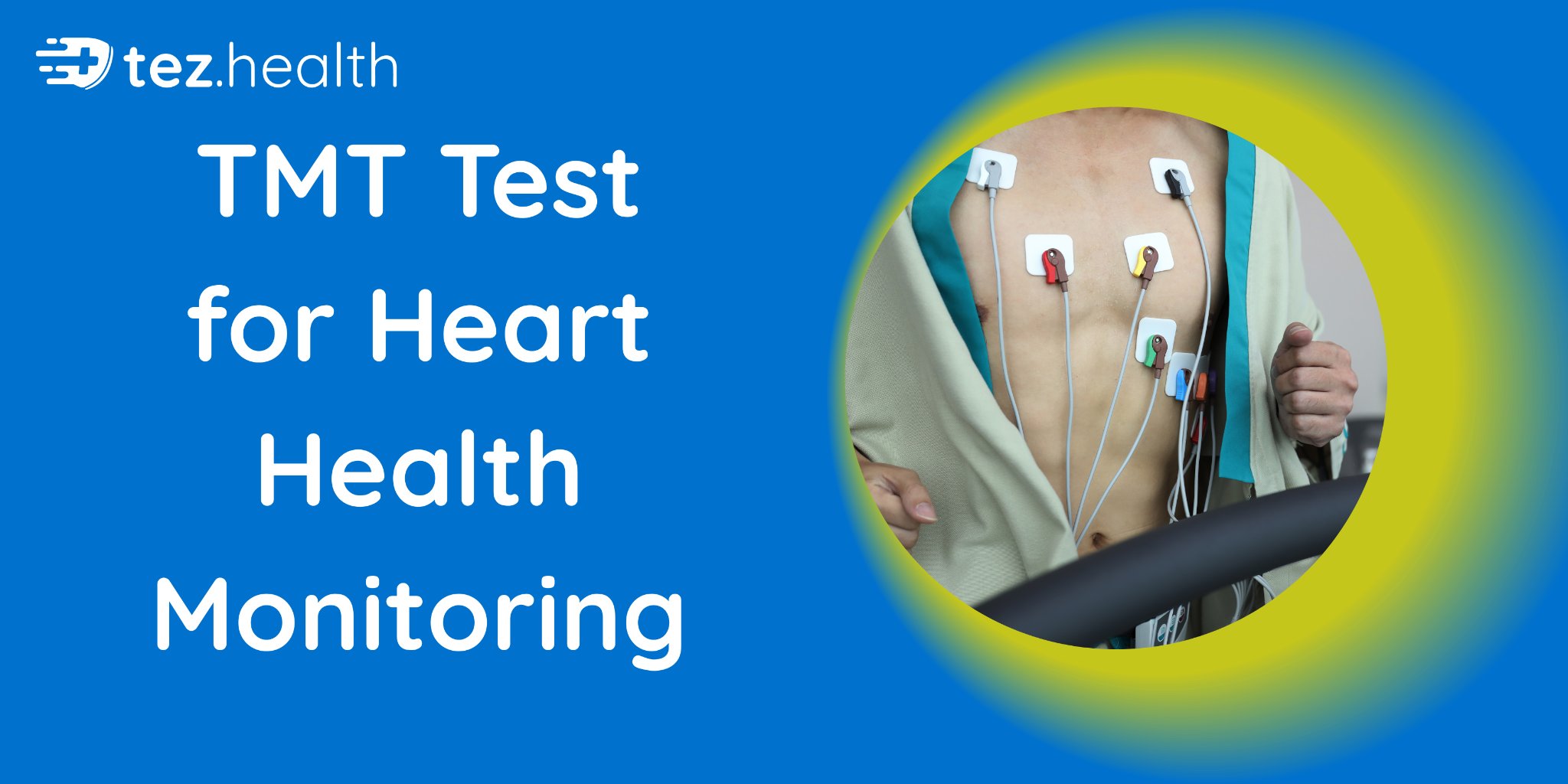
At Tez Health, we understand that heart health cannot wait—and neither should you. While advanced diagnostics like the Treadmill Test (TMT) are conducted in clinical settings, many early warning signs of heart conditions can be detected through a simple and effective ECG (Electrocardiogram) test at home. With Tez Health’s doorstep healthcare services, you no longer need to visit crowded hospitals for basic cardiac screening. Our trained professionals bring ECG testing directly to your home, helping monitor heart rhythm, detect abnormalities, and provide quick insights into your heart health. Whether you’re experiencing chest discomfort, irregular heartbeat, or simply want a preventive check-up, our fast and reliable home ECG services ensure timely care. While TMT plays a role in advanced heart evaluation, starting with an ECG at home can be the first and most convenient step toward better heart health.
What is a TMT Test?
The Treadmill Test (TMT), also known as a Cardiac Stress Test, is a diagnostic procedure used to evaluate how well your heart functions during physical activity. Since exercise increases the heart’s workload, the test helps identify issues that may not be visible when the body is at rest.
During the test, a patient walks on a treadmill while their heart rate, blood pressure, and ECG are continuously monitored.
Why is Heart Health Monitoring Important?
Heart disease is one of the leading causes of death globally. Regular monitoring helps in:
- Early detection of heart conditions
- Preventing severe complications
- Managing existing cardiac issues
- Improving long-term health outcomes
Routine tests like ECG and TMT play a crucial role in identifying potential risks before they become serious.
Role of ECG in Early Heart Monitoring
Before considering advanced tests like TMT, an ECG test is often the first step in evaluating heart health.
What is an ECG Test?
An ECG (Electrocardiogram) records the electrical activity of the heart and helps detect:
- Irregular heart rhythms (arrhythmias)
- Heart attack (current or past)
- Poor blood flow to the heart
- Structural abnormalities
Why Choose ECG at Home?
With TEZ Health, ECG testing becomes:
- Convenient – No hospital visits required
- Quick – Done within minutes
- Comfortable – Performed in your home environment
- Accessible – Ideal for elderly and high-risk patients
This makes ECG an excellent first-line test for heart health monitoring.
When is a TMT Test Recommended?
A TMT test is usually recommended when:
- ECG results are inconclusive
- You experience chest pain during physical activity
- There is suspicion of coronary artery disease
- You are at high risk due to lifestyle or medical conditions
Who Should Consider Heart Monitoring Tests?
You should consider ECG or TMT if you have:
- Chest pain or discomfort
- Shortness of breath
- High blood pressure
- Diabetes
- High cholesterol
- Family history of heart disease
- Sedentary lifestyle
Starting with an ECG at home can help determine if further testing like TMT is needed.
Procedure of a TMT Test
The TMT test typically involves:
- Attaching electrodes to the chest
- Recording baseline ECG and vitals
- Walking on a treadmill
- Gradual increase in speed and incline
- Monitoring heart response
- Recording recovery phase
The test usually lasts 30–45 minutes.
Understanding TMT Test Results
Normal Results
- Healthy heart response
- No signs of restricted blood flow
Abnormal Results
- Indications of reduced blood supply
- Possible blockages in arteries
Inconclusive Results
- May require additional tests
Benefits of TMT Test
- Detects coronary artery disease
- Evaluates exercise tolerance
- Helps in treatment planning
- Monitors heart performance under stress
Limitations of TMT Test
- Requires physical effort
- Not suitable for all patients
- May not detect early-stage issues
- Needs clinical setup
This is why ECG is often preferred as the first step.
ECG vs TMT: Which One Do You Need?
| Feature | ECG | TMT |
| Type | Resting test | Stress test |
| Location | Home possible | Hospital required |
| Purpose | Basic heart screening | Advanced diagnosis |
| Effort | No physical activity | Requires exercise |
For most individuals, starting with an ECG at home is the most practical and efficient option.
Advantages of ECG at Home with Tez Health
- Doorstep service within minutes
- Trained medical professionals
- Accurate and reliable reports
- Ideal for elderly and busy individuals
- Reduces hospital exposure risk
Tez Health ensures that your heart health is monitored without inconvenience.
Preventive Heart Care Tips
Along with regular testing, follow these habits:
- Maintain a balanced diet
- Exercise regularly
- Avoid smoking and alcohol
- Manage stress
- Get regular health check-ups
Preventive care combined with timely ECG testing can significantly reduce heart risks.
When Should You Take Action?
Do not ignore symptoms like:
- Chest pain
- Palpitations
- Fatigue
- Breathlessness
Start with an ECG at home and consult a doctor if further evaluation is needed.
Conclusion
Heart health monitoring is essential in today’s lifestyle. While the TMT test is useful for advanced diagnosis, it is not always the first step. A simple ECG test can provide valuable insights and help detect early warning signs.
With Tez Health’s ECG at home services, you can take proactive steps toward heart care without stepping out. Early detection, timely action, and convenient healthcare access can make all the difference in maintaining a healthy heart.
FAQs (Frequently Asked Questions)
1. What is the difference between ECG and TMT?
ECG measures heart activity at rest, while TMT evaluates heart performance during exercise.
2. Can ECG detect heart problems early?
Yes, ECG can identify many heart abnormalities in early stages.
3. Is ECG at home reliable?
Yes, when performed by trained professionals like TEZ Health, it is accurate and safe.
4. When should I take a TMT test?
When ECG results are inconclusive or symptoms appear during physical activity.
5. Is TMT test painful?
No, it involves walking on a treadmill and is generally safe.
6. How long does an ECG test take?
Usually 5–10 minutes.
7. Who should get regular ECG tests?
People with risk factors like diabetes, hypertension, or family history.
8. Can elderly patients take ECG at home?
Yes, it is highly recommended for elderly individuals.
9. Do I need preparation for ECG?
No special preparation is required.
10. How can I book an ECG at home?
You can easily book through TEZ Health for quick and reliable doorstep service.