


At Tez Health, we believe quality heart care should come to you—quickly, conveniently, and without the stress of hospital visits. While advanced tests like the Treadmill Test (TMT) are performed at specialized centers, many early signs of heart issues can be effectively detected through a simple ECG (Electrocardiogram) test—and the best part is, it can now be done right in the comfort of your home. Our trained healthcare professionals bring reliable ECG testing to your doorstep, helping monitor heart rhythm, detect abnormalities, and provide timely insights without delays. Whether you’re experiencing symptoms like chest discomfort, palpitations, or just want a routine heart check-up, Tez Health ensures fast, accurate, and hassle-free care—because when it comes to your heart, every minute matters
What is a TMT Test?
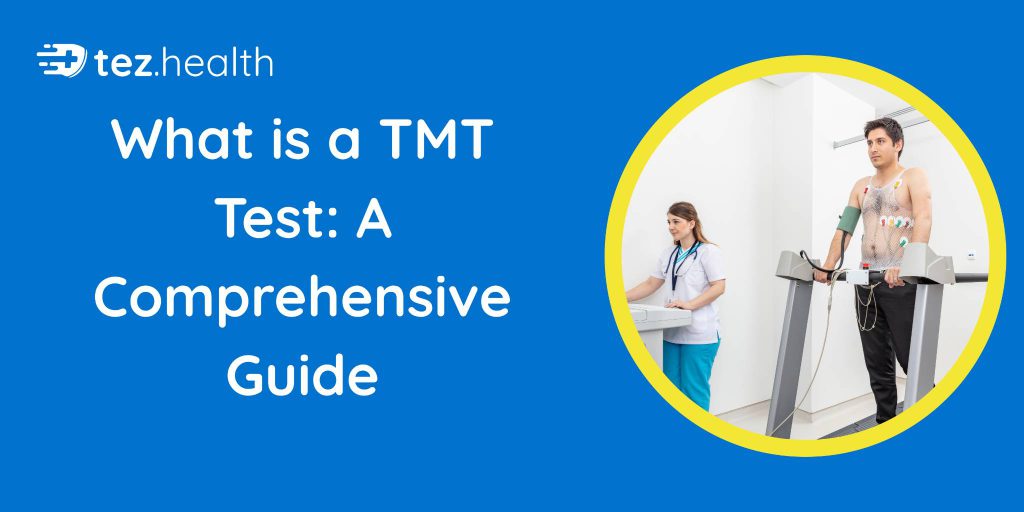
The Treadmill Test (TMT) is a non-invasive diagnostic test that evaluates how your heart performs during physical activity. Since exercise makes your heart pump harder and faster, the test can reveal problems with blood flow within the heart.
During the test, you walk on a treadmill while your heart rate, blood pressure, and electrocardiogram (ECG) are continuously monitored.
Why is a TMT Test Done?
Doctors recommend a TMT test for several reasons, including:
1. Diagnosing Coronary Artery Disease (CAD)
The test helps identify blockages or narrowing in the coronary arteries that may restrict blood flow to the heart.
2. Evaluating Chest Pain
If you experience unexplained chest pain, a TMT test can help determine whether it is heart-related.
3. Assessing Heart Function
It evaluates how efficiently your heart handles increased workload during physical activity.
4. Monitoring Treatment Effectiveness
Patients undergoing treatment for heart conditions can use TMT to track progress.
5. Determining Exercise Tolerance
It helps doctors understand how much physical activity your heart can safely handle.
Who Should Get a TMT Test?
A TMT test is generally recommended for:
- Individuals with symptoms like chest pain, dizziness, or shortness of breath
- People with risk factors such as diabetes, high blood pressure, or high cholesterol
- Patients with a family history of heart disease
- Individuals planning to start a vigorous exercise program
- Patients recovering from heart surgery or heart attack.
Types of TMT Tests
While the standard TMT involves walking on a treadmill, there are variations:
1. Exercise Stress Test
The most common type where the patient walks or runs on a treadmill.
2. Pharmacological Stress Test
Used for patients who cannot exercise. Medication is given to simulate the effects of exercise on the heart.
How to Prepare for a TMT Test
Proper preparation ensures accurate results. Here are some important tips:
- Avoid heavy meals 2–3 hours before the test
- Wear comfortable clothing and walking shoes
- Inform your doctor about any medications you are taking
- Avoid caffeine and smoking before the test
- Follow your doctor’s instructions regarding medication adjustments.
Procedure of the TMT Test
The TMT test is simple and usually completed within 30–45 minutes.
Step-by-Step Process:
- Initial Setup
Electrodes are attached to your chest to monitor heart activity. - Baseline Readings
Your resting heart rate, blood pressure, and ECG are recorded. - Start Walking on Treadmill
The treadmill begins at a slow speed. - Gradual Increase in Intensity
Speed and incline increase at regular intervals. - Continuous Monitoring
Your heart rate, ECG, and blood pressure are tracked throughout. - Test Completion
The test ends when:- You reach the target heart rate
- You experience symptoms
- The doctor detects abnormalities
- Your vitals are monitored until they return to normal.
Understanding TMT Test Results
The results of a TMT test can be:
1. Normal Result
- No significant ECG changes
- Adequate blood flow to the heart
- Normal heart rate response
2. Abnormal Result
- Reduced blood flow to heart muscles
- Irregular heart rhythms
- Indications of blocked arteries
3. Inconclusive Result
- Sometimes results are unclear and require further tests like angiography or echocardiography.
Benefits of the TMT Test
- Non-invasive and safe
- Helps in early detection of heart disease
- Assesses exercise tolerance
- Aids in treatment planning
- Quick and cost-effective.
Risks and Limitations of TMT Test
Although generally safe, the TMT test may have minor risks:
Possible Risks:
- Dizziness or fatigue
- Chest pain
- Irregular heartbeat (rare)
- Very rare risk of heart attack
Limitations:
- May not detect mild blockages
- False positives or negatives can occur
- Not suitable for patients with severe mobility issues
Who Should Avoid a TMT Test?
The test may not be suitable for:
- Patients with severe heart conditions
- Individuals with recent heart attack
- People with uncontrolled blood pressure
- Those with severe joint or mobility problems
Always consult a doctor before undergoing the test.
TMT Test vs Other Heart Tests
| Test | Purpose | When Used |
| ECG | Measures heart rhythm at rest | Routine check-up |
| TMT | Assesses heart under stress | Detect blockages |
| Echo | Visualizes heart structure | Structural issues |
| Angiography | Detects artery blockages | Confirm diagnosis |
When Should You Consider a TMT Test?
You should consider a TMT test if you experience:
- Frequent chest discomfort
- Breathlessness during activity
- Unexplained fatigue
- Irregular heartbeat
- High-risk lifestyle factors
Early testing can help prevent serious complications.
Role of Preventive Healthcare
Preventive healthcare plays a crucial role in maintaining heart health. Regular screening tests like TMT can help detect problems early and reduce the risk of major cardiac events.
Combining a TMT test with lifestyle changes such as a balanced diet, regular exercise, and stress management can significantly improve overall cardiovascular health.
Role of Preventive Healthcare
Preventive healthcare plays a crucial role in maintaining heart health. Regular screening tests like TMT can help detect problems early and reduce the risk of major cardiac events.
Combining a TMT test with lifestyle changes such as a balanced diet, regular exercise, and stress management can significantly improve overall cardiovascular health.
TMT Test at Home: Is It Possible?
Traditionally, TMT tests are conducted in hospitals or diagnostic centers due to the need for specialized equipment. However, with advancements in healthcare services, pre-test consultations and post-test care can now be managed from home.
Healthcare providers like TEZ Health are making diagnostic services more accessible, ensuring timely testing and expert guidance without unnecessary hospital visits.
Conclusion
The Treadmill Test (TMT) is a valuable diagnostic tool that provides critical insights into your heart’s performance under stress. It is widely used for detecting coronary artery disease, evaluating symptoms, and guiding treatment plans.
If you have risk factors for heart disease or experience symptoms like chest pain or breathlessness, consult your doctor about getting a TMT test. Early detection can make a significant difference in preventing serious complications and maintaining a healthy heart.
Taking proactive steps today can lead to a healthier tomorrow.
Frequently asked questions (FAQs) on TMT test
1. Is the TMT test painful?
No, the TMT test is non-invasive and painless. It only involves walking or running on a treadmill.
2. How long does a TMT test take?
The test usually takes about 30–45 minutes, including preparation and recovery time.
3. Can I eat before a TMT test?
It is recommended to avoid heavy meals 2–3 hours before the test.
4. Is TMT safe for elderly patients?
Yes, but it should be done under medical supervision, especially for elderly individuals with health conditions.
5. What happens if my TMT test is positive?
Your doctor may recommend further tests like angiography or echocardiography.
6. Can women undergo a TMT test?
Yes, the test is safe and commonly performed for both men and women.
7. Are there any side effects after the test?
Most people feel normal after the test, though mild fatigue may occur.
8. How often should I get a TMT test?
It depends on your risk factors and doctor’s recommendation.
9. Can TMT detect all heart problems?
No, it mainly detects blood flow issues and may require additional tests for complete diagnosis.
10. Is TMT necessary if my ECG is normal?
Yes, because ECG measures heart activity at rest, while TMT evaluates performance under stress.