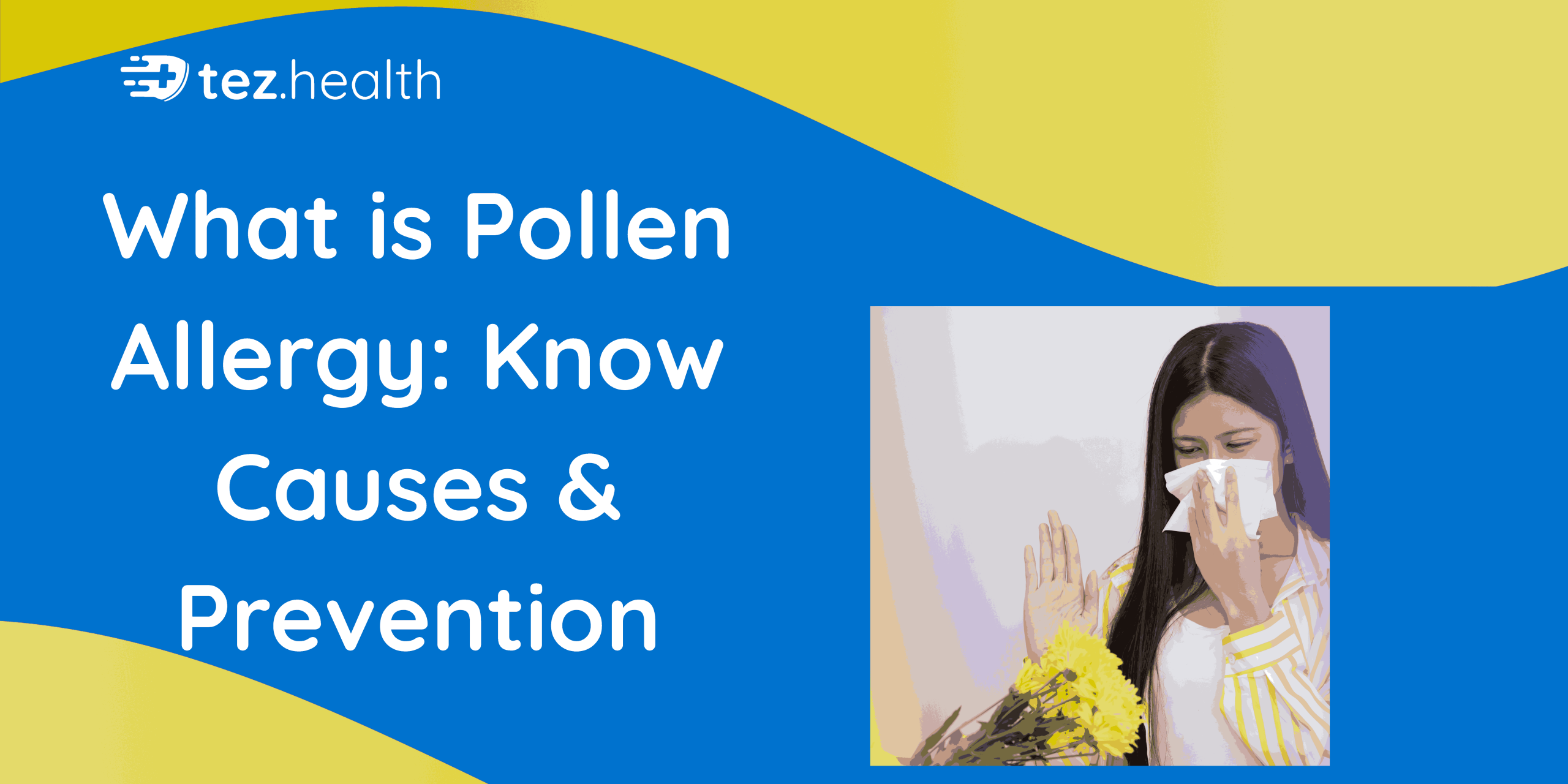
Pollen Allergy is a common seasonal condition caused when the immune system overreacts to tiny pollen particles released by trees, grasses, and weeds. It often leads to symptoms like sneezing, runny nose, itchy eyes, and congestion—especially during spring and early summer. The main causes include high pollen exposure, outdoor activities during peak pollen times, and a sensitive immune system. Prevention starts with simple steps like avoiding outdoor exposure during high pollen counts, keeping windows closed, using air purifiers, and maintaining personal hygiene after being outside.
If seasonal allergies are disrupting your daily life, it’s time to take control with expert care at your doorstep. With Tez Health, you get quick doctor consultations, at-home diagnostics, and personalized treatment without stepping out—because when it comes to your health, comfort and speed matter the most.
What is a Pollen Allergy?
A pollen allergy, commonly known as hay fever or allergic rhinitis, is an allergic reaction to pollen grains released by trees, grasses, and weeds. When a person with pollen allergy inhales these particles, the immune system reacts by releasing chemicals like histamine, leading to allergy symptoms.
What Causes Pollen Allergy?
Pollen allergy is caused by an overreaction of the immune system to harmless pollen particles.
Common Sources of Pollen:
- Trees (spring season)
- Grasses (summer season)
- Weeds (late summer and fall)
Other Contributing Factors:
- Genetic predisposition
- Environmental pollution
- Weak immune system
How Does Pollen Allergy Occur?
When pollen enters the body through inhalation:
- The immune system identifies it as harmful
- It releases histamines
- This leads to inflammation and allergy symptoms
Symptoms of Pollen Allergy
Symptoms can vary from mild to severe.
Common Symptoms Include:
- Sneezing
- Runny or blocked nose
- Itchy eyes, nose, or throat
- Watery eyes
- Coughing
- Fatigue
Severe Symptoms
- Difficulty breathing
- Wheezing
- Chest tightness
These may require immediate medical attention.
Who is at Risk?
- Individuals with a family history of allergies
- People with asthma
- Children and young adults
- People exposed to polluted environments
Diagnosis of Pollen Allergy
Doctors diagnose pollen allergy through:
- Medical history
- Physical examination
- Allergy tests (skin or blood tests)
Treatment of Pollen Allergy
1. Medications
- Antihistamines
- Decongestants
- Nasal sprays
2. Immunotherapy
Long-term treatment to reduce sensitivity to allergens.
3. Home Remedies
- Steam inhalation
- Saline nasal rinse
- Honey (in moderation)
Prevention of Pollen Allergy
1. Avoid Outdoor Exposure
- Stay indoors during high pollen count
- Avoid outdoor activities in early morning
2. Keep Indoor Air Clean
- Use air purifiers
- Keep windows closed
3. Maintain Hygiene
- Shower after coming from outside
- Wash clothes regularly
4. Wear Protective Gear
- Use masks when outdoors
5. Monitor Pollen Levels
- Stay updated on daily pollen counts
Lifestyle Tips for Managing Pollen Allergy
- Stay hydrated
- Eat a healthy diet
- Strengthen immunity
- Avoid smoking
- Get adequate rest
When to Consult a Doctor
Seek medical help if:
- Symptoms persist
- Breathing becomes difficult
- Allergy affects daily activities
With Tez Health, you can arrange a doctor visit at home for quick and comfortable care.
Benefits of Doctor Visit at Home
- Convenience and comfort
- Reduced exposure to allergens
- Faster diagnosis
- Personalized care
Complications of Untreated Pollen Allergy
- Chronic sinus infections
- Asthma attacks
- Sleep disturbances
- Reduced quality of life
Importance of Early Management
Early treatment helps:
- Reduce symptoms
- Prevent complications
- Improve daily functioning
How Tez Health Supports You
Tez Health offers:
- Doctor consultations at home
- Nursing care at home
- Quick response customer support team
- On time service delivered at home
Conclusion
In conclusion, pollen allergy is more than just a seasonal inconvenience—it can significantly impact your daily comfort and overall well-being if left unmanaged. Understanding its causes and recognizing early symptoms are key to preventing severe reactions. By taking simple precautions like limiting exposure during high pollen seasons, maintaining indoor air quality, and following proper hygiene practices, you can effectively reduce the risk and severity of symptoms. Staying proactive and informed empowers you to enjoy every season without discomfort, ensuring better respiratory health and quality of life.
Frequently Asked Questions (FAQs) on What is pollen allergy : Know causes & prevention:
1. What is pollen allergy?
An allergic reaction to pollen particles.
2. What are common symptoms?
Sneezing, runny nose, and itchy eyes.
3. Can pollen allergy be cured?
It can be managed but not completely cured.
4. When is pollen allergy most common?
During spring and summer.
5. How can I prevent pollen allergy?
Avoid exposure and maintain hygiene.
6. Is pollen allergy dangerous?
Usually mild but can be severe in some cases.
7. Can pollen allergy affect breathing?
Yes, it can cause breathing issues.
8. Is ECG needed during allergy?
In some cases, to monitor overall health.
9. Can I get ECG at home?
Yes, Tez Health provides ECG testing at home.
10. How can I book doctor services at home?
You can easily book through Tez Health.