


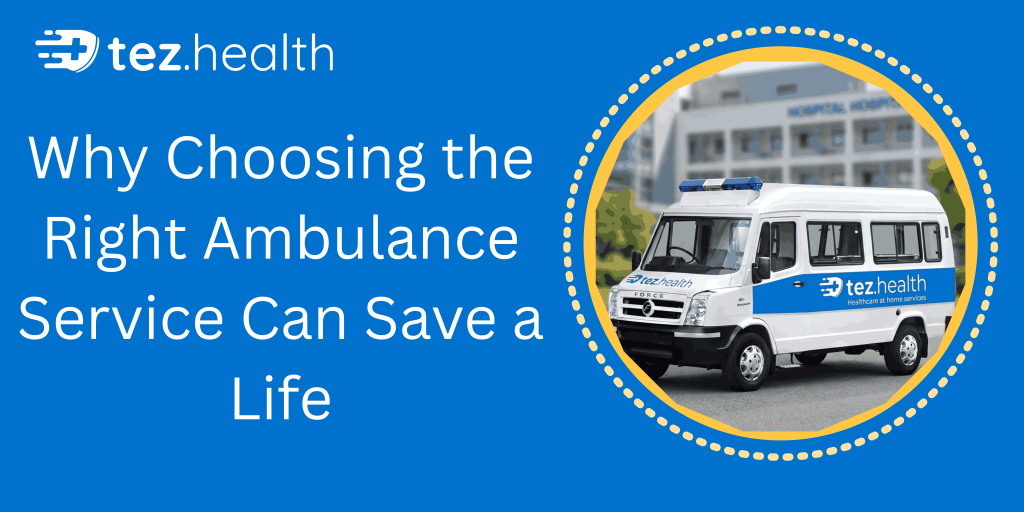
When a medical emergency strikes, every second matters. Whether it’s a sudden cardiac arrest, a severe road accident, a stroke, or a respiratory crisis, the decisions made in the first few minutes often determine survival and long-term recovery. One of the most critical decisions during such a crisis is choosing the right ambulance service.
Many people assume that all ambulances provide the same level of care. In reality, ambulance services vary significantly in terms of equipment, medical expertise, response time, and coordination with hospitals. Choosing the wrong type of ambulance—or delaying the decision—can lead to avoidable complications, disability, or even death.
This detailed guide explains why selecting the appropriate ambulance service is not just about transportation but about life-saving medical intervention. It explores how the right ambulance service impacts survival rates, reduces complications, improves recovery outcomes, and provides peace of mind during emergencies.
Ambulance Services: More Than Just Transportation
An ambulance is not simply a vehicle to transport a patient from one location to another. Modern ambulances are mobile emergency care units designed to:
- Provide immediate medical intervention
- Stabilize critical patients
- Monitor vital signs
- Administer life-saving medications
- Coordinate with hospitals before arrival
The right ambulance acts as a moving emergency room. The wrong one may only provide basic transport without advanced support.
Understanding this difference is crucial.
The Golden Hour: Why Timing and Care Matter
In emergency medicine, the “Golden Hour” refers to the first 60 minutes after a traumatic injury or critical medical event. During this period:
- Rapid intervention increases survival chances.
- Early oxygen support reduces brain damage.
- Immediate CPR doubles or triples cardiac arrest survival.
- Quick trauma management prevents excessive blood loss.
Choosing an ambulance equipped with appropriate medical support during this window can significantly alter outcomes.
If a patient suffering a heart attack is transported in a basic vehicle without cardiac monitoring, precious time is lost. If the same patient is transported in an Advanced Life Support (ALS) ambulance with defibrillation capability, life-saving treatment begins immediately.
Types of Ambulances and Their Importance
Different medical situations require different levels of care.
1. Basic Life Support (BLS) Ambulance
BLS is best suited for:
- Stable patients
- Minor injuries
- Non-critical transfers
- Post-discharge home transfers
BLS ambulances provide oxygen, first aid, and basic monitoring.
However, they are not designed for severe emergencies.
2. Advanced Life Support (ALS) Ambulance
ALS is designed for:
- Cardiac emergencies
- Stroke
- Severe asthma
- Serious trauma
ALS ambulances include:
- Cardiac monitors
- Defibrillators
- Ventilators
- Emergency medications
- Trained paramedics
In life-threatening situations, ALS ambulances can initiate advanced care even before reaching the hospital.
3. ICU Ambulance
Used for:
- Ventilated patients
- Multi-organ failure
- Critical inter-hospital transfers
- Post-surgery high-risk transfers
ICU ambulances function like mobile intensive care units.
4. Neonatal Ambulance
Specialized for:
- Premature babies
- Neonatal complications
- High-risk newborn transfers
Choosing the wrong ambulance for a newborn can be dangerous.
Why the Right Ambulance Saves Lives
Let’s explore specific medical scenarios where ambulance selection matters.
1. Cardiac Arrest
In cardiac arrest:
- Every minute without CPR reduces survival by 7–10%.
- Defibrillation within minutes is critical.
A properly equipped ALS ambulance can:
- Start CPR immediately
- Use a defibrillator
- Provide oxygen
- Administer cardiac drugs
Transporting a cardiac patient in a basic vehicle without equipment can delay life-saving intervention.
2. Stroke
In stroke cases:
- “Time is brain.”
- Brain cells die rapidly without oxygen.
A trained ambulance team can:
- Recognize stroke signs
- Alert stroke-ready hospitals
- Ensure rapid transfer
Incorrect ambulance choice may delay access to specialized care.
3. Severe Trauma
In road accidents or falls:
- Internal bleeding can occur.
- Spinal injuries must be stabilized.
Advanced ambulances provide:
- Cervical spine immobilization
- Trauma kits
- Oxygen support
- IV fluids
Improper handling during transport can worsen injuries.
4. Respiratory Failure
Patients with:
- Severe asthma
- COPD exacerbation
- COVID-related distress
- Pneumonia
may require immediate oxygen or ventilator support.
Only ALS or ICU ambulances can provide this level of respiratory care.
Response Time: A Deciding Factor
The right ambulance service ensures:
- Quick dispatch
- GPS tracking
- Efficient navigation
- Minimal delay
In urban areas, traffic congestion can delay response. Professional ambulance services use route optimization and coordination to reduce delays.
Delays of even 10–15 minutes can change patient outcomes significantly.
Importance of Trained Medical Staff
An ambulance is only as good as its medical team.
Trained paramedics and emergency technicians can:
- Assess patient condition accurately
- Provide CPR
- Administer medications
- Manage airway emergencies
- Monitor vital signs continuously
Untrained or poorly trained staff increase risk.
Always ensure the ambulance service employs certified professionals.
Coordination With Hospitals
High-quality ambulance services:
- Inform hospitals in advance
- Share patient condition details
- Ensure emergency room readiness
This reduces admission delays and improves treatment speed.
For example, in heart attack cases, pre-hospital ECG transmission allows hospitals to prepare cardiac catheterization labs before arrival.
Risks of Choosing the Wrong Ambulance
Choosing the wrong ambulance can lead to:
- Deterioration during transit
- Lack of oxygen support
- Inability to manage sudden cardiac arrest
- Delayed hospital readiness
- Increased complications
In critical emergencies, basic transport without medical intervention can be life-threatening.
Cost vs Value: Understanding the Difference
Many families hesitate due to cost concerns. However:
- The cost of complications far exceeds ambulance fees.
- Early intervention reduces ICU stay duration.
- Faster treatment lowers long-term disability costs.
While ICU ambulances cost more, they may prevent expensive long-term medical consequences.
Choosing based solely on price can be risky.
Air Ambulance Consideration
For long-distance transfers or remote locations:
- Air ambulances significantly reduce travel time.
- Critical ICU patients benefit from faster transport.
Though expensive, air ambulance services are life-saving in specific scenarios such as:
- Organ transplant
- Remote trauma
- Inter-state ICU transfer
Rural and Remote Area Challenges
In rural India:
- Hospitals may be far away.
- Road conditions may be poor.
- Specialized care may require long-distance travel.
The right ambulance service ensures stable transport over extended distances.
Public Awareness Gap
Many people:
- Attempt self-transport.
- Use private cars.
- Delay calling professional services.
Self-transport lacks:
- Medical monitoring
- Emergency intervention
- Oxygen support
- Trained assistance
This increases risk during critical deterioration.
Psychological Impact on Families
Choosing the right ambulance provides:
- Confidence
- Emotional reassurance
- Structured care
- Reduced panic
Knowing that trained professionals are managing the situation reduces stress for family members.
How to Choose the Right Ambulance Service
Consider the following:
- Nature of emergency
- Patient stability
- Distance to hospital
- Required medical equipment
- Availability of trained staff
- Service reputation
- Response time
When in doubt, opt for a higher level of care.
Signs You Need Advanced Ambulance Support
Choose ALS or ICU ambulance if:
- Patient is unconscious
- Breathing difficulty is present
- Chest pain persists
- Severe bleeding
- Seizures
- Stroke symptoms
- Ventilator dependency
In stable, non-emergency cases, BLS may be sufficient.
Legal and Safety Considerations
Professional ambulance services follow:
- Medical protocols
- Safety standards
- Infection control measures
- Equipment maintenance guidelines
Unregulated transport services may compromise patient safety.
The Bigger Picture: EMS as a Lifeline
A strong ambulance system strengthens:
- Public health infrastructure
- Emergency preparedness
- Disaster response capability
- Community confidence
Ambulance services are not luxury services—they are essential healthcare infrastructure.
Real-Life Impact
Case1: A heart attack patient receives immediate defibrillation in an ALS ambulance and survives.
Case2: A trauma patient is immobilized properly during transport and avoids permanent spinal damage.
Case3: A premature baby is transferred in a neonatal ambulance and receives life-saving temperature regulation.
In each case, the right ambulance made the difference.
The Future of Ambulance Services in India
Advancements include:
- Telemedicine integration
- GPS-enabled dispatch
- AI-based route planning
- Real-time patient monitoring
- Expansion of air ambulance networks
Choosing providers that invest in technology improves care quality.
Conclusion
Choosing the right ambulance service is not a minor decision—it is a life-saving decision.
During medical emergencies:
- Time matters.
- Equipment matters.
- Expertise matters.
- Coordination matters.
The right ambulance provides immediate care, continuous monitoring, professional intervention, and seamless hospital coordination. The wrong choice can delay treatment, worsen outcomes, and increase risk.
Preparedness is key. Know your local ambulance options. Save emergency numbers. Understand the difference between BLS, ALS, ICU, and air ambulances.
When an emergency occurs, clarity and informed decision-making can save a life.
Because in critical moments, the right ambulance is not just transportation—it is survival in motion.