
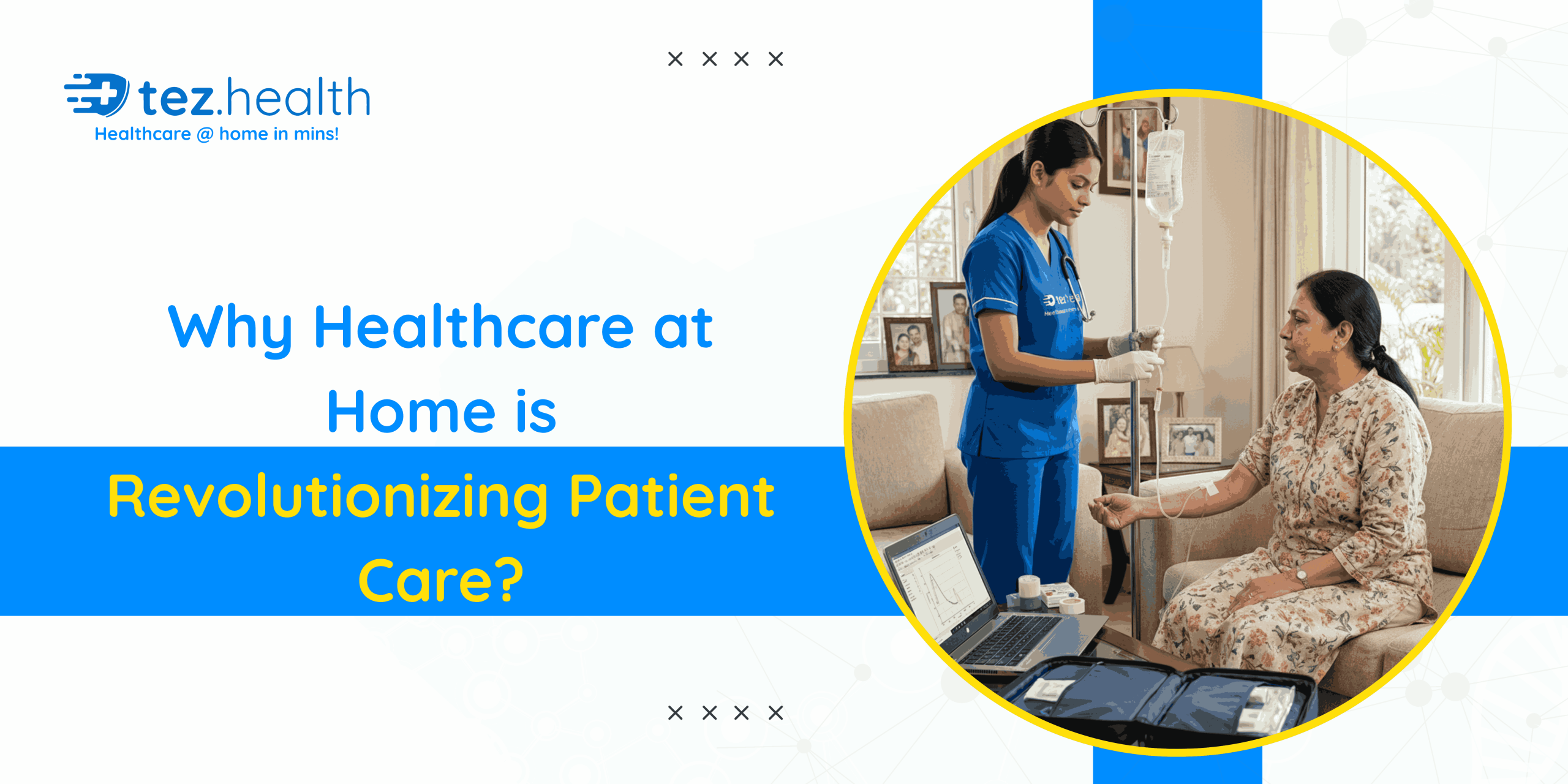
Healthcare is no longer confined to hospital walls. What we are witnessing today is a clear shift in how care is delivered — from centralized systems to patient-centric solutions. Among these, healthcare at home stands out as one of the most impactful transformations.
This shift is not driven by convenience alone. It is driven by a deeper understanding of what patients actually need: timely care, personalized attention, emotional comfort, and better outcomes. Traditional healthcare systems, while essential, often struggle to provide all of these at once. Home healthcare bridges that gap.
At Tez Health, we see this not just as a service, but as a new standard of care — one that puts the patient’s life, environment, and comfort at the center of everything.
In this blog, let’s explore 10 strong reasons why healthcare at home is revolutionizing patient care and why it is becoming the preferred choice for many.
1. Healing Happens Better in a Comfortable Environment
Recovery is not only about medicines and procedures. It is also about how a patient feels during the healing process.
Hospitals can often feel impersonal and stressful. The unfamiliar setting, constant activity, and lack of privacy can impact a patient’s emotional state. At home, everything is different. The environment is calm, familiar, and reassuring.
This sense of comfort reduces anxiety and helps patients feel more in control. When the mind is at ease, the body responds better to treatment. That’s why many patients recover more smoothly when they are at home.
2. Care That Is Truly Personalized
In a hospital, doctors and nurses manage multiple patients at the same time. Even with the best intentions, care often follows a standardized approach.
Home healthcare changes this dynamic completely.
Here, the focus is entirely on one patient at a time. Healthcare professionals tailor care plans to each patient’s individual needs, routines, and health goals. They customize everything—from medication schedules to physiotherapy sessions and daily care support.
This level of personalization leads to better adherence to treatment and ultimately better results.
3. Eliminates the Hassle of Travel and Waiting
Accessing healthcare can be physically and mentally exhausting, especially for those who need frequent care.
Traveling through traffic, waiting in crowded clinics, and coordinating appointments can add unnecessary stress — particularly for elderly patients or those recovering from illness.
With home healthcare, care comes to the patient. There is no travel, no waiting rooms, and no disruption to daily life.
This convenience makes it easier for patients to stay consistent with their treatment, which is a key factor in recovery.
4. More Efficient Use of Time and Resources
Healthcare at home is not just convenient — it is efficient.
When care is delivered at home, it reduces the need for repeated hospital visits, unnecessary admissions, and extended stays. This saves both time and resources for patients and their families.
It also allows healthcare professionals to focus on delivering care rather than managing logistics, which improves overall efficiency in the system.
5. Reduced Exposure to External Risks
Hospitals are designed to treat illness, but they are also environments where multiple health conditions exist in close proximity.
For patients with weakened immunity, this can increase the risk of complications.
Home healthcare minimizes this exposure. Patients remain in a controlled and familiar setting, which significantly lowers the chances of additional health risks.
This is particularly important for post-operative care, elderly patients, and those with chronic conditions.
6. Encourages Faster and More Consistent Recovery
Recovery is not just about receiving treatment — it is about following it consistently.
At home, patients are more likely to stick to their routines, whether it’s taking medication on time, following dietary guidelines, or completing physiotherapy exercises.
There is also greater flexibility in scheduling care, which ensures that treatment fits seamlessly into the patient’s daily life.
This consistency plays a major role in speeding up recovery and preventing setbacks.
7. Preserves Independence and Daily Routine
One of the biggest concerns patients have is losing control over their daily lives.
Hospitalization often requires patients to adapt to fixed schedules and limited freedom. At home, patients can continue their routines with minimal disruption.
They can eat what they prefer, sleep in their own space, and maintain their lifestyle — all while receiving professional care.
This sense of normalcy is incredibly important for mental well-being and overall recovery.
8. Strengthens Family Involvement in Care
Healthcare is not just about the patient — it involves the entire family.
In a hospital setting, family involvement is often limited. At home, it becomes a natural part of the care process.
Family members can stay informed, participate in care decisions, and provide emotional support. At the same time, professional caregivers ensure that medical needs are handled properly.
This collaborative approach creates a stronger support system for the patient.
9. Focus on Prevention, Not Just Treatment
Traditional healthcare often becomes active only after a problem arises.
Home healthcare takes a more proactive approach.
Regular monitoring, early detection of symptoms, and timely intervention help prevent complications before they become serious.
This not only improves health outcomes but also reduces the need for emergency care or hospitalization.
10. A More Human Approach to Healthcare
At its core, healthcare is about people.
Home healthcare brings back the human element that is sometimes lost in busy clinical environments. It allows healthcare professionals to build stronger connections with patients, understand their lives better, and provide care that goes beyond just medical needs.
This approach builds trust, improves communication, and creates a more positive healthcare experience.
The Bigger Shift: From Hospital-Centered to Patient-Centered Care
What we are seeing today is a fundamental change in priorities.
Healthcare is no longer just about treating illness — it is about improving quality of life. Patients are looking for care that is:
- Easy to access
- Tailored to their needs
- Comfortable and stress-free
- Focused on long-term well-being
Home healthcare delivers on all these expectations.
It represents a move toward care that adapts to the patient, rather than forcing the patient to adapt to the system.
Why Tez Health Is Leading This Change
At Tez Health, we are committed to making healthcare simpler, faster, and more patient-focused. Our approach is built on three key principles:
Speed: Quick response and timely care when it matters most
Quality: Skilled professionals and doctor-monitored services
Convenience: Healthcare delivered directly to your doorstep
We deliver nursing care, physiotherapy, diagnostics, and urgent support directly to patients at home. We believe good healthcare should remain simple and stress-free. It should be accessible, reliable, and centered around the patient’s needs.