Understanding the Rise of a Transformative Healthcare Model
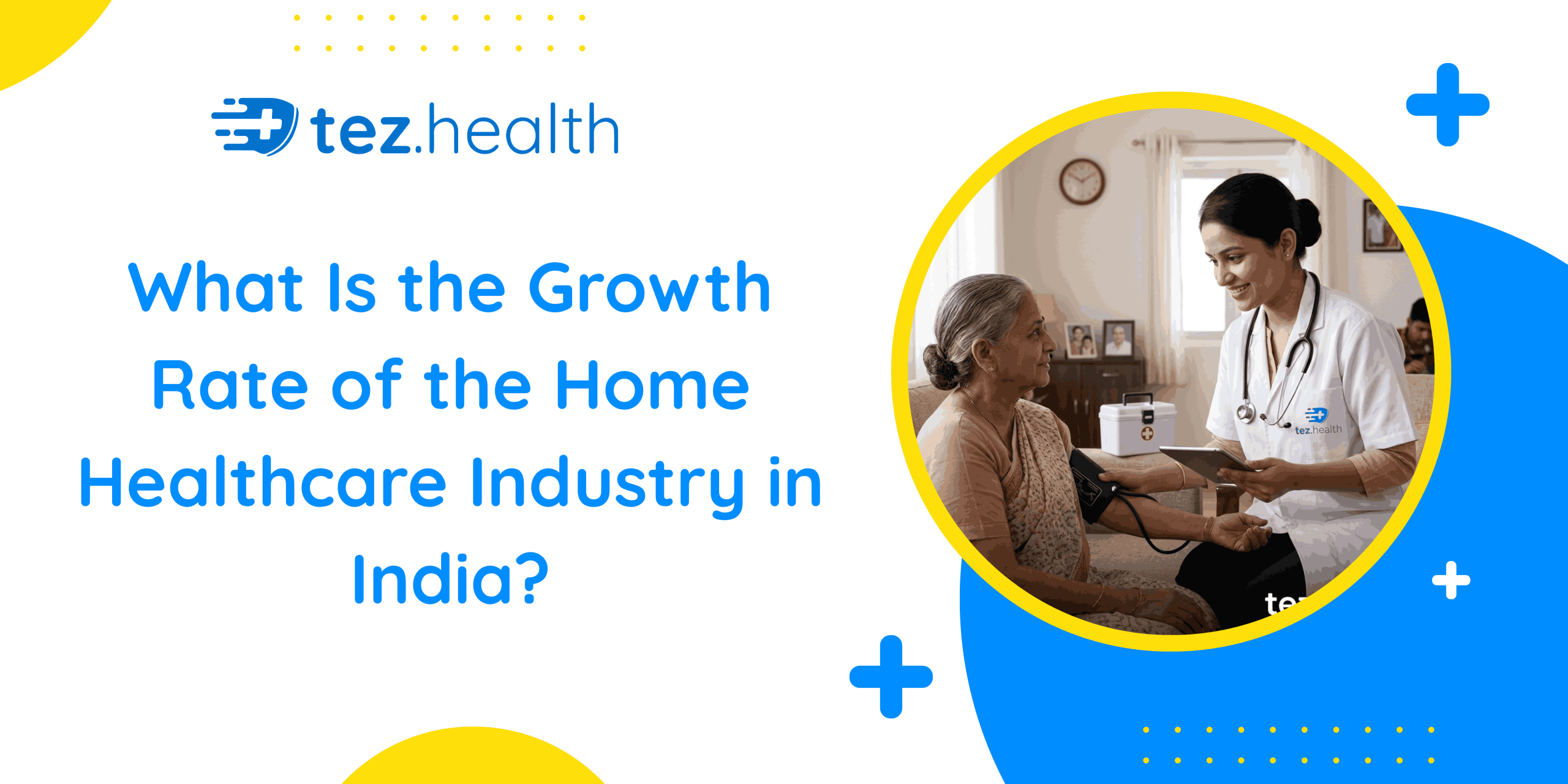
India’s healthcare landscape is changing — and it’s changing in a way that puts the patient at the center. One of the clearest signs of this transformation is the rapid growth of the home healthcare industry.
Not long ago, medical care in India was almost entirely hospital-based. Today, that model is evolving. Patients are no longer willing to depend only on clinics and hospitals for every need. Instead, they are choosing care that is more accessible, more comfortable, and more aligned with their daily lives.
This is where home healthcare comes in.
But how fast is this industry actually growing? And what is driving this growth?
Let’s explore the growth rate of home healthcare in India, the forces behind it, and what it means for the future — especially from the perspective of Tez Health.
The Growth Rate of Home Healthcare in India
The home healthcare industry in India is growing at a strong double-digit rate, typically estimated in the range of 15% to 20% annually.
This kind of growth is significant for any sector — but in healthcare, it is especially meaningful. It indicates a shift not just in demand, but in mindset.
A sustained double-digit growth rate means:
- More patients are choosing home-based care
- More services are being delivered outside hospitals
- More healthcare providers are investing in this model
In simple terms, home healthcare is moving from being an alternative option to becoming a primary mode of care delivery.
What Does This Growth Really Mean?
Growth rate is more than just a number — it reflects a deeper transformation.
When an industry grows at 15–20% year after year, it signals:
- Strong and consistent demand
- High patient satisfaction
- Expanding service capabilities
- Increasing trust in the model
In India, this growth is not limited to metro cities anymore. Tier-2 and Tier-3 cities are also adopting home healthcare rapidly, making it a nationwide movement rather than a niche urban trend.
Key Drivers Behind the Growth of Home Healthcare
The rise of home healthcare in India is not driven by a single factor. It is the result of multiple changes happening simultaneously across society, technology, and healthcare needs.
1. Increasing Lifestyle Diseases
India is witnessing a rise in chronic conditions such as diabetes, hypertension, and heart-related issues. These conditions require long-term management rather than one-time treatment. Frequent hospital visits can be exhausting and impractical.
Home healthcare provides a more sustainable solution by enabling:
- Regular monitoring
- Ongoing treatment
- Continuous support
This makes it easier for patients to manage their conditions effectively over time.
2. Aging Population
India’s elderly population is steadily increasing.As people age, they often require assistance with daily activities, medication management, and medical care. Traveling to hospitals frequently becomes difficult. Home healthcare addresses this need by bringing care directly to elderly patients, ensuring they receive attention without disrupting their comfort or routine.
3. Demand for Convenience
Modern lifestyles are busy and time-sensitive.
People are looking for services that save time and reduce effort — and healthcare is no exception.
Home healthcare eliminates:
- Travel time
- Waiting periods
- Scheduling complications
This convenience makes it an attractive option for working professionals, families, and caregivers alike.
4. Shift Toward Preventive Care
Healthcare is no longer only about treating illness — it is also about preventing it.
Home healthcare supports preventive care through:
- Regular health check-ups
- Early detection of issues
- Continuous monitoring
This proactive approach reduces the risk of complications and improves long-term health outcomes.
5. Cost Efficiency
Hospital care can be expensive, especially for long-term treatment.
Home healthcare offers a more cost-effective alternative by reducing:
- Hospital admissions
- Travel expenses
- Additional service charges
For many families, this makes consistent care more affordable and manageable.
6. Technological Advancements
Technology has played a major role in enabling home healthcare. From portable diagnostic devices to remote monitoring tools, medical care can now be delivered effectively outside traditional settings.
Digital platforms also make it easier to:
- Book services
- Track health data
- Stay connected with healthcare professionals
This seamless integration of technology enhances both efficiency and patient experience.
7. Increased Awareness and Trust
Earlier, many people were hesitant to opt for home healthcare due to concerns about quality and reliability. Today, that perception is changing. As more patients experience the benefits of home care, trust is growing. Positive outcomes and word-of-mouth recommendations are further accelerating adoption.
8. Pressure on Hospitals
Hospitals often face high patient volumes, leading to overcrowding and longer waiting times. Home healthcare helps reduce this burden by managing non-critical cases outside hospital settings. This creates a more balanced healthcare system where hospitals can focus on critical care, while home healthcare handles routine and recovery-based services.
How Big Can This Industry Become?
Given its current growth rate, the home healthcare industry in India is expected to expand significantly in the coming years.
As awareness increases and services become more accessible, we can expect:
- Wider adoption across cities and towns
- Expansion of service offerings
- Greater integration with digital health platforms
- Increased investment in infrastructure and workforce
The industry is not just growing — it is evolving into a core part of India’s healthcare system.
Challenges That Come with Growth
While the growth is promising, it also comes with challenges that need to be addressed.
Some of the key challenges include:
- Maintaining consistent quality across providers
- Ensuring availability of trained professionals
- Building standardized protocols
- Strengthening trust in smaller markets
Addressing these challenges is essential to sustain long-term growth and ensure patient safety.
The Role of Tez Health in This Growing Industry
At Tez Health, we see this growth as an opportunity to redefine healthcare delivery. Our goal is not just to participate in this industry, but to lead it by setting higher standards for:
- Speed of service
- Quality of care
- Patient experience
We focus on delivering:
- Nursing care at home
- Physiotherapy services at home
- Diagnostics and sample collection at home
- Urgent medical support
All our services are designed to be fast, reliable, and patient-focused. As the industry grows, Tez Health is committed to making home healthcare more accessible, efficient, and trustworthy for every patient.
The Future of Home Healthcare in India
The future of healthcare in India will not be limited to hospitals. We are moving toward a hybrid model where care is delivered across multiple settings — with home healthcare playing a central role.
In the coming years, we can expect:
- More advanced home-based treatments
- Integration with telemedicine and digital health
- Personalized care driven by data and technology
- Greater focus on preventive and long-term care
Home healthcare will not replace hospitals — but it will complement them in a way that makes the entire system more efficient.
Final Thoughts
The growth rate of the home healthcare industry in India tells a powerful story. A consistent 15–20% annual growth is not just about numbers — it reflects a shift in how people think about healthcare.
Patients today want care that is:
- Convenient
- Personalized
- Accessible
- Comfortable
Home healthcare delivers all of this — and more. As this model continues to evolve, it is clear that the future of healthcare in India will be more flexible, more patient-centered, and more connected to everyday life. And with Tez Health, that future is already taking shape — one home at a time.