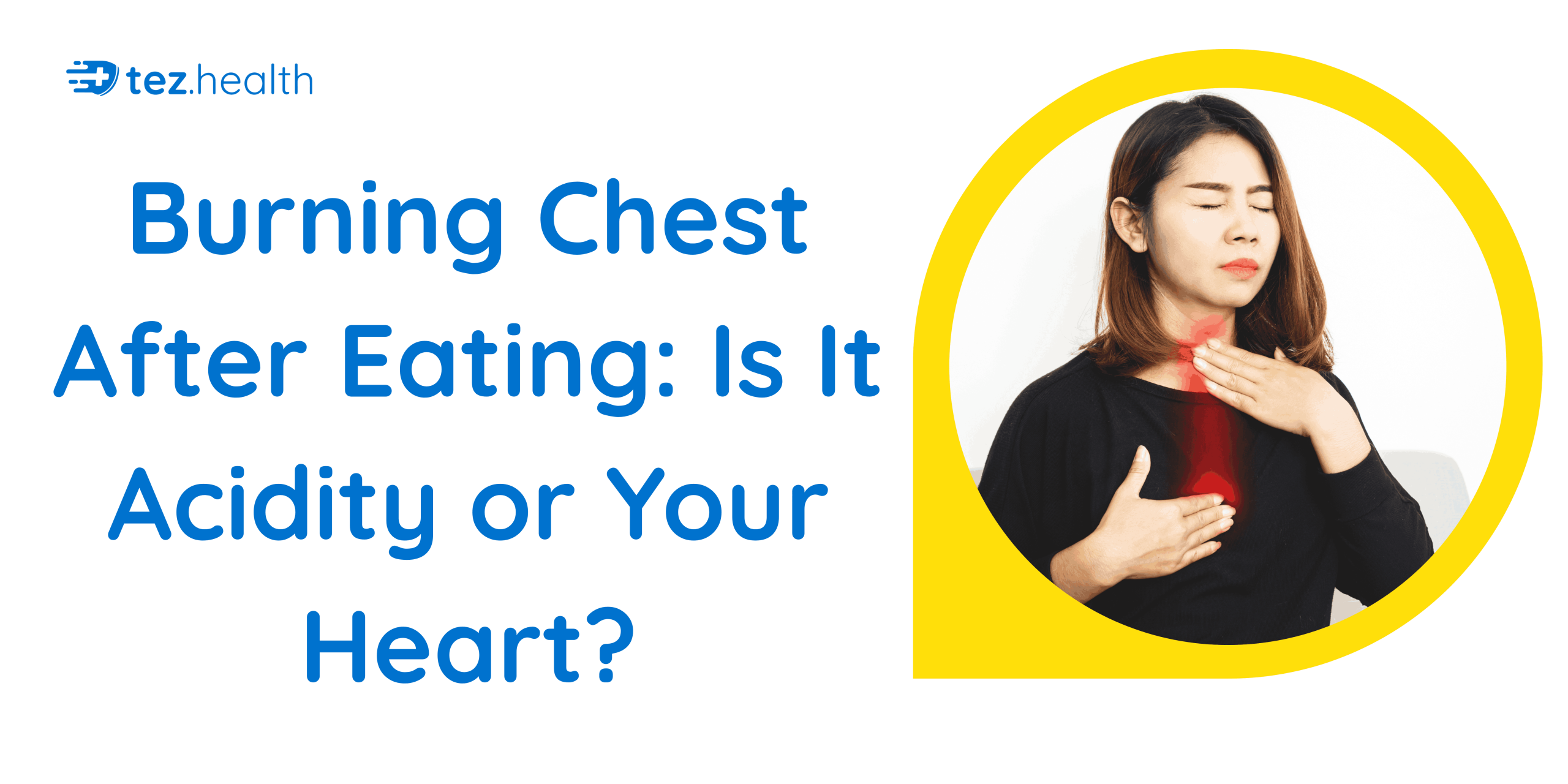
Experiencing a burning sensation in the chest after eating can be uncomfortable, worrying, and sometimes even frightening. For many people, the first thought is acidity or heartburn. However, others may fear that the discomfort is related to the heart.
In many situations, burning chest pain after meals is caused by digestive issues such as acid reflux or indigestion. Nevertheless, chest discomfort can occasionally be linked to serious heart-related conditions that require urgent medical attention.
Because the chest and upper digestive organs are located close together, symptoms from the digestive system and the heart may sometimes feel very similar. As a result, it can be difficult to determine whether the burning sensation is harmless acidity or a warning sign of a heart problem.
Understanding the possible causes, associated symptoms, warning signs, and preventive measures can help you identify when simple lifestyle changes may help and when immediate medical care is necessary.
What Causes Burning Chest After Eating?
The most common cause of burning chest discomfort after meals is acid reflux. This happens when stomach acid flows upward into the food pipe (esophagus), causing irritation and a burning sensation commonly known as heartburn.
However, chest burning after meals can also occur due to:
- Indigestion
- Gastritis
- Overeating
- Hiatal hernia
- Gallbladder problems
- Anxiety and stress
- Heart-related conditions
In some cases, especially in people with diabetes, high blood pressure, obesity, smoking history, or high cholesterol, chest discomfort after eating may signal reduced blood flow to the heart.
Therefore, it is important not to ignore persistent or severe chest symptoms.
Why Do Acidity and Heart Problems Feel Similar?
The food pipe, stomach, and heart are located close to one another inside the chest. Consequently, pain signals from these organs may sometimes overlap.
For example:
- Acid reflux may create a burning sensation behind the chest bone
- Heart-related chest pain may sometimes feel like heaviness, pressure, or burning
Additionally, some people may mistake heart-related chest pain for simple indigestion.
This is why understanding the differences between acidity and heart-related symptoms is extremely important.
Common Symptoms of Acidity or Heartburn
Burning chest discomfort caused by acidity is often linked to digestive symptoms and may worsen after eating certain foods.
Common symptoms include:
- Burning sensation in the chest
- Sour or bitter taste in the mouth
- Acidity after spicy or oily foods
- Burping
- Bloating
- Upper stomach discomfort
- Mild throat irritation
- Symptoms worsening while lying down
In many cases, these symptoms improve after:
- Taking antacids
- Avoiding trigger foods
- Sitting upright
- Drinking water
Acidity-related burning is usually temporary, although chronic acid reflux may require treatment.
Signs the Burning Could Be Heart-Related
Heart-related chest pain may sometimes feel different from typical acidity and should never be ignored.
Warning signs include:
- Pressure or tightness in the chest
- Pain spreading to the arm, jaw, shoulder, or back
- Shortness of breath
- Sweating
- Dizziness
- Nausea
- Sudden weakness
- Chest discomfort during physical activity
- Feeling faint or lightheaded
In some people, especially women, older adults, and diabetic patients, heart symptoms may appear mild and resemble acidity or indigestion rather than severe chest pain.
Therefore, persistent chest burning with these symptoms requires urgent medical attention.
Common Causes of Burning Chest After Eating
There are several possible reasons why burning chest discomfort may occur after meals.
1. Acid Reflux (GERD)
Acid reflux, also called gastroesophageal reflux disease (GERD), is one of the most common causes of chest burning.
It occurs when stomach acid moves upward into the food pipe, irritating its lining.
Common symptoms include:
- Heartburn
- Sour taste in the mouth
- Chest burning after meals
- Burping
- Difficulty lying down comfortably
Symptoms often worsen after:
- Spicy foods
- Oily meals
- Large meals
- Late-night eating
2. Overeating
Eating large meals may increase pressure inside the stomach.
As a result:
- Stomach acid may move upward
- Digestion may slow down
- Chest burning and bloating may occur
Heavy meals often worsen symptoms in people already prone to acidity.
3. Spicy or Oily Foods
Certain foods commonly trigger acidity and chest discomfort.
Trigger foods may include:
- Fried foods
- Spicy meals
- Excess caffeine
- Chocolate
- Citrus fruits
- Carbonated drinks
These foods may irritate the digestive system and increase acid production.
4. Gastritis
Gastritis refers to inflammation of the stomach lining.
Common causes include:
- Excess acidity
- Alcohol
- Certain medications
- Stress
- Infections
People with gastritis may experience:
- Burning stomach pain
- Nausea
- Bloating
- Chest discomfort after eating
5. Hiatal Hernia
A hiatal hernia occurs when part of the stomach moves upward through the diaphragm.
This condition may increase the risk of acid reflux and heartburn.
Common symptoms include:
- Burning chest discomfort
- Acidity
- Difficulty swallowing
- Bloating after meals
6. Indigestion
Poor digestion after meals may also cause burning discomfort in the chest and upper abdomen.
Indigestion may occur due to:
- Eating too quickly
- Overeating
- Heavy meals
- Stress
Additionally, symptoms may include:
- Fullness
- Burping
- Bloating
- Mild stomach pain
7. Heart Disease
Reduced blood flow to the heart may sometimes cause chest discomfort after eating.
This is more common in people with:
- Diabetes
- High blood pressure
- High cholesterol
- Smoking history
- Obesity
- Family history of heart disease
Heart-related chest pain may worsen during:
- Physical activity
- Emotional stress
- Climbing stairs
Unlike acidity, heart-related symptoms may not improve with antacids.
8. Anxiety and Stress
Stress and anxiety can strongly affect both digestion and heart health.
As a result, some people may experience:
- Chest tightness
- Acidity
- Stomach discomfort
- Burning sensation in the chest
Stress may also worsen existing acid reflux symptoms.
Symptoms That Should Never Be Ignored
Seek immediate medical attention if burning chest pain occurs along with:
- Severe chest pressure
- Pain spreading to the arm or jaw
- Difficulty breathing
- Excessive sweating
- Fainting
- Sudden weakness
- Confusion
- Vomiting
- Blue lips or pale skin
These symptoms may indicate a heart emergency.
Home Remedies & Lifestyle Tips
Mild acidity-related burning may improve with healthy daily habits and dietary changes.
1. Eat Smaller Meals
Large meals may overload the digestive system and worsen acid reflux.
Smaller meals may help reduce:
- Bloating
- Acidity
- Chest discomfort
2. Avoid Trigger Foods
Limit foods that commonly worsen acidity, including:
- Spicy foods
- Fried foods
- Oily meals
- Excess caffeine
- Carbonated beverages
Identifying personal trigger foods may also help reduce symptoms.
3. Do Not Lie Down Immediately After Eating
Lying down soon after meals may worsen acid reflux and chest burning. Therefore, it is advisable to wait at least 2–3 hours after eating before sleeping.
4. Maintain a Healthy Weight
Excess body weight increases pressure on the stomach and may worsen reflux symptoms. Regular exercise and balanced eating habits may help improve digestion and reduce acidity.
5. Reduce Smoking & Alcohol
Smoking and alcohol may:
- Irritate the stomach lining
- Relax the lower food pipe muscles
- Increase acid reflux risk
Reducing these habits may improve both digestive and heart health.
6. Manage Stress
Stress management techniques may help improve digestion and reduce acidity.
Helpful methods include:
- Meditation
- Deep breathing exercises
- Yoga
- Proper sleep
- Regular physical activity
7. Stay Hydrated
Drinking enough water may support digestion and help reduce acidity in some individuals.
When Should You Seek Immediate Medical Attention?
Seek urgent medical care if chest burning:
- Feels like pressure or squeezing
- Spreads to the arm, jaw, shoulder, or back
- Occurs with sweating or breathlessness
- Happens during physical activity
- Causes dizziness or fainting
- Does not improve with rest
- Occurs suddenly and severely
It is always safer to rule out heart-related conditions early.
How Are the Causes Diagnosed?
Doctors may recommend tests such as:
- ECG (electrocardiogram)
- Blood tests
- Endoscopy
- Chest X-ray
- Stress tests
- Echocardiogram
These tests help identify whether symptoms are related to acidity, digestive disorders, or heart disease.
Can Burning Chest After Eating Be Prevented?
In many cases, yes. Healthy lifestyle habits can reduce both acidity and heart disease risk.
Helpful preventive measures include:
- Eating balanced meals
- Avoiding trigger foods
- Maintaining healthy body weight
- Exercising regularly
- Managing stress
- Avoiding smoking and excess alcohol
- Getting regular health check-ups
People with diabetes, high blood pressure, or heart disease risk factors should pay extra attention to chest symptoms.
Frequently Asked Questions (FAQs) on Burning Chest After Eating: Is It Acidity or Your Heart?
1. Is burning chest after eating always caused by acidity?
No, although acidity is a common cause, chest burning may sometimes be related to heart conditions or other digestive problems.
2. How do I know if chest burning is related to the heart?
Heart-related symptoms may include chest pressure, sweating, breathlessness, dizziness, or pain spreading to the arm, jaw, shoulder, or back.
3. Which foods commonly trigger chest burning?
Spicy foods, oily meals, caffeine, alcohol, chocolate, fried foods, and acidic foods may commonly trigger acidity and chest burning.
4. Can stress cause chest burning?
Yes, stress and anxiety can worsen acid reflux and may also contribute to chest discomfort.
5. When should I go to the hospital for chest burning?
Seek emergency care if chest burning occurs with pressure, sweating, shortness of breath, dizziness, fainting, or pain spreading to other areas.
6. Can overeating cause chest burning?
Yes, large meals may increase stomach pressure and worsen acid reflux symptoms.
7. Does lying down after eating worsen acidity?
Yes, lying down immediately after meals may increase acid reflux and chest burning.
8. Can heartburn and heart attack feel similar?
Yes, some heart-related chest pain may resemble acidity or indigestion, especially in women and diabetic patients.
9. What helps reduce acidity-related chest burning naturally?
Eating smaller meals, avoiding trigger foods, staying upright after meals, managing stress, and maintaining healthy weight may help reduce symptoms.
10. Can burning chest after eating be prevented?
In many cases, yes. Healthy eating habits, regular exercise, stress management, and avoiding smoking or excess alcohol may help prevent recurring symptoms.