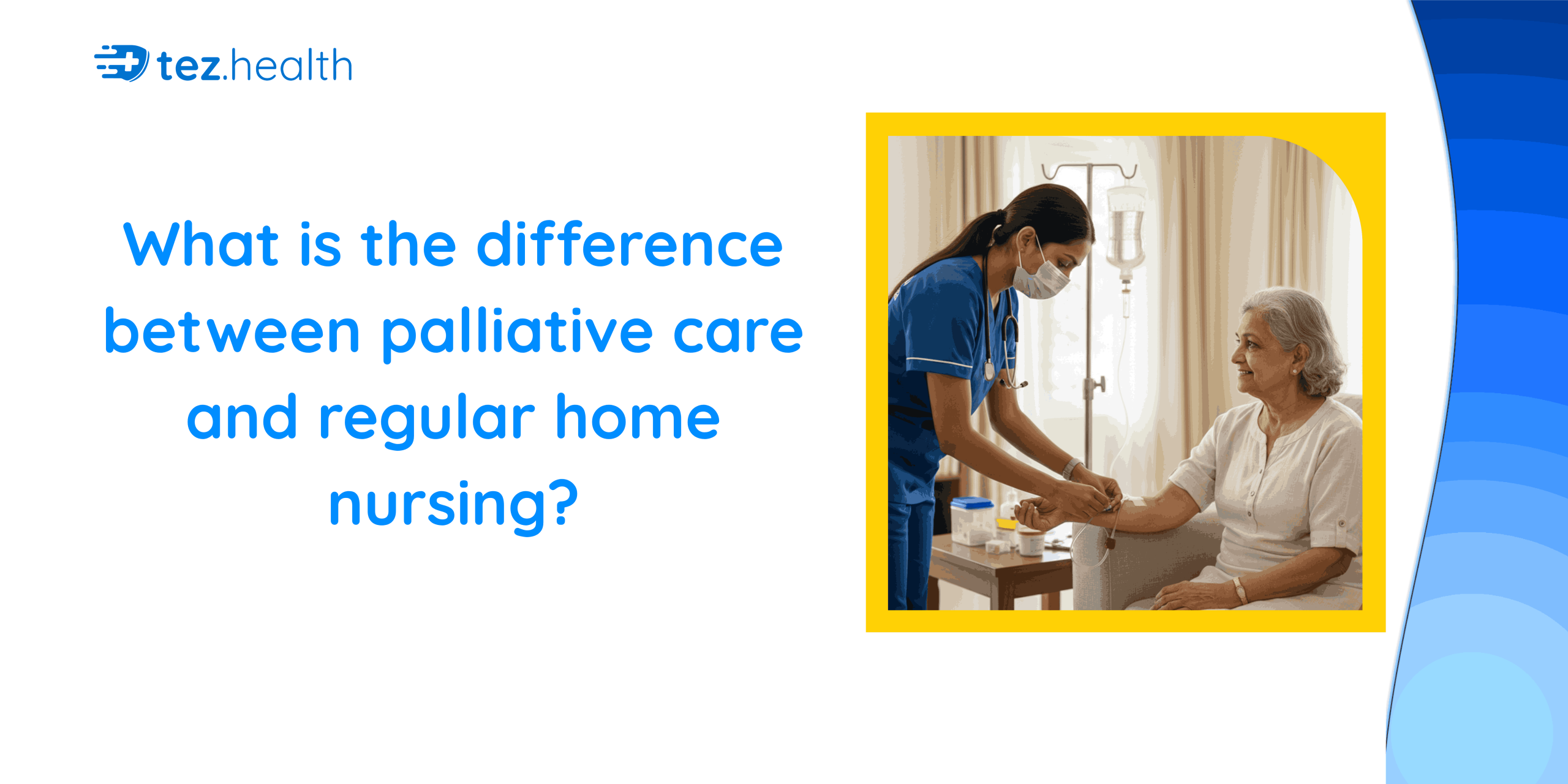
When patients and families explore home healthcare, one of the most common areas of confusion is the difference between palliative care and regular home nursing.
At first glance, both may seem similar.
Both are delivered at home.
>Both involve trained healthcare professionals.
>Both aim to improve patient comfort.
But in reality, they serve very different purposes, especially in terms of goals, approach, and the type of care provided.
Understanding this difference is essential—not just for making the right medical decision, but also for ensuring that patients receive the right kind of care at the right stage of their health journey.
Understanding the Basics
Before comparing the two, let’s simplify what each one means.
What Is Regular Home Nursing?
Regular home nursing focuses on medical and clinical care provided at home.
It is typically used for:
- Recovery after surgery
- Managing chronic conditions
- Administering medications
- Wound care
- Monitoring vital signs
The goal is straightforward:
Support recovery, manage health conditions, and maintain physical well-being.
What Is Palliative Care?
Palliative care is different in both intent and approach.
It focuses on improving the quality of life for patients dealing with serious or life-limiting illnesses.
This includes:
- Pain management
- Symptom relief
- Emotional support
- Psychological care
- Support for families
The goal is not just medical treatment.
The goal is comfort, dignity, and overall well-being—especially when a cure may not be possible.
The Core Difference: Purpose of Care
The most important difference lies in why the care is provided.
Regular Home Nursing:
- Focuses on treatment and recovery
- Aims to improve or stabilize medical conditions
- Supports physical healing
Palliative Care:
- Focuses on comfort and quality of life
- Manages symptoms rather than curing illness
- Supports emotional and psychological well-being
In simple terms:
Home nursing treats the condition. Palliative care supports the person living with the condition
When Is Each Type of Care Needed?
Understanding when each is used helps clarify the difference.
Regular Home Nursing Is Needed When:
- A patient is recovering from surgery
- A chronic condition needs monitoring
- Medications or injections are required
- Wounds or infections need care
- The goal is improvement or recovery
Palliative Care Is Needed When:
- A patient has a serious or advanced illness
- The focus shifts from cure to comfort
- Symptoms like pain, breathlessness, or fatigue need management
- Emotional and psychological support is required
- Families need guidance and support
Scope of Services: What Each Includes
Let’s look at what each type of care typically involves.
1. Services in Regular Home Nursing
Regular home nursing is primarily clinical.
It includes:
- Checking vital signs
- Administering medications and injections
- Managing IV fluids
- Wound dressing and care
- Post-surgery recovery support
- Assisting with mobility and rehabilitation
The care is structured, routine-based, and focused on medical outcomes.
2. Services in Palliative Care
Palliative care is more holistic.
It includes:
- Pain and symptom management
- Emotional and mental health support
- Counseling for patients and families
- Assistance with decision-making
- End-of-life care planning (when required)
- Spiritual and psychological comfort
The approach goes beyond physical health.
It addresses the entire experience of the patient.
Approach to Care: Clinical vs Holistic
Another key difference lies in how care is delivered.
Regular Home Nursing:
- Clinical and task-oriented
- Focused on procedures and treatment plans
- Based on medical protocols
Palliative Care:
- Holistic and patient-centered
- Focused on comfort and dignity
- Adapts to emotional and personal needs
Palliative care often involves a broader team, including:
- Doctors
- Nurses
- Counselors
- Care coordinators
Duration of Care
The length of care also differs significantly.
Home Nursing:
- Usually short-term or medium-term
- Linked to recovery or treatment duration
- Ends when the patient improves or stabilizes
Palliative Care:
- Can be long-term
- Continues as long as needed
- May extend through advanced stages of illness
Emotional and Psychological Support
This is where the difference becomes even more clear.
Home Nursing:
- Primarily focused on physical health
- Limited emotional support
Palliative Care:
- Strong emphasis on mental and emotional well-being
- Helps patients cope with fear, anxiety, and uncertainty
- Supports families during difficult times
Palliative care recognizes that illness affects more than just the body.
Role of Family in Each Type of Care
Family involvement differs between the two.
In Home Nursing:
- Families assist with basic support
- Focus remains on medical care
In Palliative Care:
- Families are actively involved
- They receive guidance, counseling, and emotional support
- Care plans often include family needs
This makes palliative care more collaborative.
Common Misconceptions About Palliative Care
Many people misunderstand palliative care.
Let’s clear a few myths.
1: Palliative Care Means Giving Up
Reality:
Palliative care is about improving quality of life—not giving up treatment.
2: It Is Only for End-of-Life
Reality:
Palliative care can begin at any stage of a serious illness.
3: It Replaces Medical Treatment
Reality:
It works alongside medical care, not instead of it.
Can Both Be Used Together?
Yes—and in many cases, they are.
A patient may receive:
- Home nursing for medical needs
- Palliative care for comfort and support
For example:
A cancer patient may need:
- Nursing care for medication and monitoring
- Palliative care for pain management and emotional support
This combined approach provides complete care.
Why the Distinction Matters
Choosing the wrong type of care can lead to:
- Unmet patient needs
- Emotional distress
- Incomplete treatment
Understanding the difference ensures:
- Better decision-making
- Improved patient experience
- More effective care
The Tez Health Perspective
At Tez Health, we understand that healthcare is not one-size-fits-all.
Every patient’s journey is different.
Some need:
- Clinical support for recovery
- Continuous monitoring for chronic conditions
Others need:
- Comfort-focused care
- Emotional and psychological support
That’s why the focus is on delivering the right type of care based on the patient’s needs.
How Tez Health Supports Both
Tez Health is built to provide:
1. Structured Home Nursing Services
- Professional medical care delivered at home with accuracy and consistency.
2. Patient-Centered Care Planning
- Every care plan is tailored to individual conditions and requirements.
3. Integrated Healthcare Approach
- Connecting doctors, nurses, and support systems seamlessly.
4. Focus on Comfort and Dignity
- Ensuring patients feel safe, respected, and cared for.
5. Support for Families
- Helping families navigate care decisions with clarity and confidence.
Real-Life Scenarios
Let’s make this more practical.
1: Post-Surgery Patient
Needs wound care, medication, and monitoring
Home Nursing is the right choice
2: Patient with Advanced Illness
Needs pain relief, emotional support, and comfort
Palliative Care is more suitable
3: Long-Term Condition with Complications
Needs both medical care and emotional support
Combination of both works best
The Future of Home-Based Care in India
Healthcare in India is moving toward more personalized and home-based models.
Patients are looking for:
- Convenience
- Comfort
- Continuity
Both home nursing and palliative care will play a major role in this shift.
The focus will increasingly move toward:
Treating the patient—not just the disease
Final Thoughts
So, what is the difference between palliative care and regular home nursing?
Home nursing focuses on medical treatment and recovery.
Palliative care focuses on comfort, quality of life, and emotional well-being.
Both are important.
Both serve different purposes.
And in many cases, both are needed together.
At Tez Health, the goal is not just to provide services—but to ensure that every patient receives the care that truly fits their needs.
Because healthcare is not just about treatment.
It’s about comfort, dignity, and support—at every stage of life.