


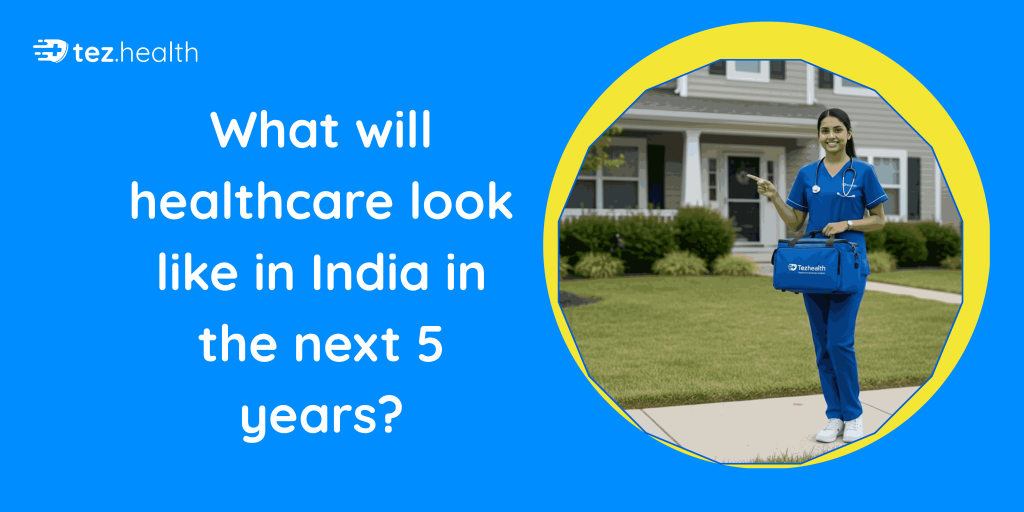
Healthcare in India is entering one of the most transformative phases in its history.
Over the past decade, the system has evolved steadily—but the next five years will bring faster, deeper, and more visible changes than ever before.
The way patients access care, how doctors deliver treatment, and how health systems operate are all shifting at the same time.
And at the center of this transformation is one simple idea:
Healthcare is moving closer to the patient.
So what will healthcare in India actually look like in the next five years?
Let’s break it down.
A Shift from Hospital-Centric to Patient-Centric Care
For decades, healthcare in India has revolved around hospitals.
Patients traveled to hospitals for consultations, diagnostics, treatment, and follow-ups. The system was built around physical infrastructure.
That model is now changing.
In the next five years:
- Care will move beyond hospital walls
- Patients will receive services at home or digitally
- Healthcare will adapt to patient needs, not the other way around
This shift will redefine how care is delivered across the country.
The Rise of Home Healthcare as a Core System
Home healthcare is no longer a niche option—it is becoming a central part of healthcare delivery.
In the coming years, we will see:
- More patients choosing recovery at home
- Growth in at-home diagnostics and lab services
- Increased demand for nursing and rehabilitation at home
- Expansion of home-based critical care
Patients with chronic conditions, elderly individuals, and post-surgery cases will increasingly rely on structured care at home instead of prolonged hospital stays.
For many, home will become the primary place of care—not the hospital.
Telemedicine Will Become the First Point of Contact
Telemedicine has already gained acceptance—but it will become even more integrated into daily healthcare.
In the near future:
- Patients will consult doctors online before visiting a clinic
- Follow-ups will happen digitally
- Minor illnesses will be managed remotely
- Prescriptions and reports will be shared instantly
Instead of asking, “Should I go to the hospital?” patients will first ask:
“Can this be handled online?”
This shift will reduce unnecessary hospital visits and improve accessibility, especially in smaller cities and rural areas.
AI Will Transform Diagnosis and Decision-Making
Artificial intelligence is set to become a powerful tool in healthcare.
Over the next five years, AI will help:
- Detect diseases earlier
- Assist doctors in diagnosis
- Predict health risks
- Personalize treatment plans
This doesn’t mean AI will replace doctors.
Instead:
AI will support doctors in making faster, more accurate decisions
For patients, this means:
- Earlier detection of conditions
- Better treatment outcomes
- More efficient care
Preventive Healthcare Will Take Center Stage
India’s healthcare system has traditionally been reactive—treating illnesses after they occur.
That is changing.
In the future, there will be a strong focus on:
- Regular health check-ups
- Lifestyle monitoring
- Early risk detection
- Preventive interventions
Wearable devices, health apps, and regular screenings will make preventive care a part of everyday life.
Instead of waiting for symptoms, patients will act earlier.
Continuous Monitoring Will Replace Occasional Checkups
One of the biggest changes will be how health is monitored.
Today:
- Patients visit doctors occasionally
- Data is collected at intervals
In the future:
- Health will be tracked continuously
- Devices will monitor vital signs in real time
- Doctors will receive ongoing data
This will allow:
- Early detection of complications
- Faster intervention
- Better management of chronic conditions
Healthcare will become continuous, not episodic.
Digital Health Records Will Become Standard
Managing medical records is often a challenge.
Patients carry files, reports, and prescriptions across different hospitals.
In the next five years:
- Health records will become digital
- Patients will have access to their data anytime
- Doctors will view complete medical histories instantly
This will improve:
- Accuracy in diagnosis
- Continuity of care
- Efficiency in treatment
Healthcare will become more connected and organized.
Healthcare Will Become More Personalized
No two patients are the same—and future healthcare will reflect that.
Instead of standardized treatment plans, care will be tailored based on:
- Medical history
- Lifestyle
- Risk factors
- Genetic predisposition (in advanced cases)
This means:
- More effective treatments
- Fewer side effects
- Better patient engagement
Personalized care will replace the one-size-fits-all approach.
Expansion Beyond Metro Cities
Healthcare access in India has always been uneven.
Urban areas have better facilities, while rural areas often face challenges.
In the coming years:
- Telemedicine will bridge geographical gaps
- Mobile healthcare units will expand reach
- Digital platforms will connect patients to specialists
Patients in smaller towns will gain access to:
- Specialist consultations
- Diagnostics
- Continuous care
This will significantly improve healthcare accessibility across the country.
Insurance Will Play a Bigger Role
Healthcare affordability is a major concern in India.
Over the next five years:
- More people will adopt health insurance
- Coverage will expand beyond hospitalization
- Home healthcare and preventive services may see wider inclusion
This shift will reduce:
- Out-of-pocket expenses
- Financial stress during treatment
Insurance will become a key enabler of accessible healthcare.
Faster, On-Demand Healthcare Services
Patients today expect speed—and healthcare is adapting.
In the future:
- Doctor consultations will be available quickly
- Lab tests will be done at home within hours
- Medicines will be delivered faster
- Emergency services will become more responsive
Healthcare will become more on-demand, similar to other service industries.
Mental Health Will Gain More Attention
Mental health is becoming an important part of overall healthcare.
In the next five years:
- Awareness will increase
- Access to counseling will improve
- Digital therapy platforms will grow
Patients will increasingly recognize that:
Health is not just physical—it is also mental
The Changing Role of Hospitals
Hospitals will continue to play a critical role—but their function will evolve.
Hospitals will focus more on:
- Emergency care
- Surgeries
- Intensive care
Routine and long-term care will increasingly move outside hospitals.
This will make hospitals more efficient and reduce overcrowding.
The Role of Technology in Everyday Healthcare
Technology will become invisible—but essential.
Patients may not notice it, but it will power:
- App-based consultations
- Automated reminders
- Smart health tracking
- Faster diagnosis
Healthcare will feel simpler—but will be supported by advanced systems in the background.
The Tez Health Perspective
At Tez Health, this future is not just a prediction—it is already taking shape.
The focus is on building a healthcare experience that is:
1. Fast
- Patients should not wait when they need care.
2. Accessible
- Care should reach patients wherever they are.
3. Reliable
- Quality should remain consistent across all services.
4. Integrated
- Consultations, diagnostics, and treatment should work together seamlessly.
5. Patient-Centric
- Every decision should be made with the patient’s comfort and outcomes in mind.
What This Means for Patients
In the next five years, patients in India will experience healthcare differently.
They will:
- Spend less time in hospitals
- Access care more easily
- Receive more personalized treatment
- Stay more involved in their own health
Healthcare will become:
More convenient
More connected
More proactive
Challenges That Still Need to Be Addressed
While the future looks promising, there are still challenges:
- Uneven access in rural areas
- Need for trained healthcare professionals
- Data privacy and security concerns
- Awareness and adoption barriers
Addressing these challenges will be key to building a stronger healthcare system.
Final Thoughts
The next five years will redefine healthcare in India.
The shift is clear:
From hospitals to homes
From reactive to preventive care
From isolated systems to connected ecosystems
From one-size-fits-all to personalized care
Healthcare will not just be about treating illness—it will be about managing health continuously and conveniently.
At Tez Health, the vision aligns with this future:
Deliver care that is faster, smarter, and closer to the patient.
Because the future of healthcare is not just about better hospitals—
It’s about better access, better experience, and better outcomes for every patient.