


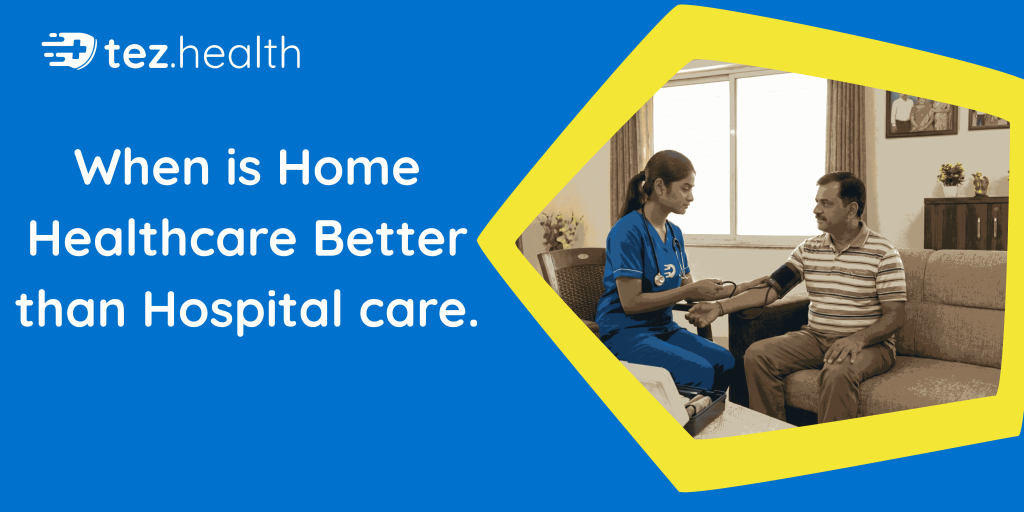
Healthcare decisions often feel overwhelming. Many families automatically choose hospital care because they associate it with safety and expertise. However, modern healthcare has evolved significantly. Today, home healthcare offers professional medical support that rivals hospital-based services in many situations.
This leads to an important question:
When is home healthcare better than hospital care?
The answer depends on the patient’s condition, medical needs, mobility, and overall comfort. In many non-emergency situations, home healthcare provides equal medical quality with added benefits such as comfort, reduced infection risk, personalized attention, and faster recovery.
In this detailed guide, we explain when home healthcare becomes the better option, its advantages, limitations, and how services like Tez Health ensure safe and reliable care at home.
Understanding Home Healthcare
Home healthcare involves professional medical services delivered at the patient’s residence. Qualified nurses, caregivers, and healthcare professionals provide treatment, monitoring, and support under medical supervision.
Common home healthcare services include:
- Injection services at home
- IV therapy and fluids
- Wound care and dressing
- Post-surgical care
- Elderly care
- Chronic disease management
- Vaccination at home
- Blood sample collection
Importantly, home healthcare does not replace emergency hospital care. Instead, it serves as a safe and effective alternative for stable medical conditions.
Understanding Hospital Care
Hospitals specialize in handling emergencies, surgeries, intensive care, and complex medical conditions. They provide advanced diagnostic tools, specialized doctors, and life-saving equipment.
However, hospitals also involve:
- Long waiting times
- Higher exposure to infections
- Increased stress for patients
- Higher overall costs
- Limited personalized attention
Therefore, while hospitals remain essential for critical care, they may not always be the best option for every situation.
When Is Home Healthcare Better Than Hospital Care?
1. During Recovery After Hospital Discharge
After surgery or hospitalization, many patients require ongoing care such as wound dressing, injections, IV medications, or monitoring. Instead of extending hospital stays, patients can recover comfortably at home.
Home healthcare reduces unnecessary hospital days while maintaining medical supervision. As a result, patients often experience faster emotional and physical recovery.
2. For Chronic Disease Management
Patients with conditions like diabetes, hypertension, arthritis, or respiratory diseases require regular monitoring and medication administration. Frequent hospital visits can become exhausting.
Home healthcare ensures consistent monitoring and timely treatment without repeated travel. Consequently, patients maintain better compliance and disease control.
3. For Elderly Patients
Elderly individuals often face mobility challenges and weaker immunity. Hospital visits can increase fatigue and infection risk.
Home healthcare offers:
- Personalized attention
- Reduced exposure to hospital-acquired infections
- Emotional comfort in familiar surroundings
Therefore, for stable elderly patients, home care often becomes the safer and more comfortable option.
4. When Infection Risk Must Be Minimized
Hospitals treat multiple patients daily, which increases exposure to contagious illnesses. Immunocompromised patients or those recovering from surgery benefit greatly from staying in a controlled home environment.
By receiving care at home, patients significantly reduce cross-infection risks.
5. For Palliative and Long-Term Supportive Care
Patients requiring long-term supportive care often feel more comfortable at home. Family presence, emotional familiarity, and personalized support contribute positively to quality of life.
Home healthcare provides compassionate care while maintaining medical oversight.
6. For Routine Medical Procedures
Many routine procedures do not require hospital infrastructure. These include:
- Injections
- IV therapy
- Blood sample collection
- Vaccinations
- Basic wound dressing
Instead of traveling to a hospital, patients can receive these services safely at home.
7. When Mental and Emotional Well-Being Matters
Hospitals can feel overwhelming and stressful. In contrast, home environments promote relaxation and stability.
Emotional well-being directly influences recovery. Therefore, patients often heal faster when they feel comfortable and secure.
Advantages of Home Healthcare Over Hospital Care
Personalized One-on-One Attention
At home, healthcare professionals focus on one patient at a time. This improves monitoring, communication, and overall care quality.
Greater Comfort
Patients remain in their own beds, follow familiar routines, and stay close to family members.
Cost-Effective Care
In many cases, home healthcare reduces costs associated with hospital stays, room charges, and additional services.
Improved Family Involvement
Family members can actively participate in care, which improves transparency and trust.
Flexible Scheduling
Home services can be scheduled at convenient times, reducing disruption to daily life.
When Hospital Care Is Still Necessary
While home healthcare offers many benefits, certain situations require hospital treatment. These include:
- Medical emergencies
- Severe infections
- Major surgeries
- Intensive care needs
- Advanced diagnostic procedures
- Sudden deterioration of health
Hospitals provide specialized equipment and immediate emergency response, which home care cannot replace.
Safety Standards in Home Healthcare
Home healthcare remains safe when qualified professionals follow medical protocols.
Key safety measures include:
- Trained and certified healthcare staff.
- Sterile, single-use equipment.
- Proper medication verification.
- Regular patient monitoring.
- Safe disposal of medical waste.
- Clear documentation and reporting.
When providers maintain these standards, home healthcare matches hospital-level procedural safety for non-critical cases.
Who Benefits Most from Home Healthcare?
Home healthcare is particularly beneficial for:
- Elderly individuals
- Post-surgery patients
- Patients with chronic illnesses
- Individuals with mobility challenges
- Bedridden patients
- Patients requiring routine procedures
- Families seeking preventive healthcare services
Because home healthcare removes logistical barriers, patients focus more on recovery and less on travel stress.
How Tez Health Delivers Safe Home Healthcare
At Tez Health, we prioritize patient safety, professionalism, and comfort.
Qualified Healthcare Professionals
Our nurses and caregivers receive professional training and hands-on experience in managing various medical conditions.
Strict Hygiene Protocols
We follow infection-control standards, use sterile equipment, and maintain proper medical waste disposal.
Doctor-Guided Care Plans
We provide services based on medical prescriptions and professional guidance to ensure accurate treatment.
Patient-Centered Approach
We communicate clearly, explain procedures thoroughly, and monitor patients carefully during every visit.
Reliable and Timely Service
We ensure punctual visits and consistent care for ongoing treatment needs.
Comparing Home Healthcare and Hospital Care
| Factor | Home Healthcare | Hospital Care |
| Environment | Comfortable and familiar | Clinical and structured |
| Infection Risk | Lower for stable patients | Higher due to crowd exposure |
| Personal Attention | One-on-one focus | Shared attention among multiple patients |
| Cost | Often more affordable | Higher overall expenses |
| Emergency Handling | Limited | Fully equipped for emergencies |
| Best For | Stable, non-critical conditions | Critical and emergency cases |
This comparison clearly shows that home healthcare works best for stable conditions, while hospitals remain essential for critical care.
The Growing Shift Toward Patient-Centered Care
Modern healthcare emphasizes comfort, accessibility, and preventive care. As a result, home healthcare continues to gain popularity among families seeking safer and more convenient solutions.
Rather than replacing hospitals, home healthcare complements them. Patients receive hospital treatment when necessary and continue recovery safely at home.
Frequently Asked Questions Is Home Healthcare Better Than Hospital Care?
Is home healthcare as safe as hospital care?
Yes, for stable and non-emergency conditions, home healthcare is safe when delivered by trained professionals.
Can serious conditions be managed at home?
Stable chronic conditions can be managed at home. However, emergencies require hospital care.
Does home healthcare reduce recovery time?
Many patients recover faster in comfortable environments due to reduced stress and better emotional support.
Is home healthcare suitable for elderly patients?
Yes. Elderly individuals often benefit greatly from personalized and infection-controlled home care.
Conclusion
Home healthcare becomes better than hospital care when the patient’s condition is stable, non-emergency, and manageable with professional supervision. It offers comfort, reduced infection risk, personalized attention, and improved emotional well-being.
However, hospitals remain essential for emergencies and complex medical needs. The key lies in choosing the right type of care based on medical requirements.
At Tez Health, we provide safe, professional home healthcare services designed to support recovery, manage chronic conditions, and deliver quality care at your doorstep. By combining medical expertise with patient comfort, we help families make confident healthcare decisions.
If you are considering home healthcare for yourself or a loved one, understanding when it works best ensures safer and smarter choices.