hronic diseases are quietly becoming one of the biggest healthcare challenges in India.
From diabetes and high blood pressure to heart conditions and respiratory illnesses, millions of people today are living with conditions that don’t go away quickly. These are not illnesses that can be treated with a single hospital visit—they require ongoing care, regular monitoring, and long-term management.
And this is exactly why patient behavior is changing.
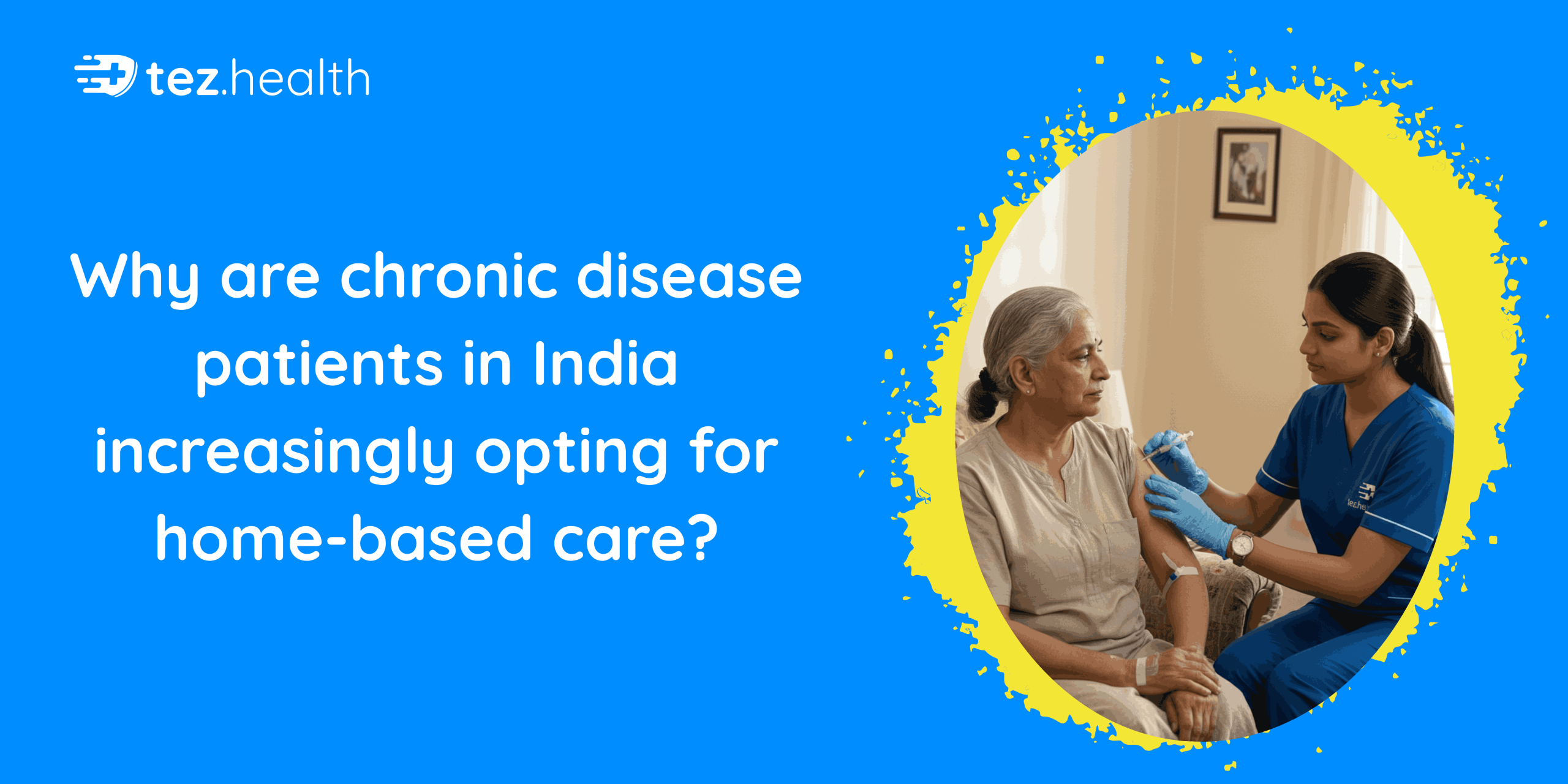
Instead of relying only on hospitals, many patients are now choosing home-based healthcare as a more practical and sustainable solution.
But what’s driving this shift?
Why are chronic disease patients across India increasingly preferring care at home?
Chronic Care Is Not a One-Time Event
The biggest difference between acute and chronic illness is time.
Chronic conditions require:
- Continuous monitoring
- Regular medication
- Frequent consultations
- Lifestyle adjustments
This makes healthcare a part of everyday life, not something that happens occasionally.
Hospitals are built for short-term, intensive treatment. But chronic care needs consistency—and that’s where home-based care fits naturally.
A Shift in Mindset: Care Should Come to the Patient
For years, patients had to adjust everything around healthcare:
- Travel long distances
- Spend hours in waiting rooms
- Revisit hospitals frequently
Now, expectations are changing.
Patients want healthcare that fits into their lives—not the other way around.
Home-based care is making that possible.
Key Reasons Behind the Shift to Home-Based Care
Let’s look at what’s really driving this change.
1. Easier Monitoring on a Daily Basis
Chronic diseases need regular tracking. Whether it’s blood sugar, blood pressure, or oxygen levels, patients need to stay on top of their health constantly.
With home-based care:
- Monitoring becomes part of the daily routine
- Patients avoid repeated hospital visits
- Early warning signs can be identified quickly
This leads to better control and fewer complications.
2. Comfort Makes a Difference
Living with a long-term condition is already stressful.
Hospitals can add to that stress with:
- Noise
- Rigid routines
- Unfamiliar surroundings
At home, patients feel:
- More relaxed
- More in control
- More comfortable
This emotional stability plays a major role in long-term health.
3. Less Dependence on Hospital Visits
Frequent hospital trips can be exhausting, especially for:
- Elderly patients
- People with mobility issues
- Those living in busy urban areas
Home care reduces the need for constant travel, making healthcare more manageable.
4. More Personalized Attention
In hospitals, healthcare providers divide their attention across multiple patients.
At home:
- Care is focused on one individual
- Treatment plans are tailored
- Monitoring is more consistent
This level of attention improves both care quality and patient confidence
5. Lower Risk of Infections
Hospitals, while essential, can expose patients to infections. For people with chronic conditions—especially those with weakened immunity—this can be risky. Home care provides a safer environment with reduced exposure.
6. More Cost Control Over Time
Chronic care is not short-term—it can last months or years.
Hospital-based care often includes:
- Room charges
- Facility fees
- Additional overhead costs
Home-based care focuses only on the services needed.
Over time, this makes it a more financially sustainable option.
7. Better Medication Management
Many chronic patients take multiple medications daily.
At home:
- Schedules can be managed properly
- Doses are less likely to be missed
- Side effects can be monitored closely
This improves treatment effectiveness and reduces risks.
8. Stronger Family Involvement
Healthcare at home allows families to stay involved in the patient’s care.
This creates:
- Emotional support
- Better communication
- A sense of security
For chronic patients, this support can make a significant difference.
9. Maintaining Independence
One of the biggest challenges of chronic illness is the feeling of losing control.
Hospitals often require patients to follow strict routines.
At home:
- Patients maintain their daily habits
- They feel more independent
- Life feels more normal
This improves overall well-being.
10. Changing Lifestyles and Family Structures
Modern life in India is different today.
- More nuclear families
- Busy work schedules
- Limited time for caregiving
Home healthcare provides professional support where families may not be able to manage everything on their own.
Technology Is Making Home Care More Effective
One of the biggest reasons home-based care is growing is technology.
Today, patients can benefit from:
- Remote health monitoring
- Digital medical records
- Virtual doctor consultations
- Real-time health tracking
Doctors can stay connected with patients without needing them to visit a hospital every time.
This makes home care not just convenient—but also reliable.
Hospitals Still Play a Critical Role
It’s important to be clear—home healthcare is not replacing hospitals.
Hospitals are essential for:
- Emergency situations
- Surgeries
- Critical care
But for long-term management, hospitals are not always the most practical solution.
Chronic care requires consistency—and that’s where home care works better.
Real-Life Impact on Patients
This shift is not theoretical—it’s changing real lives.
1. A person with diabetes
- Can manage their condition without frequent clinic visits.
2. A heart patient
- Can receive ongoing monitoring without repeated hospital admissions.
3. An elderly individual
- Can stay in a familiar environment instead of being confined to a hospital bed.
4. A respiratory patient
- Can receive continuous support without constant travel. These changes improve both health outcomes and quality of life.
The Tez Health Approach
At Tez Health, we see healthcare as something that should adapt to the patient—not the other way around. Home-based care is not just about convenience—it’s about delivering care in a way that works for real life.
That means focusing on:
1. Medical Expertise at Home
- Every service is guided by trained professionals.
2. Fast and Reliable Care
- Patients shouldn’t have to wait when they need help.
3. Seamless Experience
- From consultation to treatment, everything should be connected.
4. Patient-Centric Planning
- Care plans are designed around individual needs.
5. Consistency in Care
- Chronic conditions require long-term support—and that’s exactly what home care provides.
The Future of Chronic Care in India
The shift toward home-based care is only going to grow stronger.
In the coming years, we can expect:
- More advanced home healthcare services
- Greater use of technology
- Improved insurance support
- Wider availability across cities
Chronic care will become more:
- Accessible
- Flexible
- Personalized
Final Thoughts
Chronic diseases require long-term commitment—not just from doctors, but from patients and families. The traditional hospital model cannot always support this journey effectively. Home-based care offers a better alternative for ongoing management by bringing care directly to the patient. That’s why more chronic disease patients in India are choosing this approach. Not because hospitals are less important—but because home is often the best place for long-term care.
At Tez Health, the goal is simple:
Make healthcare easier to access, easier to manage, and easier to live with—every single day.
Because managing a chronic condition is not just about treatment.
It’s about improving life while living with it.